In this article
QuantumGenie’s CipherScan™ is now officially available on Microsoft Marketplace.
This is an important milestone for QuantumGenie. It makes our post-quantum cryptography discovery and migration platform easier for Microsoft customers, technology leaders, security teams, and partners to find—and gives Azure-centric enterprises a familiar starting point for engaging with us.
The Marketplace process was thorough, but it was not needlessly difficult. Microsoft has created a structured path covering publisher verification, offer information, technical and support documentation, legal information, preview validation, and final publication. The requirements were clearly laid out, and the submission gave us an opportunity to explain precisely how QuantumGenie fits into an enterprise Azure environment.
What we demonstrated through the Marketplace submission
An Azure estate does not contain one neat list called “cryptography.” Its cryptographic reality is distributed across identities, certificates, managed keys, secrets, workloads, databases, storage services, network endpoints, and application dependencies.
CipherScan™ brings those signals into six provider-neutral cloud-inventory domains:
- Identity & Access — identities, roles, policies, principals, and trust relationships that govern access to cryptographic resources.
- Certificates & PKI — certificate identities, issuers, algorithms, validity periods, lifecycle metadata, and confirmed service bindings.
- Key Management — managed keys, algorithms, state, rotation metadata, and confirmed protected-resource relationships.
- Secrets — secret metadata, protection state, and lifecycle indicators without retrieving secret values.
- Compute & Workloads — virtual machines, functions, containers, clusters, applications, and other services that produce or consume cryptographic operations.
- Storage & Data — object storage, databases, tables, volumes, and data services whose protection depends on cryptographic controls.
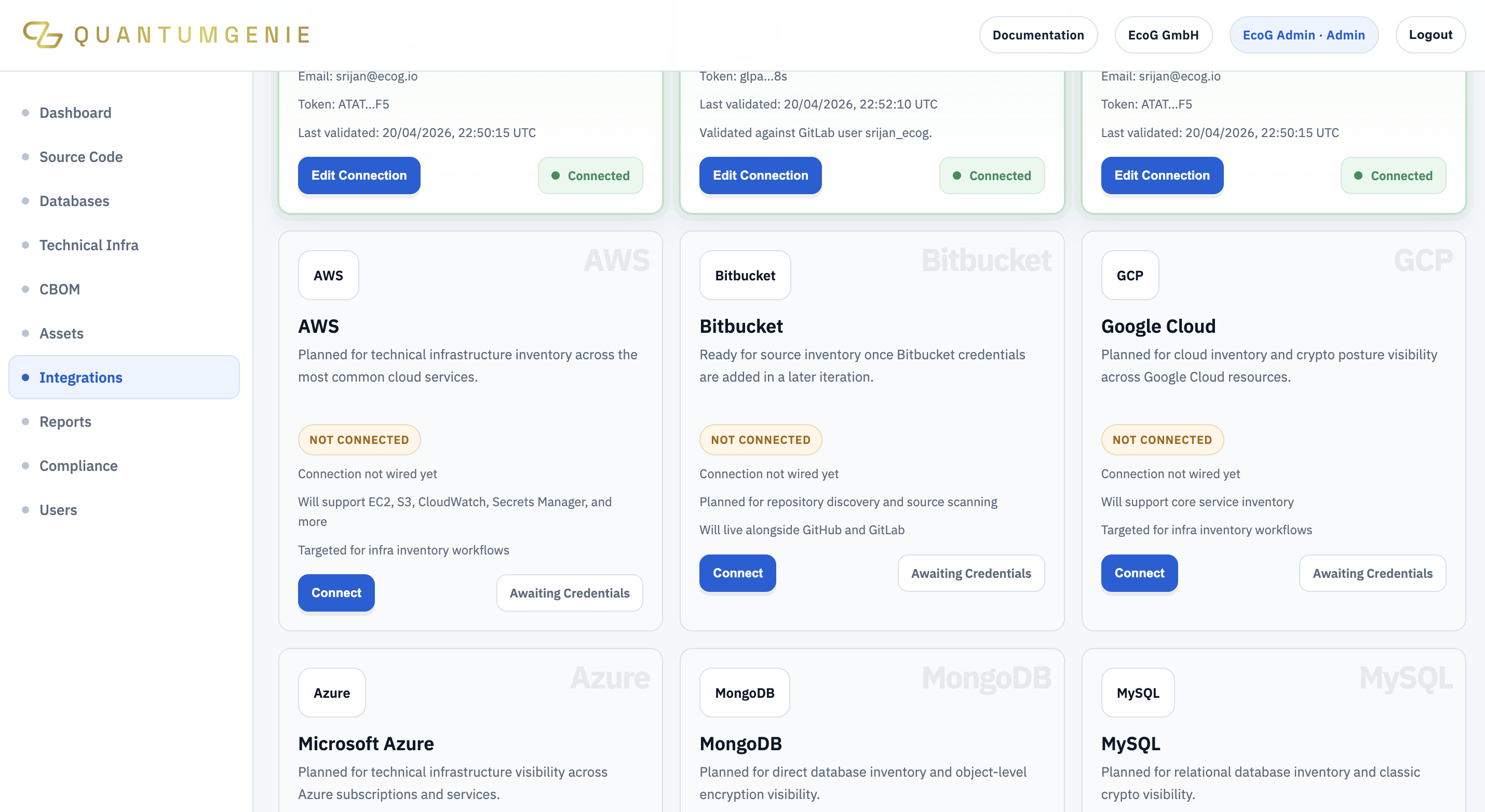
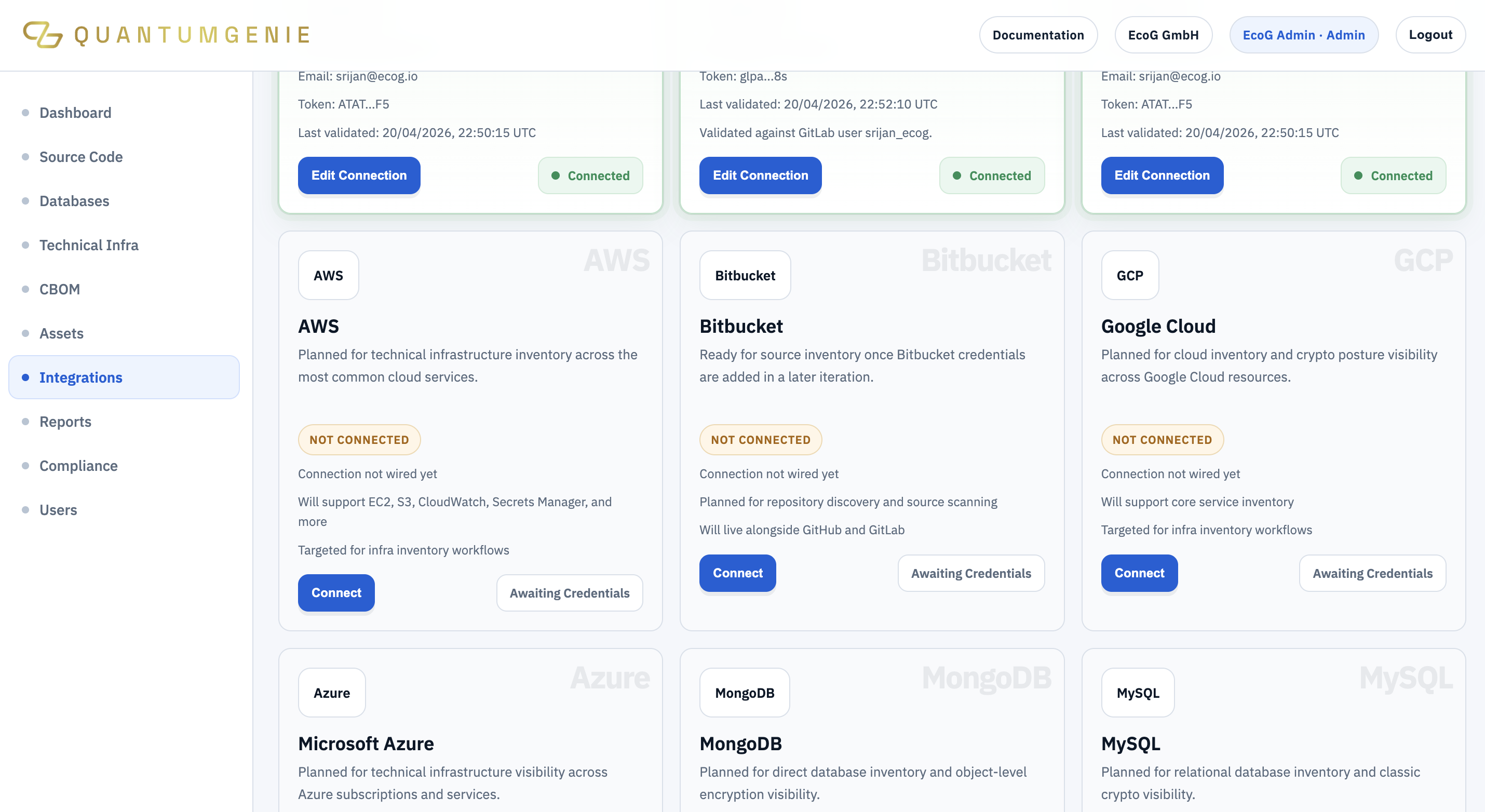
The collection model is metadata-first and read-only. The customer controls the Azure identity and permissions granted to the connector, while QuantumGenie makes assessed, blocked, and permission-limited scopes visible. A missing permission should not silently become a misleading zero.
A CBOM must show more than a list
Finding cryptographic assets is the first step. Understanding their relationships is what makes the inventory operational.
CipherScan™ does not stop after reporting that a certificate or key exists. Where provider evidence is available, the platform records:
- the certificate issuer, algorithm, validity period, expiry, and renewal or lifecycle metadata;
- the Azure or cloud service to which a certificate is bound;
- the workloads, data stores, or resources protected by a managed key;
- the source and confidence of each relationship;
- whether an assertion is confirmed, incomplete, stale, or permission-limited; and
- the distinction between a stable cryptographic object and an observed cryptographic usage occurrence.
That evidence is normalized into a Cryptographic Bill of Materials compatible with CycloneDX. The result can be inspected inside QuantumGenie or exported into an interoperable format rather than being trapped inside a proprietary dashboard.
This matters during migration. Replacing an expiring certificate or rotating a legacy key without knowing what depends on it can create an outage. Relationship evidence makes it possible to move from “we found RSA” to “we know where it is used, which services it affects, and what must be validated before it changes.”
Why the Microsoft Marketplace listing matters
1. It improves enterprise discoverability
Microsoft Marketplace is a destination used by business and IT customers to discover partner solutions. QuantumGenie can now be found in the same ecosystem enterprises already use to evaluate cloud and security technology.
For a prospective customer, this creates a straightforward path: review the offer, understand the supported use cases, and contact QuantumGenie directly through the Marketplace listing.
2. It establishes a verified commercial presence
Publication means QuantumGenie has completed Microsoft’s applicable publisher and offer-listing process and that CipherScan™ is represented through an official Microsoft Marketplace page. That is a meaningful trust signal for security, procurement, and technology teams assessing an emerging category.
It is important to be precise: a Marketplace listing is not a Microsoft certification of every product capability, nor is it an unconditional endorsement of security efficacy. It does, however, establish that QuantumGenie is an identifiable publisher with a live offer that has passed the applicable Marketplace publication workflow.
3. It creates a path toward marketplace-led procurement
Microsoft Marketplace supports several commercial models, including direct-contact listings, trials, free offers, and transactable SaaS offers. Our current listing gives customers a direct route to begin an engagement with QuantumGenie. As the commercial motion develops, Marketplace also provides a framework for private offers, transactable plans, channel-led deals, and other procurement options where the relevant requirements are met.
For enterprises already operating within the Microsoft ecosystem, that can reduce the distance between technical interest, commercial evaluation, security review, and an approved deployment path.
4. It opens the door to Microsoft co-sell motions
A live Marketplace offer is an important prerequisite for progressing toward Microsoft co-sell-ready and Azure IP co-sell eligibility. Those statuses require additional configuration, collateral, and qualification; they are not automatic consequences of being listed.
Once the relevant requirements are completed, co-sell programs can expose an offer to Microsoft sales teams and partners and support joint customer opportunities. Azure IP co-sell eligibility can also create a path toward Microsoft Azure Consumption Commitment eligibility for qualifying transactable offers.
The listing therefore does not mean every Microsoft field executive will immediately position QuantumGenie. It means QuantumGenie now has the Marketplace foundation from which a credible Microsoft-aligned sales and co-sell motion can be built.
Why this milestone is particularly timely
The policy environment around post-quantum migration has changed materially.
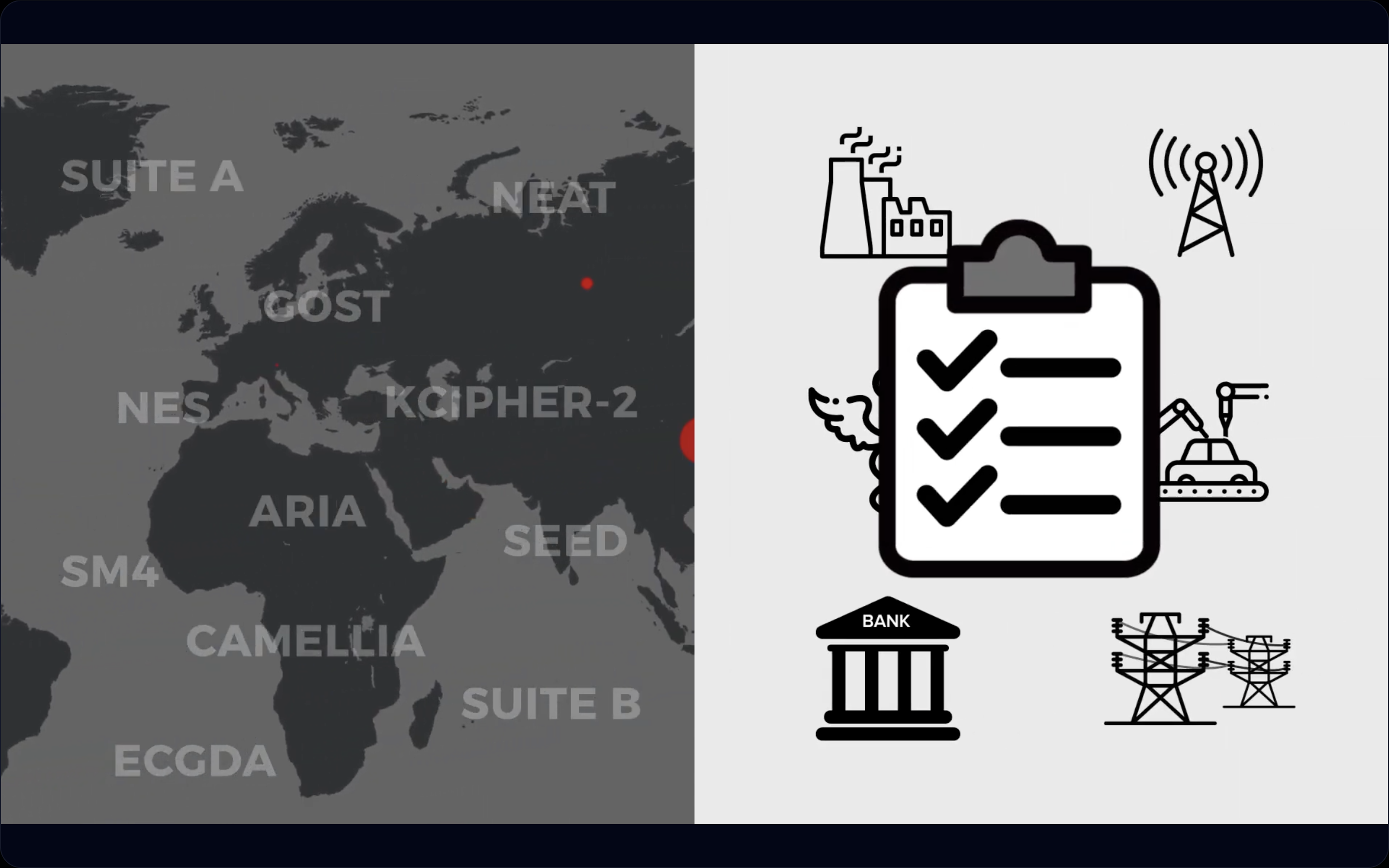
On June 22, 2026, the United States issued Executive Order 14412, “Securing the Nation Against Advanced Cryptographic Attacks”. The order requires federal agencies to appoint PQC migration leads, review inventories of high-value assets and high-impact systems, and develop transition plans. It sets 2030 and 2031 deadlines for PQC key establishment and digital signatures on specified federal systems, calls for federal guidance on minimum CBOM elements, and directs work toward proposed procurement requirements for covered contractors.
France is moving in the same direction. ANSSI encourages organizations to begin cryptographic inventory and migration analysis now and aims to introduce PQC requirements for entry into qualification from 2027. ANSSI is more specific than the shorthand claim that “every product must be quantum-resistant by 2027”: the planned requirement concerns entry into qualification, while the regulatory scope and product categories remain defined by the applicable French security framework.
The common message is clear. Organizations need to know what cryptography they have, what depends on it, which systems matter most, and how change can be sequenced without disrupting operations.
Discovery is only the beginning
QuantumGenie is not designed as a scanner that produces a static list and stops.
Our operating model connects five capabilities:
- CipherScan™ discovers cryptographic objects and usage evidence across approved source-code, cloud, database, infrastructure, certificate, and asset surfaces.
- CipherEdge™ extends authorized visibility to endpoints, IoT devices, disks, workloads, and network telemetry where API-based inventory is insufficient.
- The Causal Security Engine™ attributes findings to their technical origins, dependencies, and downstream services.
- The Security World Model™ maintains an evolving representation of an organization’s cryptographic reality.
- CipherNova™ and Causal Risk Triage™ prioritize migration work and guide remediation through evidence, approval, validation, and rollback-aware workflows.
That full loop—discover, connect, prioritize, remediate, and verify—is what turns a CBOM into an operating system for crypto agility.
The public Harvest Now, Decrypt Later demonstration explains why the exposure begins before a cryptographically relevant quantum computer exists. Organizations can also explore the QuantumGenie Knowledge Base or review the broader market through our PQC competition matrix.
Find QuantumGenie on Microsoft Marketplace
For Azure customers, security teams, Microsoft partners, and enterprises beginning a post-quantum readiness program, the next step is now simpler.
View CipherScan™ on Microsoft Marketplace and contact QuantumGenie to plan a read-only cryptographic discovery, CycloneDX CBOM, relationship assessment, and prioritized migration roadmap.