In this article
Government services went offline. Security teams had to identify affected applications, trace dependencies, patch software and decide when it was safe to restore access. The October 2026 PHP vulnerability response is a sharp reminder of what happens when a widely used technology becomes an urgent operational risk.
Our newsletter called it “PHP got hacked.” The precise development was AI-assisted discovery of critical PHP vulnerabilities, followed by coordinated fixes and precautionary shutdowns. That distinction matters. A vulnerable application, a service taken offline as a precaution and a confirmed breach are different things.
The enterprise lesson is immediate: knowing that a technology is vulnerable is only the beginning. You need to know where it runs, what depends on it, who owns it and how to change it safely. Those same questions sit at the centre of cryptographic discovery and post-quantum cryptography migration.
What happened to PHP, and why it matters
On 21 October, OpenAI described a coordinated response after Calif used its models to uncover critical PHP vulnerabilities. Wiz also independently reported the issues. PHP maintainers and technology providers worked on fixes and deployment. Read the full announcement here.
The disruption extended into public services. The Dutch government announced that selected websites, including Overheid.nl, MijnOverheid.nl and DigiD, were taken offline as a precaution. Its announcement said that it had no indication of active exploitation at that point. Source
Technology providers also had to assess their exposure. AWS published an Amazon Linux advisory for CVE-2026-109618, identifying affected PHP packages and available fixes. This was a software exposure and patching issue, not evidence of an AWS-wide breach. Source
For enterprise security teams, the difficult work starts after the announcement. A patch must reach the actual runtime, including containers, inherited applications and overlooked dependencies. Application owners must validate that the change works. Operations teams need evidence before reopening a critical service. A technology inventory that cannot answer those questions quickly leaves a business making decisions with incomplete information.
The post-quantum connection: discovery before disruption
PHP vulnerabilities and quantum attacks have different technical causes. The common lesson is the operational cost of discovering your exposure under pressure.
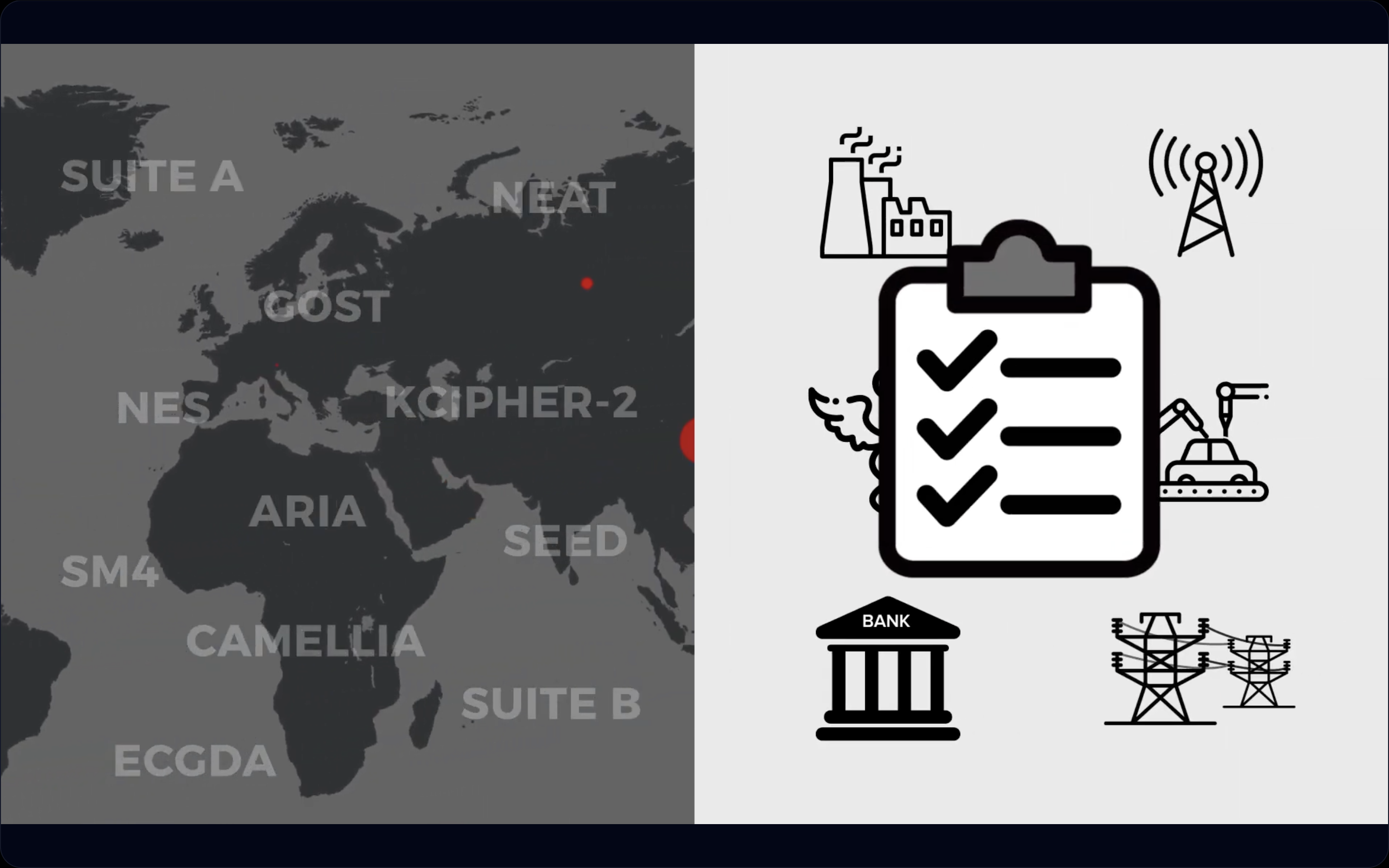
A cryptographically relevant quantum computer could threaten widely deployed public-key cryptography, including RSA and elliptic-curve systems. Encrypted information collected today may remain valuable long enough to face future decryption. Digital signatures and authentication introduce another migration challenge: enterprises must change trust mechanisms without breaking the systems that depend on them.
At QuantumGenie, we are treating 2029 as a serious post-quantum cryptography deadline. Google has also announced a 2029 PQC migration timeline, citing progress in quantum hardware, error correction and factoring research. A migration deadline is a decision to prepare early; it does not establish the date on which an encryption-breaking quantum computer will arrive. Source
For a bank, government agency or large enterprise, preparation means identifying exposed cryptography, prioritising long-lived sensitive data and testing replacements before production deadlines become emergencies. Waiting for certainty about quantum hardware does not shorten the time required to inventory thousands of applications, coordinate suppliers or validate interoperability.
Four capabilities that must work together
QuantumGenie covers four connected aspects of enterprise post-quantum cryptography: discovery, attribution, monitoring and remediation. Their value comes from carrying evidence from one activity into the next.
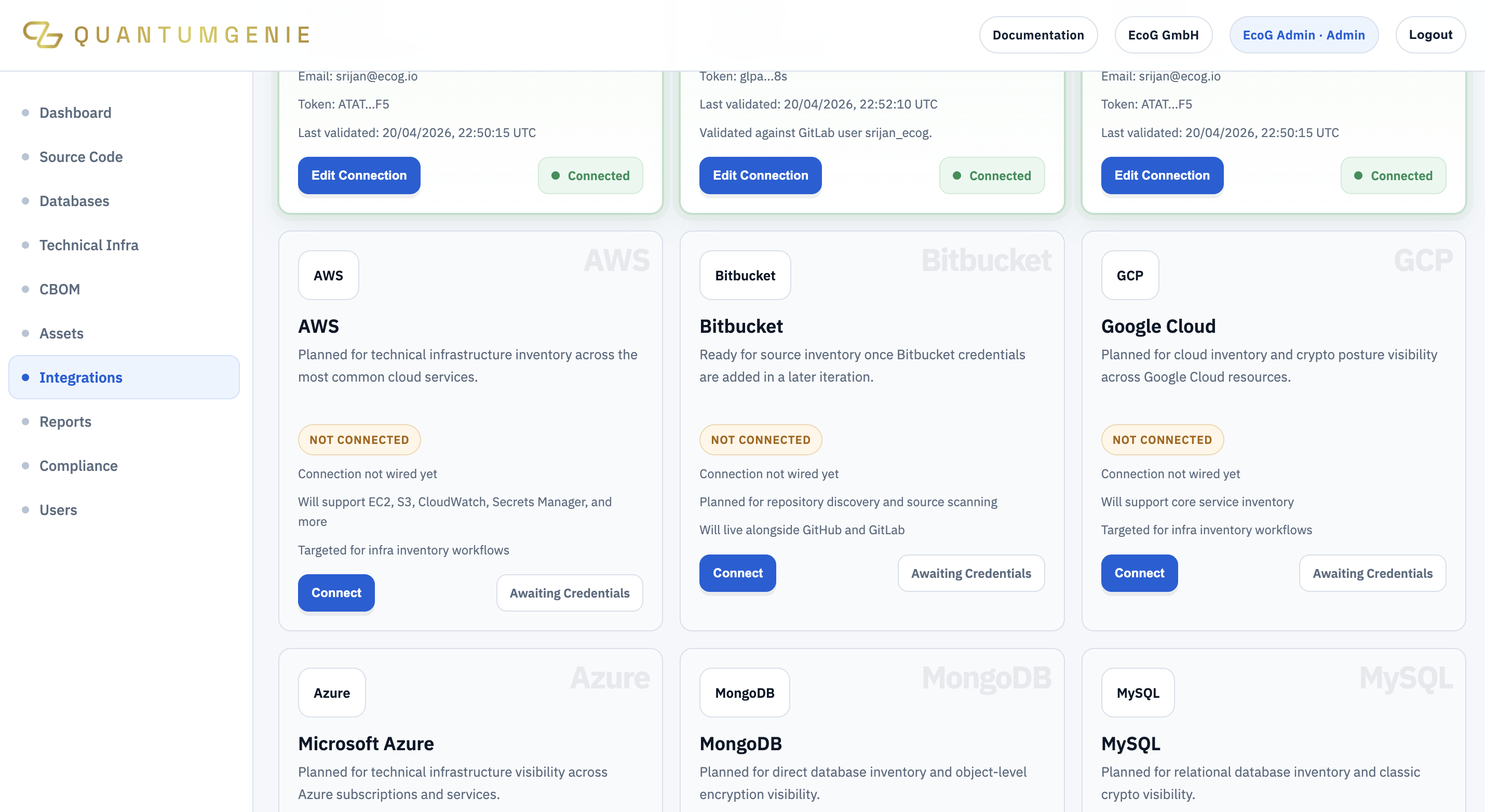
Discovery establishes where cryptography exists across applications, source code, cloud services, databases, certificates, keys, HSMs, networks and endpoints. CipherScan normalises collected evidence into a cryptographic inventory and Cryptographic Bill of Materials, or CBOM.
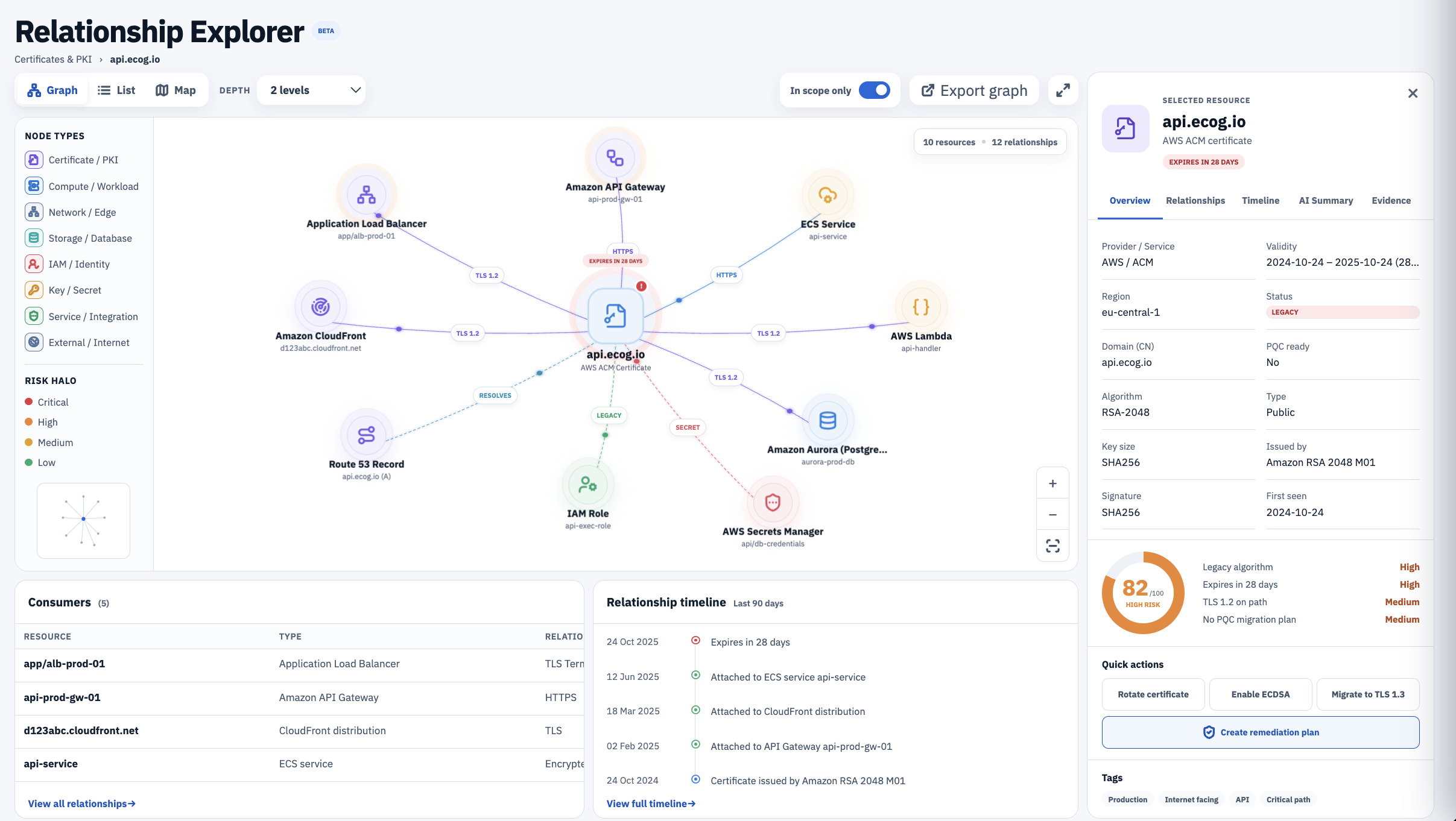
Attribution connects a finding to its application, infrastructure, dependent services and business context. Relationship Explorer and the Causal Security Engine help teams investigate what a cryptographic weakness affects and where a migration should begin.
Monitoring keeps that picture current. New certificates, changed libraries, additional workloads and configuration drift can invalidate a one-time assessment. Continuous observation and CBOM maintenance help teams follow migration progress and identify newly introduced exposure.
Remediation turns findings into controlled changes. CipherNova supports migration planning and reviewable remediation workflows, with validation and human approval where required. The objective is to move from an identified weakness to evidence of a tested change, with accountability for the result.
This is why agentless discovery alone is insufficient for a comprehensive programme. Cloud APIs, repositories and existing security platforms provide useful evidence, while CipherEdge endpoint telemetry adds local detail. Coverage depends on the sources actually connected and authorised. Combining evidence sources exposes more of the cryptographic estate and makes remaining gaps visible.
Attribution makes a CBOM actionable
A list saying “RSA-2048 found” does not tell an operations team what to change.
The useful answer is closer to this illustrative relationship chain: a net banking application on Server 7 uses a certificate containing an RSA-2048 key to communicate with an authentication service on Server 3 over TLS 1.2. The record identifies the issuer, expiry, application owner and supporting evidence.
That context changes the migration discussion. Teams can assess the dependent service, check compatibility, select a test environment and assign an owner. QuantumGenie's CycloneDX-compatible enterprise CBOM is designed to retain identity, ownership, cryptographic detail, certificate information, protocols, libraries, provenance, risk and migration context.
The Relationship Explorer image accompanying this article shows a representative platform view of those connections. It illustrates how teams move from individual cryptographic objects to the systems and relationships they need to investigate.
QuantumGenie's nine-step enterprise journey
Our recently published nine-stage enterprise roadmap gives organisations a connected path from initial evidence to sustained cryptographic governance. The platform supports the entire journey, while architecture and roadmap decisions remain expert-led.
- Discovery. Identify cryptographic assets and dependencies across the agreed estate. Combine approved connectors and endpoint telemetry, and record the scope and coverage gaps.
- CBOM preparation. Normalise the findings into a Cryptographic Bill of Materials with provenance. Establish a common record that security, application and infrastructure teams can use.
- Assessment. Evaluate quantum vulnerability, crypto-agility, data sensitivity and operational dependencies. Prioritise findings by exposure and business impact, rather than algorithm names alone.
- Target architecture. Define the future cryptographic architecture, integration boundaries and controls. Account for application compatibility, deployment constraints and the customer's operating model.
- Proof of concept. Validate evidence quality, architecture fit and security controls within a bounded scope. Agree measurable success criteria and demonstrate the relationship chains that matter.
- Roadmap. Assign migration waves, owners, milestones, budgets and decision gates. Use the evidence to make delivery commitments realistic and dependencies explicit.
- Pilot. Apply the approach to representative systems. Test operating procedures, change approvals, compatibility and validation before extending the rollout.
- Full-scale rollout. Expand approved discovery sources, endpoint cohorts and remediation workflows. Coordinate deployment and governance across the enterprise.
- Continuous monitoring and CBOM maintenance. Refresh evidence, detect drift and verify remediation. Maintain cryptographic readiness as systems and standards evolve.
The distinction is practical: discovery produces the evidence, and the remaining journey makes that evidence useful throughout migration. Customers and implementation partners share a delivery structure, rather than handing off a spreadsheet and leaving the next stage undefined.
Enterprise traction and a delivery ecosystem
QuantumGenie has secured its first paying enterprise customer and has begun phase-one work with a major regional bank with approximately US$3 billion in annual revenue. These engagements reinforce the importance of combining discovery sources and mapping dependencies before deciding how to remediate.
Our implementation ecosystem includes a Big Four organisation and system-integrator engagements in Singapore, Dubai, India and the United States. The QuantumGenie Alliance Program, QAP, provides five Prestige Levels: Authorized, Select, Premier, Elite and Strategic. Its commercial and delivery structure supports partners as they build repeatable PQC services.
For customers, the combination matters. A platform provides inventory, attribution, monitoring and remediation workflows. Implementation partners bring architecture, deployment and organisational change expertise. The nine-step journey connects these responsibilities around agreed evidence and milestones.
Available across five marketplaces
QuantumGenie is available through cloud, developer and security marketplaces, making it easier to introduce cryptographic readiness into existing procurement and engineering workflows. The listings cover different products and integration surfaces.
| Marketplace | QuantumGenie listing | Practical starting point |
|---|---|---|
| Google Cloud Marketplace | QuantumGenie CipherScan | Explore the cloud marketplace offering. |
| Microsoft Marketplace | CipherScan | Evaluate enterprise cryptographic discovery and PQC readiness. |
| AWS Marketplace | QuantumGenie Post Quantum Cryptography and CBOM | Access the platform through an established cloud procurement channel. |
| Visual Studio Code Marketplace | QuantumGenie Crypto Scanner | Identify risky cryptography usage inside the developer's editor. |
| Splunkbase | QuantumGenie Add-on for Splunk | Bring CBOM, certificate and relationship data into security operations. |
Start with a pilot that answers a business question
A useful first engagement starts with a critical application and its dependencies. Agree which servers, repositories, certificate services, key-management systems and other sources are in scope. Define the relationship chain to demonstrate, the evidence to collect and the criteria for accepting the results.
The result should be a scoped CBOM, attributable findings, visible coverage gaps and a prioritised migration plan. That creates a basis for the next phase, including the work, resources and controls required to expand safely.
The PHP response showed how quickly a technical issue can become an operational disruption. Cryptographic readiness needs to be established before that pressure arrives.
It's time to perform cryptographic discovery and remediation.
It's time for post-quantum cryptography.
It's time for QuantumGenie.
Partner up. Invest. Or watch. Arrange a platform demonstration.