In This Article
What This Means
- The Broad Landscape of Post-Quantum Cryptography and What It Means for Enterprise
- Supporting Perspectives: The Imperative of Crypto-Agility and Governance
- How QuantumGenie Fits Into Enterprise PQC Migration
The Broad Landscape of Post-Quantum Cryptography and What It Means for Enterprise
The post-quantum cryptography (PQC) landscape continues to evolve beyond niche academic interest into a pressing concern for enterprises tasked with securing long-term data confidentiality and integrity. A thorough survey published on arXiv in late 2025 offers a panoramic view of PQC algorithm families, their underlying security assumptions, and the practical challenges in implementing them reliably within complex environments. For CISOs and enterprise architects, this survey underscores that PQC migration is not solely about adopting new algorithms but requires a nuanced understanding of cryptographic properties, algorithm performance, and integration complexity.
The survey's deep dive into lattice-based, code-based, multivariate, and hash-based signature schemes reveals wide variation in efficiency and security models, which directly impacts migration strategies. Enterprises must not only parse compliance mandates but also balance operational feasibility and long-term sustainability when selecting PQC solutions. Thus, investing in comprehensive cryptographic inventories and detailed algorithm assessments becomes a vital first step towards meaningful crypto-agility.
Supporting Perspectives: The Imperative of Crypto-Agility and Governance
Supporting studies reinforce the critical importance of crypto-agility — the ability to switch algorithms without disruption — as a foundation for post-quantum readiness. Open Security Architecture emphasizes transitioning from vulnerable asymmetric algorithms to quantum-resistant ones through agile frameworks, highlighting the operational necessity of flexible cryptographic systems in a quantum-threatened future.
Moreover, the concept of software-defined cryptography, illustrated by recent research, advocates for centralized governance and automated policy enforcement as essential components for successful migration. These ideas align on a critical point: enterprises require systematic discovery, governance, and orchestration capabilities to manage evolving cryptographic environments with confidence.
Post-Quantum Cryptography Algorithm Families: Characteristics and Enterprise Considerations
| Algorithm Family | Security Basis | Key Features |
|---|---|---|
| Lattice-Based | Hard problems in lattice theory | Versatile, supports encryption & signatures |
| Code-Based | Error-correcting codes hardness | Strong encryption schemes |
| Multivariate | Multivariate polynomial equations | Efficient signatures |
| Hash-Based | Cryptographic hash functions | Simple design, strong signature security |
How QuantumGenie Fits Into Enterprise PQC Migration
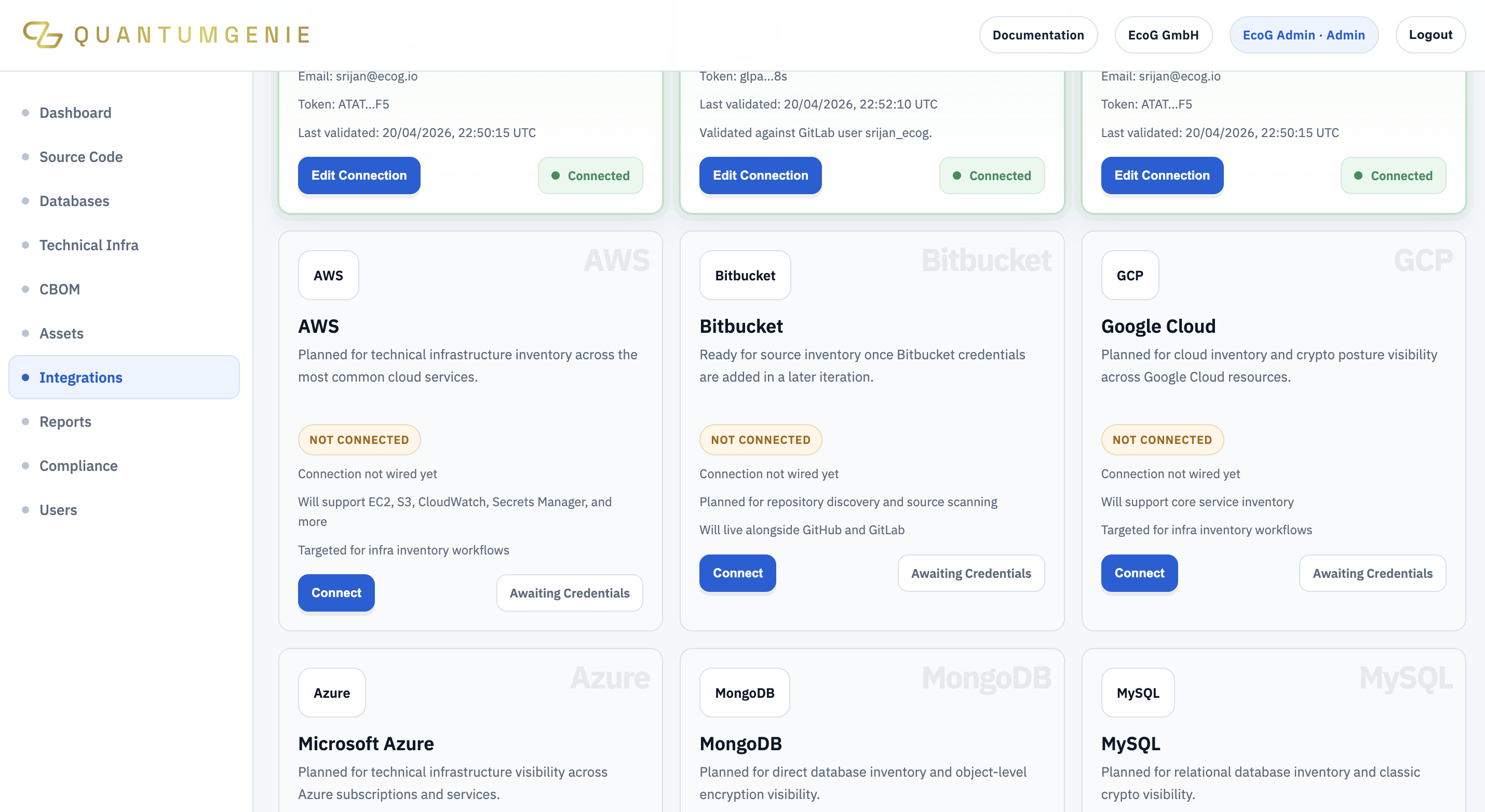
QuantumGenie directly addresses the complex enterprise needs illuminated by these insights. By automating cryptographic discovery across multiple dimensions — from certificates to source code and infrastructure — QuantumGenie lays a robust foundation for building the cryptographic inventory and component bill of materials (CBOM) critical to understanding exposure and risk.
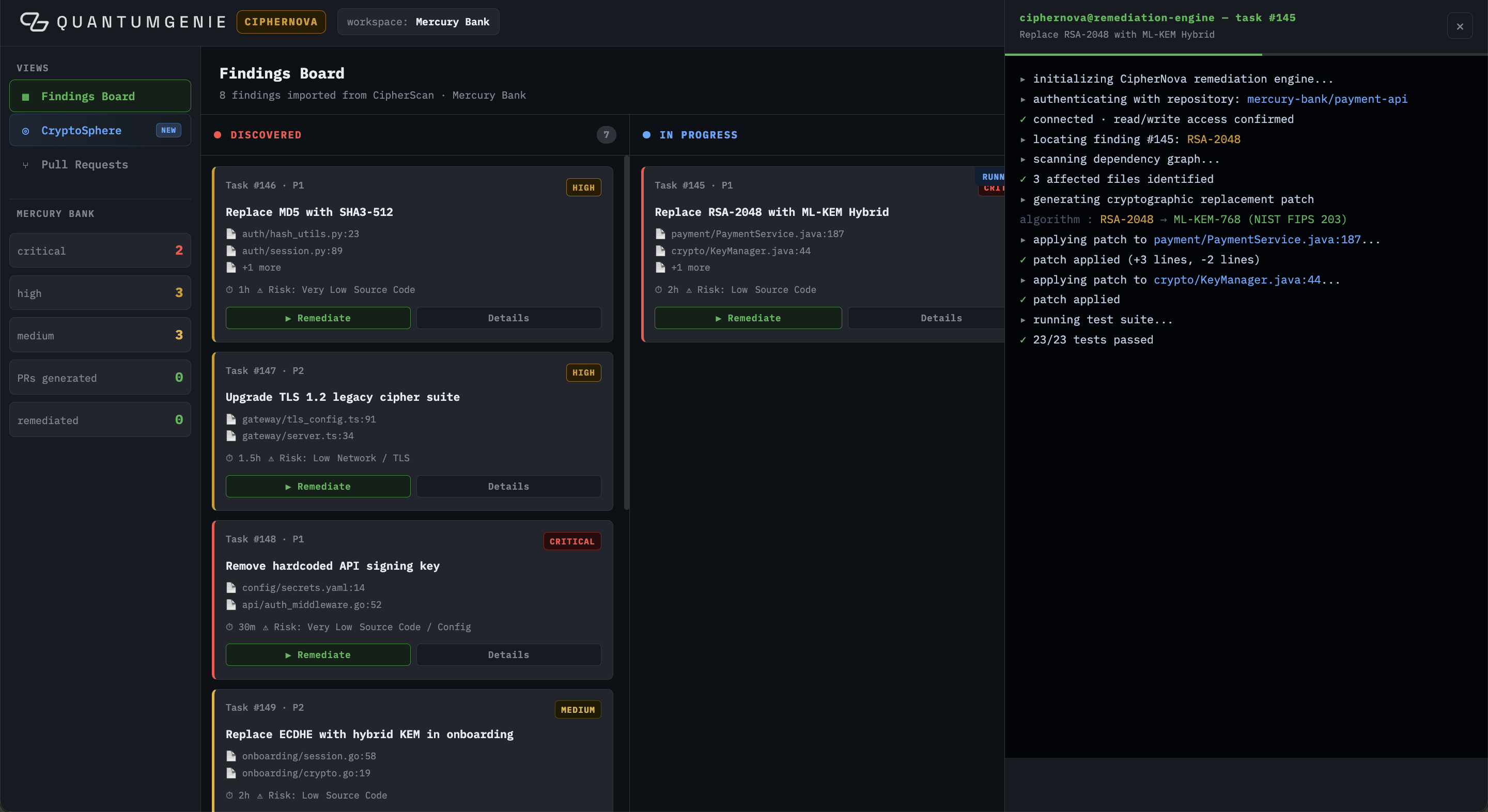
With integrated prioritization and workflow orchestration capabilities, QuantumGenie enables teams to plan and execute migration steps aligned with algorithm selection and compliance trajectories. Its approach operationalizes crypto-agility by bridging visibility with remediation controls, thus directly supporting the practical integration of PQC algorithms as mapped in the comprehensive survey. For enterprises aiming to navigate the complexity of post-quantum cryptography, QuantumGenie is a practical infrastructure backbone to move from theoretical preparedness to actionable resilience.
Frequently Asked Questions
Why is understanding different PQC algorithm families critical for enterprise migration?
Enterprises must assess performance, security assumptions, and integration complexity of each PQC algorithm family to select solutions that fit their operational environments and regulatory requirements, ensuring sustainable quantum-safe security.
How does crypto-agility help in post-quantum cryptography readiness?
Crypto-agility allows enterprises to seamlessly switch cryptographic algorithms as threats evolve or standards update, minimizing disruption and maintaining continuous security during the PQC migration journey.
Watch The Quantum Threat
Sources And Further Reading
- Post-Quantum Cryptography and Quantum-Safe Security: A Comprehensive Survey arXiv · Oct 12, 2025
- Post-Quantum Cryptography and Quantum Readiness Open Security Architecture · Feb 1, 2026
- Software-Defined Cryptography: A Design Feature of Cryptographic Agility arXiv · Apr 2, 2024