In This Article
What This Means
- The End of Static Cryptographic Migration Cycles
- Setting Standards Meets Operational Realities
- How QuantumGenie Enables Continuous Post-Quantum Crypto-Agility
The End of Static Cryptographic Migration Cycles
Recent developments illustrate a paradigm shift in how enterprises must approach cryptographic security. Traditionally, organizations have managed cryptographic migrations over multi-quarter or multi-year windows, often driven by regulatory deadlines or milestone events. The recent re-architecture of key management layers to support agent-enforced, continuous updates—highlighted by developments such as those at PKWARE—showcases a move toward continuous cryptographic agility. This new approach enables enterprises to deploy post-quantum algorithm updates dynamically without the prolonged, complex migrations that hamper responsiveness.
Enterprises face mounting pressures not only from emerging quantum computing threats but also from the need to maintain uninterrupted security posture in increasingly complex IT environments. This shift calls for a fundamental rethinking of how cryptographic keys and algorithms are managed at scale. The move toward a more flexible, agent-managed key lifecycle represents an operational imperative for security teams aiming to reduce risk exposure and operational friction.
Setting Standards Meets Operational Realities
NIST’s debut of the first post-quantum cryptography algorithms marks a critical milestone for enterprises worldwide. With standards now established, organizations must accelerate their adoption strategies to implement quantum-resistant encryption methods. Yet adopting new algorithms is only part of the challenge.
Operational realities are forcing enterprises to evolve beyond waterfall-style migration projects. Integrating continuous cryptographic updates into existing workflows requires accurate, up-to-date inventories of cryptographic assets, risk prioritization, and controlled remediation processes. Failure to do so risks facing ‘harvest now, decrypt later’ attacks while struggling to maintain compliance and governance.
Enterprise Cryptographic Migration Approaches: Traditional vs. Continuous
| Aspect | Traditional Migration Model | Continuous Crypto-Agility Model |
|---|---|---|
| Migration Timing | Multi-quarter, fixed windows | Ongoing, dynamic updates via agents |
| Risk Management | Periodic assessment at milestones | Continuous discovery with real-time prioritization |
| Operational Complexity | High, manual coordination | Automated workflows with integrated change management |
| Compliance Readiness | Point-in-time audits | Continuous compliance evidence and policy enforcement |
How QuantumGenie Enables Continuous Post-Quantum Crypto-Agility
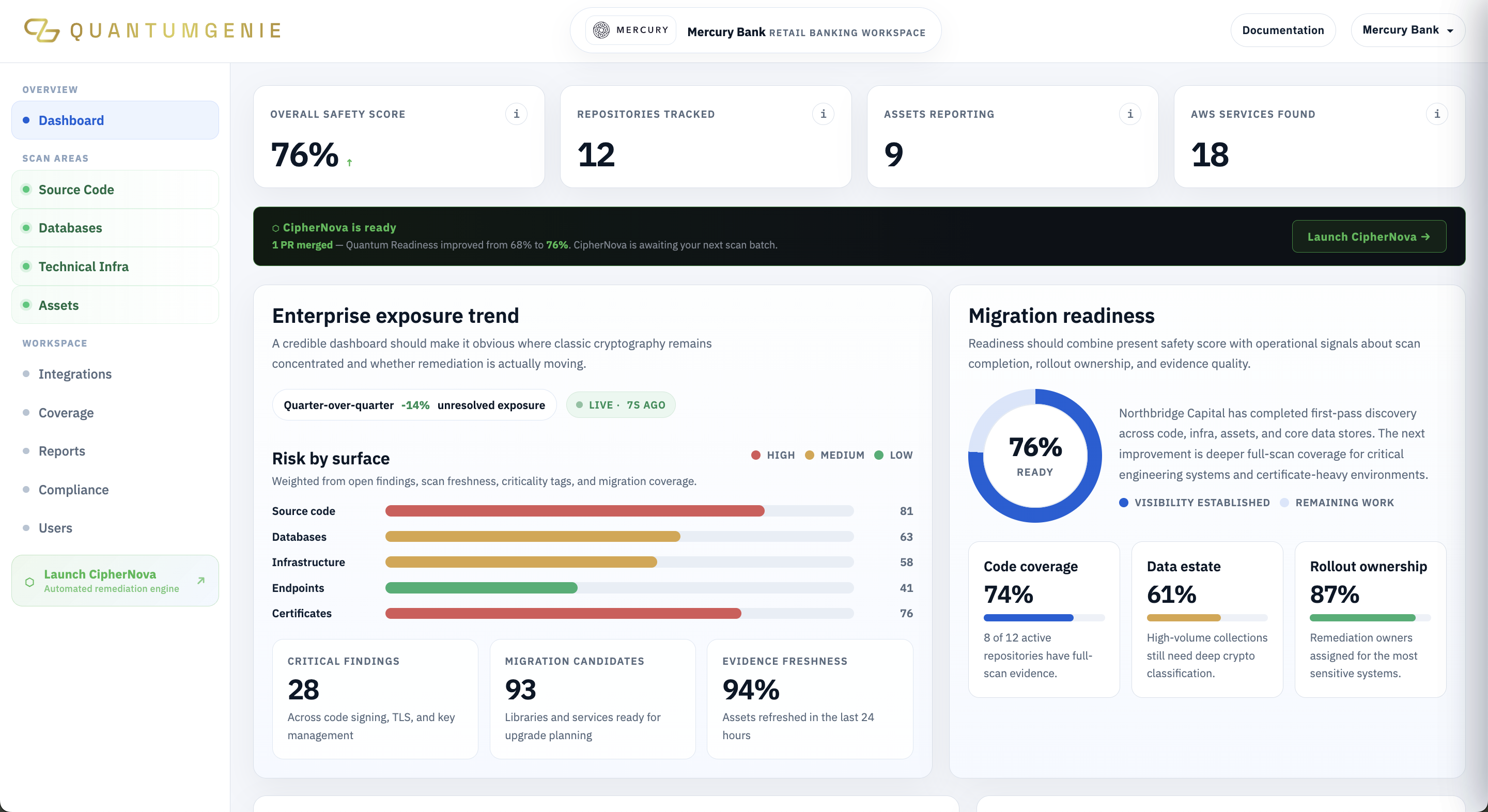
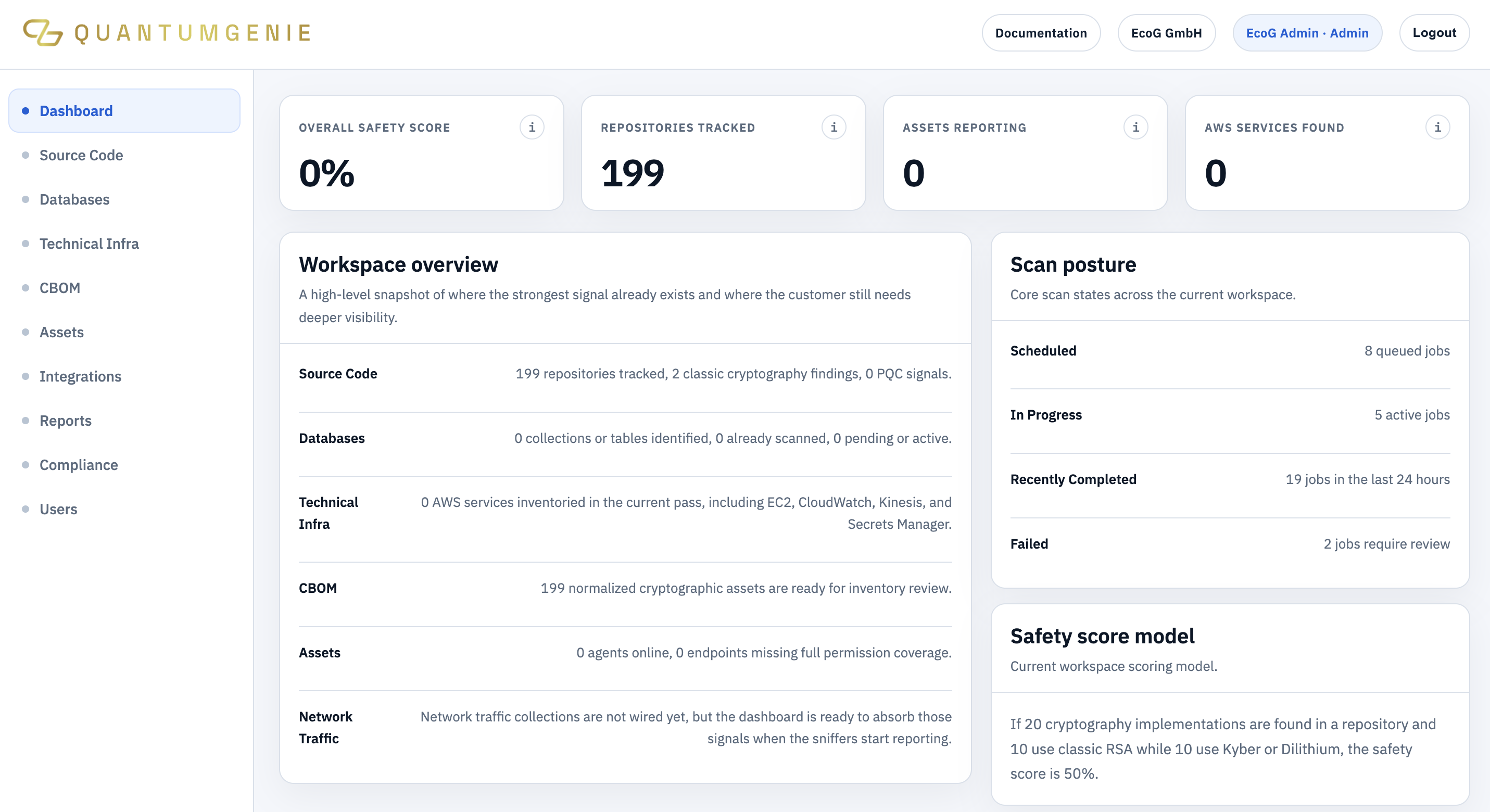
QuantumGenie addresses this evolving landscape by providing comprehensive visibility into cryptographic usage across an enterprise’s digital footprint. CipherScan enables automated discovery of cryptographic assets in websites, certificates, source code, infrastructure, and applications, forming a detailed cryptographic inventory and component bill of materials (CBOM). This inventory underpins informed prioritization of migration risks and compliance gaps.
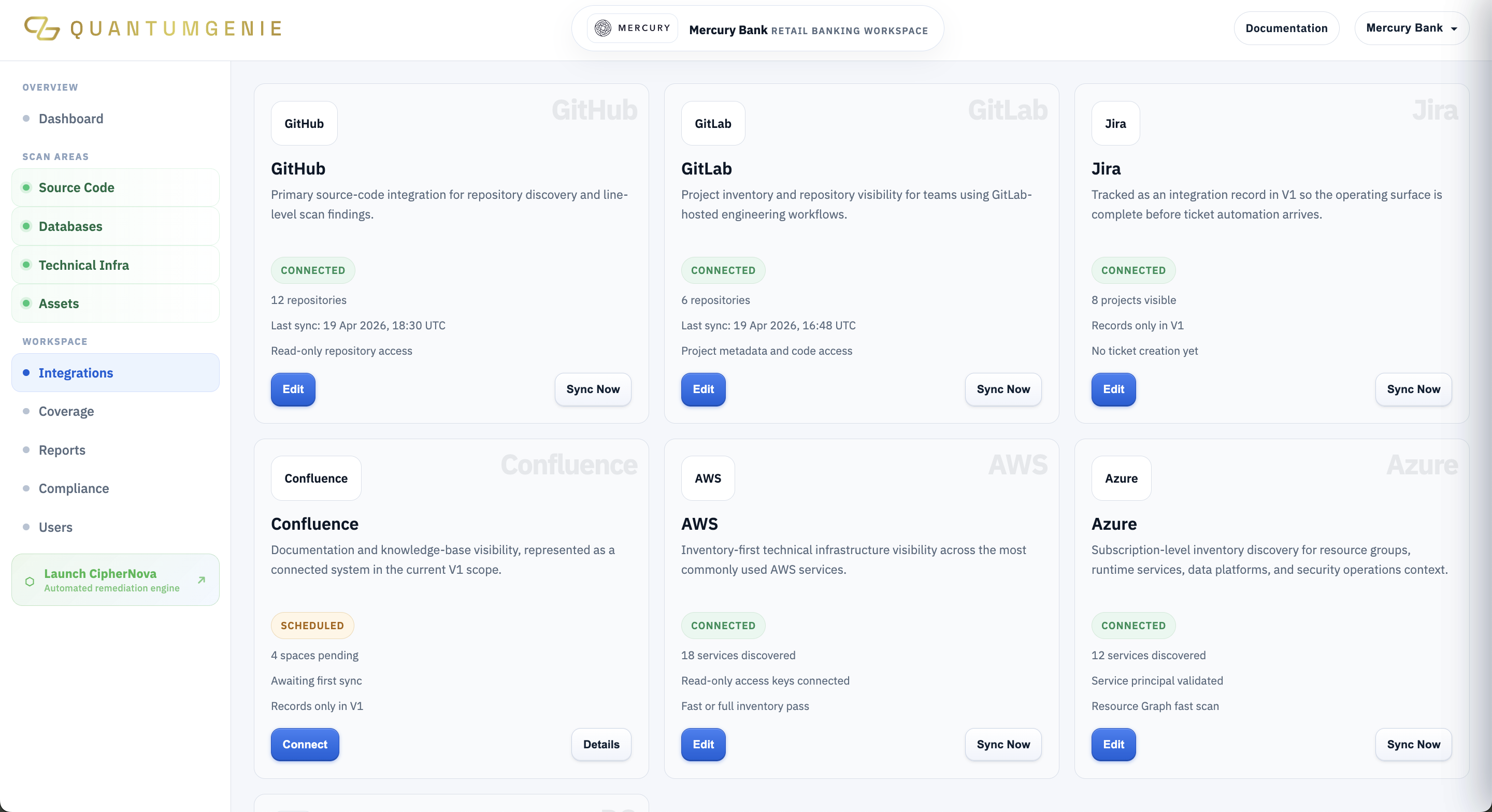
CipherNova complements this by orchestrating remediation workflows, supporting policy enforcement, change review, and verification processes critical for continuous cryptographic change. By integrating discovery, risk assessment, planning, and operational execution, QuantumGenie equips enterprises to move beyond episodic migration projects to a sustainable, continuous cryptographic agility posture that aligns with evolving post-quantum standards and key management innovations.
Frequently Asked Questions
Why is continuous cryptographic change critical for post-quantum readiness?
Continuous cryptographic change enables enterprises to respond rapidly to emerging threats, new algorithm standards, and operational risks without waiting for slow, disruptive migration cycles, ensuring sustained security and compliance.
How does a cryptographic inventory support migration to post-quantum algorithms?
A comprehensive cryptographic inventory identifies all cryptographic assets, their usage contexts, and associated risks, enabling organizations to prioritize remediation efforts and plan effective, secure migrations that align with business priorities.
Watch The Quantum Threat
Sources And Further Reading
- PKWARE Re-Engineers Key Management for Continuous Cryptographic Change PR Newswire · Jun 1, 2026
- NIST Debuts First Post-Quantum Cryptography Algorithms Nextgov/FCW · Aug 13, 2024