In This Article
What This Means
- NIST Formalizes First IBM-Derived Post-Quantum Algorithms — A Key Enterprise Signal
- Bridging Early Adoption Signals to Practical PQC Migration Needs
- Comment QuantumGenie s’intègre dans la préparation post-quantique des entreprises
NIST Formalizes First IBM-Derived Post-Quantum Algorithms — A Key Enterprise Signal
The recent announcement that NIST has officially standardized IBM-developed post-quantum cryptographic algorithms ML-KEM and ML-DSA marks a watershed moment in cryptography for enterprises. These standards form the first globally recognized, rigorously vetted cryptographic mechanisms designed to resist quantum attacks, removing much of the uncertainty around which algorithms enterprises should prioritize for migration programs.
For enterprise CISOs and architects, this development signals a concrete turning point from research and preparation to implementation and compliance readiness. Organizations now face increasing pressure to inventory cryptographic assets, evaluate risk exposure to 'harvest now, decrypt later' scenarios, and formulate pragmatic migration strategies aligned with these standards. The finalization transforms PQC from theoretical urgency to an urgent operational mandate.
Bridging Early Adoption Signals to Practical PQC Migration Needs
Supporting news such as Apple’s adoption of a post-quantum protocol for iMessage and significant funding raised by quantum-resistant cryptography vendors reflects growing commercial and operational momentum. Enterprises can read these as early market signals of impending industry-wide PQC adoption, underscoring the need for immediate readiness beyond pilot projects.
However, deciphering which cryptographic components require migration, prioritizing risk, and ensuring controlled implementation within complex IT landscapes remains a formidable challenge. These standards provide clarity on algorithm selection, but enterprises must focus on establishing comprehensive cryptographic inventories and adopting tools to orchestrate remediation workflows effectively.

Key Enterprise Implications of Post-Quantum Cryptography Standardization
| Aspect | Enterprise Concern | Operational Considerations |
|---|---|---|
| Standard Selection | Which PQC algorithms to adopt | Focus migration priority on standardized, vetted algorithms like ML-KEM and ML-DSA |
| Risk Management | 'Harvest now, decrypt later' attacks | Inventory existing cryptographic assets to identify vulnerable data |
| Migration Planning | Scope and sequencing of transition | Use automated discovery tools to build CBOM and prioritize based on risk |
| Compliance | Alignment with regulatory demands | Generate audit-ready cryptographic inventories and evidence of remediation |
Comment QuantumGenie s’intègre dans la préparation post-quantique des entreprises
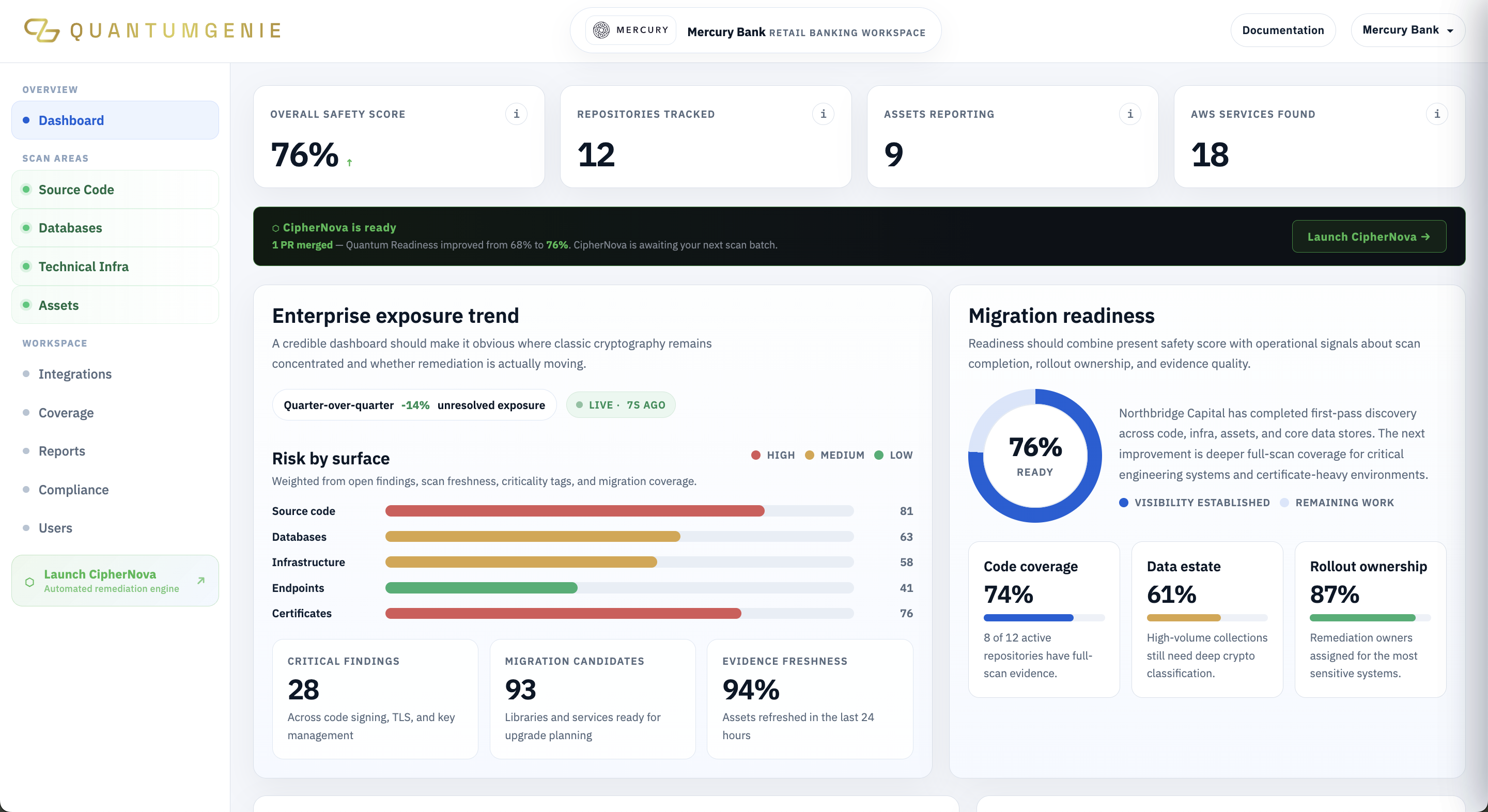
QuantumGenie sert de pierre angulaire à la préparation des entreprises face à la normalisation post-quantique. En automatisant la découverte exhaustive des actifs cryptographiques via CipherScan, il permet aux équipes de sécurité de créer un inventaire détaillé et un CBOM, indispensables pour cartographier l’exposition aux algorithmes à migrer.
Ensuite, QuantumGenie facilite la priorisation des risques et la planification des programmes de migration grâce à CipherNova, qui orchestre les flux de travail, les demandes de correction et la vérification des changements. Cette approche opérationnelle garantit une migration conforme, adaptée aux standards formalisés, tout en répondant aux exigences réglementaires croissantes. En somme, QuantumGenie concrétise la transition stratégique de la norme à l’action sur le terrain, pour une agilité cryptographique indispensable en entreprise.
Frequently Asked Questions
Why are post-quantum cryptography standards important for enterprises?
Standards provide vetted, interoperable cryptographic algorithms that enterprises can trust and adopt systematically, reducing uncertainty in migration programs and ensuring long-term data security against quantum threats.
How should enterprises start preparing for PQC migration following these standards?
Enterprises should start by conducting comprehensive cryptographic inventories to understand current exposures, then prioritize migration efforts based on risk and compliance requirements, leveraging automation tools for visibility and remediation workflow orchestration.
Watch The Quantum Threat
Sources And Further Reading
- IBM-Developed Algorithms Announced as World's First Post-Quantum Cryptography Standards Nasdaq · Aug 13, 2024
- Apple Unveils PQ3 Post-Quantum Encryption for iMessage TechTarget · Feb 21, 2024
- PQShield Secures $37M More for ‘Quantum Resistant’ Cryptography TechCrunch · Jun 20, 2024