In This Article
What This Means
- NIST's Standards: A Defining Moment for Enterprise Security
- Practical Enterprise Implications and Challenges
- How QuantumGenie Supports Post-Quantum Migration Strategy
NIST's Standards: A Defining Moment for Enterprise Security
The National Institute of Standards and Technology (NIST) has officially released the first set of post-quantum cryptographic standards, finalized after years of testing and evaluation. These include the ML-KEM, ML-DSA, and SLH-DSA algorithms designed to resist cyberattacks powered by quantum computers. This milestone offers enterprises a definitive, government-backed roadmap to future-proof their sensitive data and communications against emerging quantum threats.
For enterprise CISOs and security architects, this is more than a technical update—it is a strategic inflection point. The standards are ready for immediate adoption, signaling that post-quantum cryptography (PQC) is no longer theoretical but an urgent operational mandate. Organizations must now begin incorporating these standards into their cryptographic inventories, risk assessments, and migration plans to maintain resilient security postures.
Practical Enterprise Implications and Challenges
Integrating NIST's new standards into complex enterprise environments involves significant challenges. Cryptographic assets are dispersed across websites, applications, infrastructure, databases, and third-party integrations, creating a fragmented security landscape. Moreover, 'harvest now, decrypt later' attacks mean that data intercepted today may become decryptable once quantum computers arrive, underscoring the need for proactive cryptographic agility and readiness.
To comply with evolving regulations and to protect against cyber threats, enterprises must develop a clear cryptographic inventory—a comprehensive catalog of where and how cryptography is used. This inventory underpins the cryptographic Bill of Materials (CBOM), risk prioritization, and phased migration roadmaps that align with NIST's newly published PQC standards. Effective migration demands operational workflows to validate, remediate, and verify cryptographic transitions without disrupting business continuity.

Summary of NIST's First Post-Quantum Cryptography Standards
| Algorithm | Type | Purpose |
|---|---|---|
| ML-KEM | Key Encapsulation Mechanism | Secure key exchange resistant to quantum attacks |
| ML-DSA | Digital Signature Algorithm | Quantum-resistant digital signatures |
| SLH-DSA | Digital Signature Algorithm | Alternative post-quantum digital signature |
How QuantumGenie Supports Post-Quantum Migration Strategy
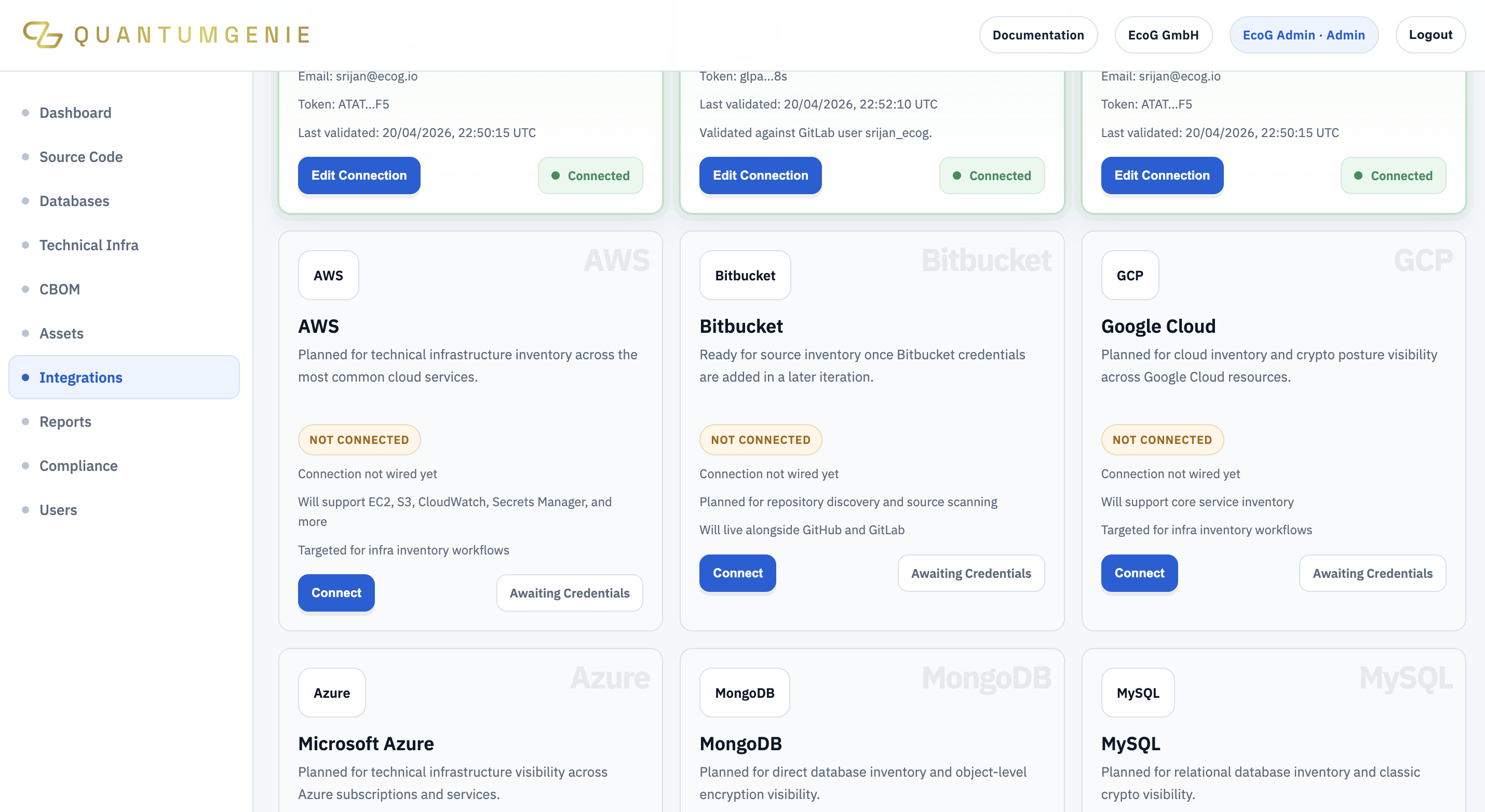
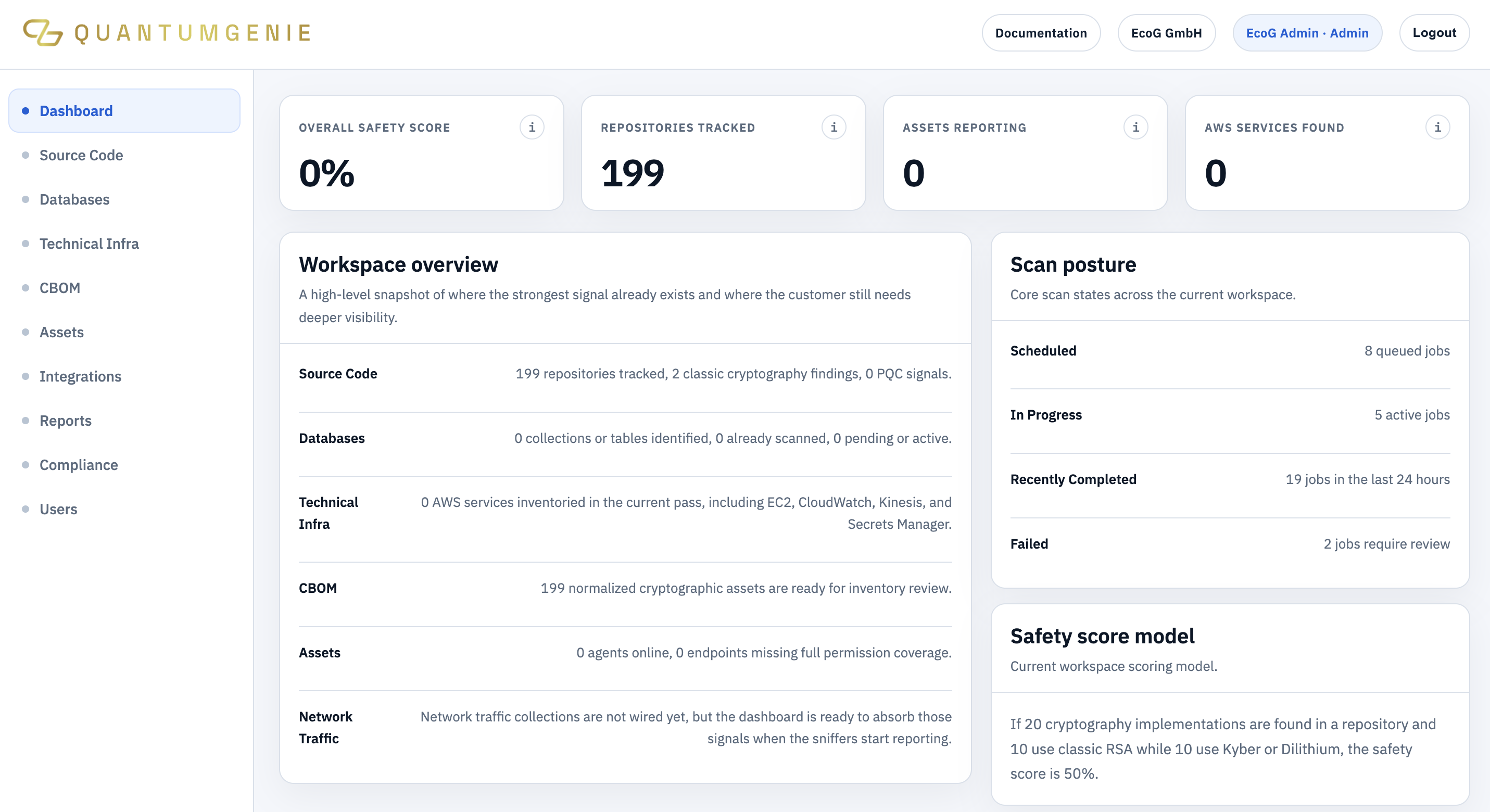
QuantumGenie addresses the enterprise need to transition smoothly to post-quantum security by providing a robust platform for cryptographic discovery, prioritization, and remediation. Using CipherScan, enterprises gain comprehensive visibility into their cryptographic assets across all digital footprints, enabling accurate CBOM creation and risk assessment aligned with NIST standards.
QuantumGenie’s workflow orchestration capabilities then facilitate prioritized remediation, policy enforcement, and migration verification, ensuring operational control and audit readiness. This positions QuantumGenie as an indispensable tool for enterprises seeking to achieve compliance and resilience in the post-quantum era by bridging the gap between standard publication and practical cryptography migration execution.
Frequently Asked Questions
Why should enterprises start migrating to NIST’s new post-quantum standards now?
Delaying migration exposes organizations to 'harvest now, decrypt later' attacks, where adversaries intercept and store encrypted data today to decrypt in the future once quantum computing capabilities mature. Early adoption mitigates this risk and aligns enterprise security with regulatory expectations.
How does a cryptographic inventory help in post-quantum migration?
A detailed cryptographic inventory identifies where cryptography is applied across enterprise systems, enabling organizations to prioritize which assets require upgrading to post-quantum algorithms. It forms the basis for a CBOM and supports compliance, risk management, and systematic migration workflows.
Watch The Quantum Threat
Sources And Further Reading
- NIST Releases First 3 Finalized Post-Quantum Encryption Standards NIST · Aug 13, 2024
- IBM-Developed Algorithms Announced as World's First Post-Quantum Cryptography Standards Nasdaq · Aug 13, 2024
- The First Post-Quantum Cryptography Standards Are Here TechCrunch · Aug 13, 2024