In This Article
What This Means
- The Urgency for Integrated Post-Quantum Cryptography in Enterprise Security
- Practical Implications for Enterprise Crypto-Agility and Migration
- How QuantumGenie Fits: Enabling Enterprise PQC Integration and Governance
The Urgency for Integrated Post-Quantum Cryptography in Enterprise Security
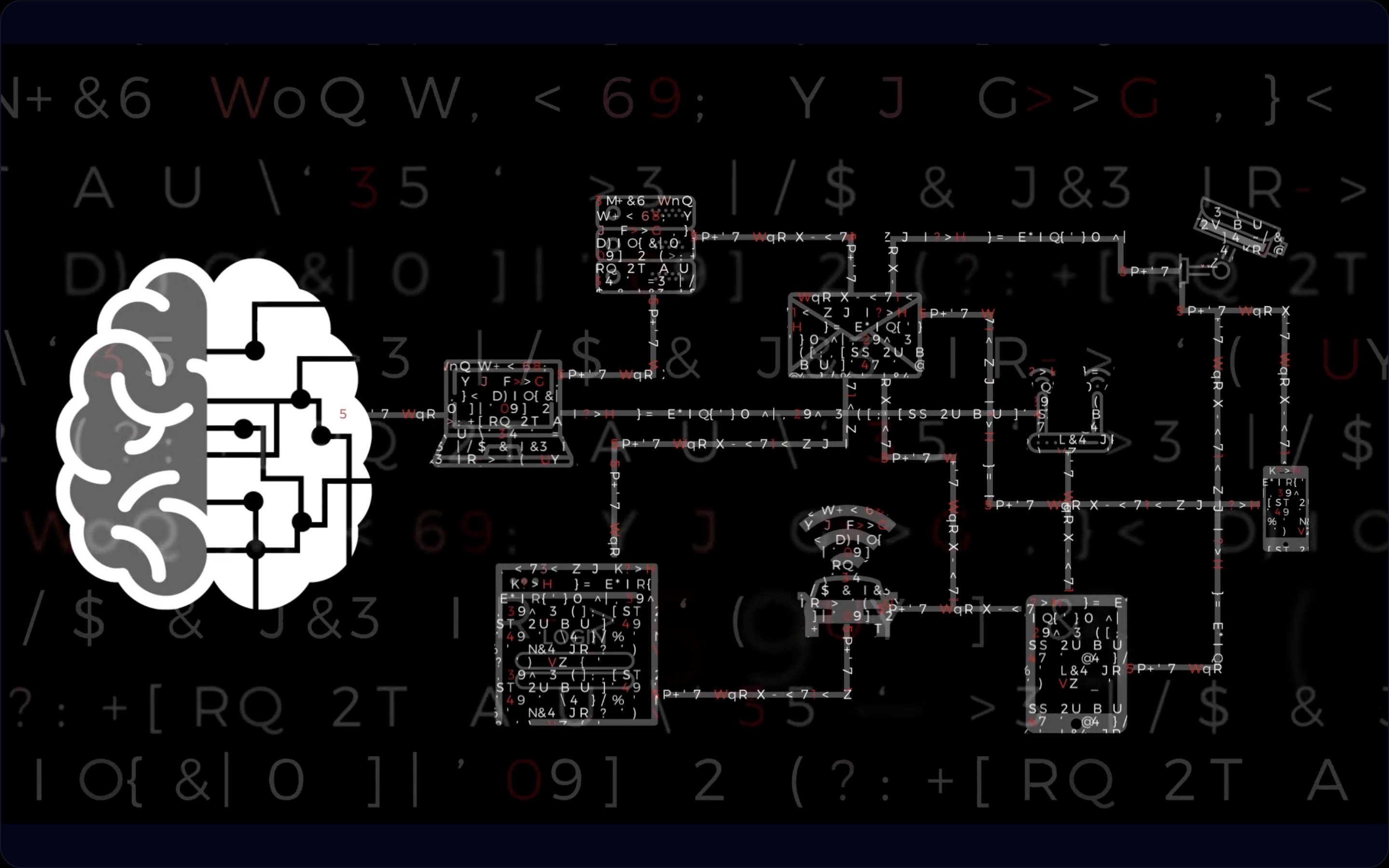
As quantum computing inches closer to disrupting classical encryption, enterprises worldwide are grappling with how to defend their critical infrastructure not only against current cyber threats but also against future quantum attacks. Vektorium's Cypher Sentinel platform exemplifies a strategic shift—integrating post-quantum cryptography with advanced cryptographic primitives and AI-driven threat detection into a single, on-premise cybersecurity solution. This reflects an emerging industry consensus that PQC must no longer be an isolated upgrade but part of a layered and resilient defense-in-depth architecture.
This integration approach acknowledges that cryptographic agility, continuous monitoring, and operational visibility are vital to withstand both classical and quantum-enabled adversaries. For CISOs and security architects, this means reevaluating legacy infrastructures, aiming for seamless PQC adoption that complements existing controls without operational disruption. The platform’s combination of 72 security engines highlights the complexity enterprises face in harmonizing cryptography with broader cybersecurity functionalities.
Practical Implications for Enterprise Crypto-Agility and Migration
Deploying post-quantum cryptography is not solely a technical exercise but a multifaceted transformation requiring granular visibility into cryptographic asset usage across varied environments. PQCrypto’s emphasis on zero disruption and continuous vulnerability dashboards underlines the necessity for robust discovery and crypto-agility frameworks. Enterprises must transition from ad hoc implementations to governed programs that continuously assess PQC effectiveness and compliance.
This layered approach highlights the importance of cryptographic inventory management and risk prioritization. Enterprises need systems that identify quantum-vulnerable keys and certificates, assess contextual risk, and orchestrate remediation plans within operational workflows. These requirements make it clear that successful PQC migration will depend on platforms capable of supporting complex lifecycle management, including compliance reporting and integration with incident response.
Key Enterprise Considerations for Post-Quantum Cryptography Integration
| Consideration | Implication for Enterprises | QuantumGenie Support |
|---|---|---|
| Cryptographic Asset Visibility | Essential to identify all points of cryptographic usage and vulnerability | CipherScan enables comprehensive discovery |
| Crypto-Agility & Risk Prioritization | Focus on assets with highest quantum threat risk for phased migration | Prioritization framework guides focused remediation |
| Operational Integration | Embed PQC changes in secure, auditable workflows | CipherNova orchestrates migration and verification workflows |
| Compliance & Reporting | Generate evidence for regulatory and audit readiness | Supports documentation and compliance tracking |
How QuantumGenie Fits: Enabling Enterprise PQC Integration and Governance
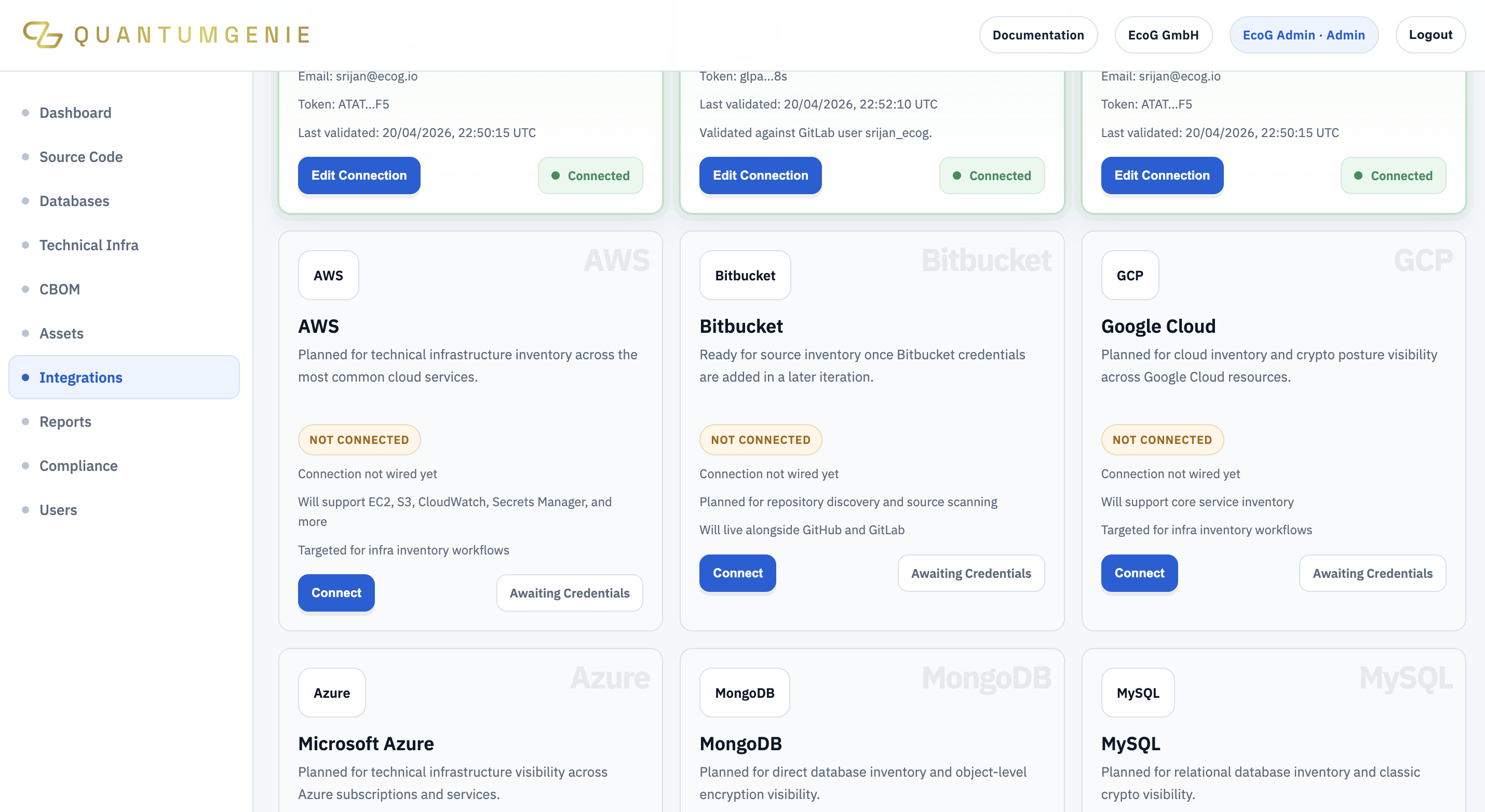
QuantumGenie addresses these core needs by providing continuous discovery of cryptographic assets through its CipherScan layer, offering enterprises a cryptographic inventory and component bill of materials (CBOM). This foundational visibility is essential before any PQC migration effort can be reliably planned and executed. QuantumGenie’s prioritization framework aligns remediation efforts with actual enterprise risk, focusing resources where quantum threats intersect with business-critical assets.
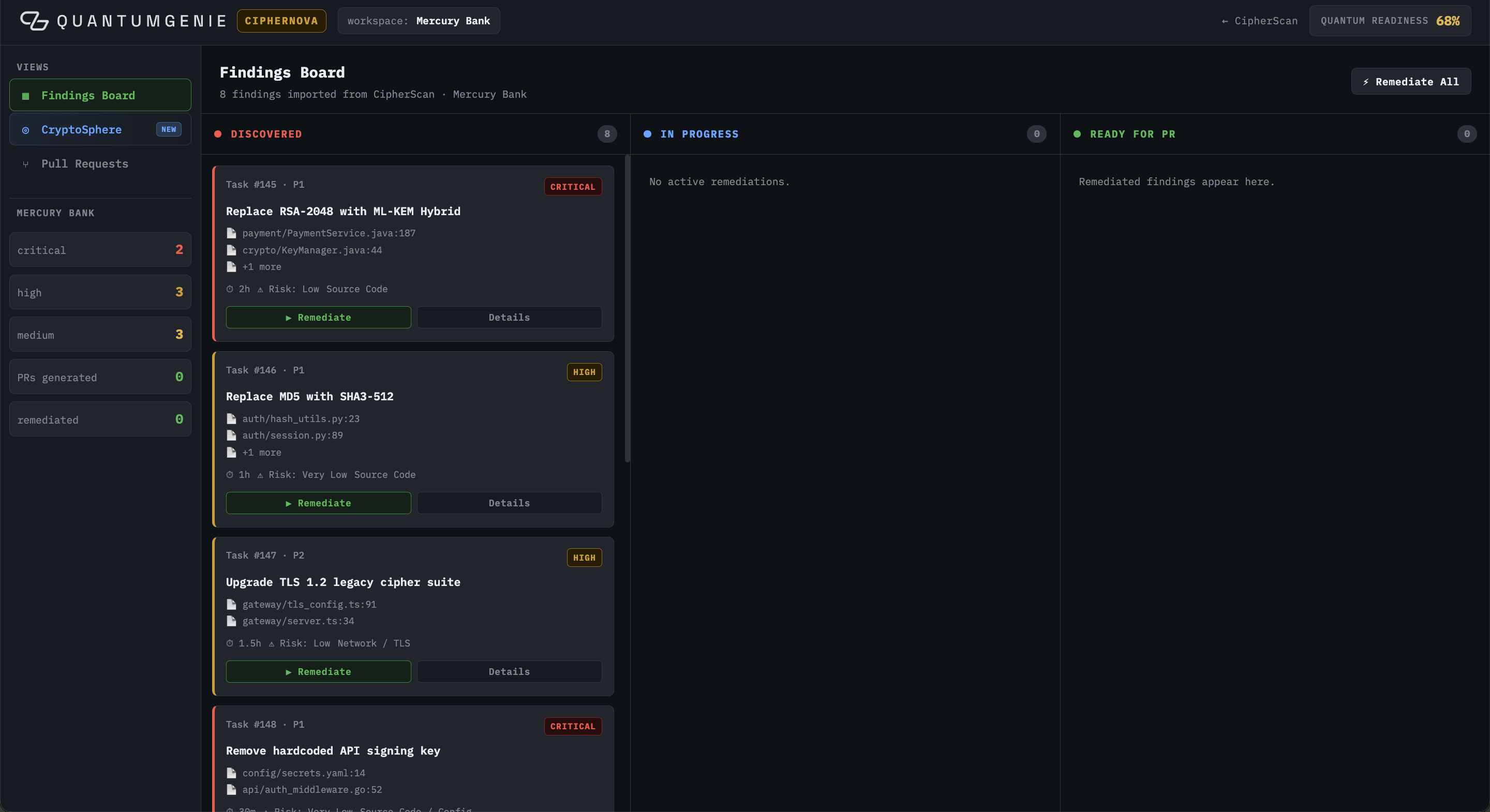
Moreover, QuantumGenie's CipherNova remediation orchestration supports practical migration workflows, including pull requests, policy exceptions, and change verifications. This operational backbone enables enterprises to embed PQC adoption within existing cybersecurity processes, ensuring crypto-agility and compliance readiness without disrupting daily operations. As seen in comprehensive platforms like Cypher Sentinel, such integration layers are indispensable for successful enterprise quantum readiness.
Frequently Asked Questions
Why is post-quantum cryptography integration critical beyond just upgrading algorithms?
Because quantum threats impact multiple layers of enterprise security, PQC must be integrated into broader cybersecurity platforms to maintain defense-in-depth, allow crypto-agility, and ensure continuous monitoring without operational disruption.
How can enterprises manage the complexity of migrating to post-quantum cryptography across diverse systems?
Enterprises need comprehensive cryptographic discovery, risk prioritization, and workflow orchestration platforms that allow phased migration with visibility and compliance tracking—capabilities that solutions like QuantumGenie deliver.
Watch The Quantum Threat
Sources And Further Reading
- Vektorium's Cypher Sentinel: Sovereign Cybersecurity Platform with Post-Quantum Capabilities Vektorium · Jul 8, 2026
- PQCrypto: Quantum-Resistant Cryptography for Enterprise Systems PQCrypto · Jul 6, 2026