In This Article
What This Means
- Understanding the U.S. PQC Regulatory Landscape
- Implications for Enterprise Cybersecurity
- How QuantumGenie Fits
Understanding the U.S. PQC Regulatory Landscape
The U.S. federal government has established a detailed framework for transitioning to post-quantum cryptography, primarily through OMB Memorandum M-23-02. This directive mandates federal agencies to identify and inventory quantum-vulnerable cryptographic systems, submit annual reports to the Office of the National Cyber Director and CISA, and plan for migration to quantum-resistant algorithms. The National Institute of Standards and Technology (NIST) has finalized standards for key encapsulation (ML-KEM), digital signatures (ML-DSA), and stateless hash-based signatures (SLH-DSA), with deprecation timelines set for existing algorithms like RSA and ECDSA by 2035.
Implications for Enterprise Cybersecurity
Enterprises must align their cybersecurity strategies with these evolving regulations to mitigate risks associated with quantum vulnerabilities. This involves conducting comprehensive cryptographic inventories, assessing exposure to quantum-vulnerable algorithms, and developing migration plans that adhere to NIST's standards and timelines. Failure to comply not only jeopardizes data security but also risks non-compliance penalties and reputational damage.
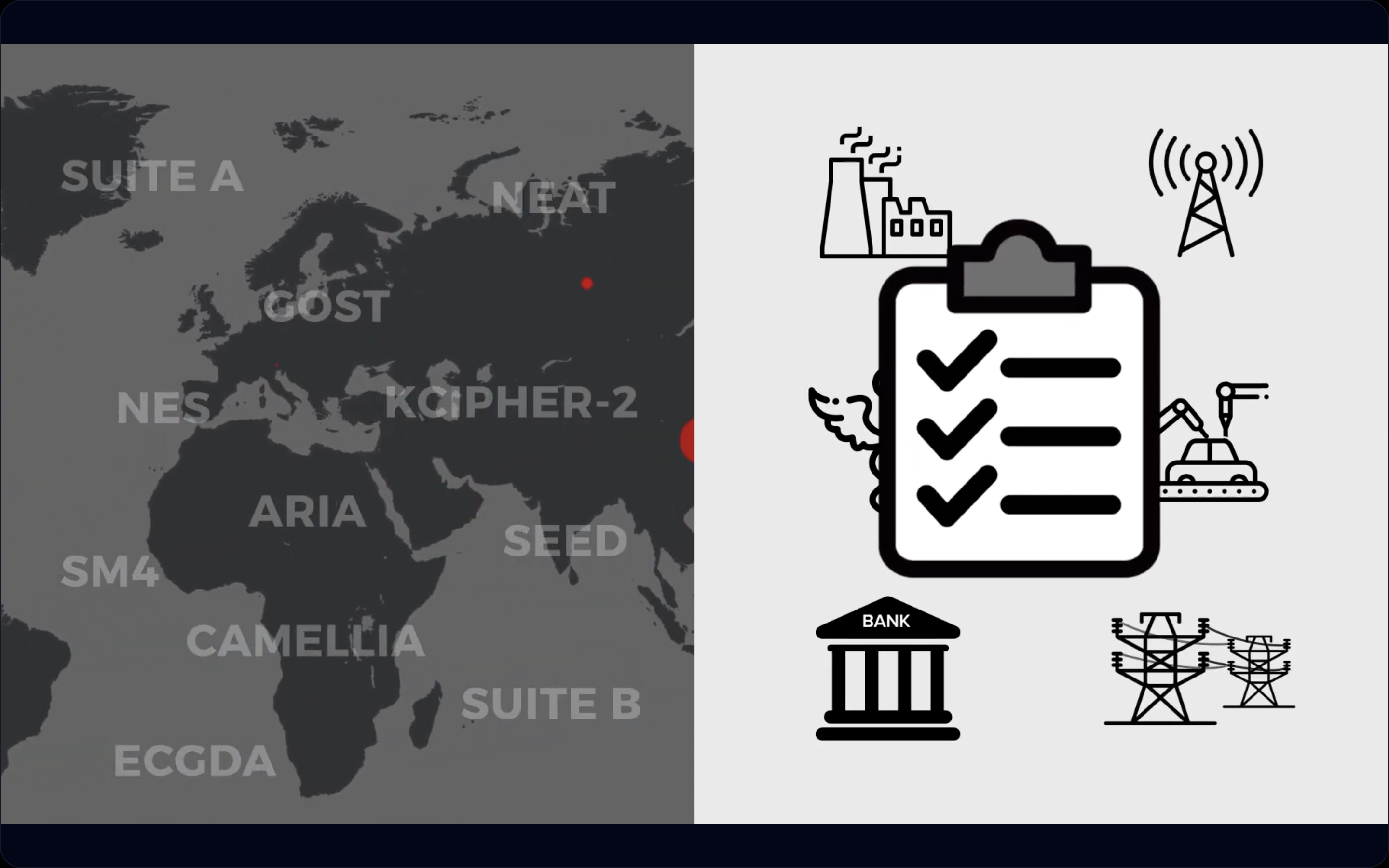
Key Components of the U.S. PQC Regulatory Framework
| Component | Description | Implications for Enterprises |
|---|---|---|
| OMB M-23-02 | Directive requiring federal agencies to inventory and plan for migration of quantum-vulnerable cryptographic systems. | Enterprises should align their cryptographic inventories and migration plans with this directive. |
| NIST Standards (FIPS 203, 204, 205) | Finalized standards for ML-KEM, ML-DSA, and SLH-DSA algorithms. | Enterprises must adopt these standards for quantum-resistant cryptographic solutions. |
| Deprecation Timelines | Deprecation of RSA and ECDSA algorithms by 2035. | Enterprises need to transition away from these algorithms before the deadline to maintain compliance. |
| Annual Reporting | Requirement for agencies to submit annual reports on quantum-vulnerable systems. | Enterprises should prepare for similar reporting requirements and ensure accurate documentation. |
How QuantumGenie Fits
QuantumGenie offers a robust solution for enterprises navigating the complexities of PQC migration. Its platform enables organizations to discover and inventory cryptographic assets across various systems, prioritize migration efforts based on risk assessments, and operationalize remediation plans. By leveraging QuantumGenie, enterprises can ensure compliance with regulatory requirements, streamline migration processes, and enhance their overall cybersecurity posture.
Frequently Asked Questions
What is OMB M-23-02 and how does it affect enterprises?
OMB M-23-02 is a directive requiring federal agencies to inventory and plan for the migration of quantum-vulnerable cryptographic systems. Enterprises should align their cryptographic inventories and migration plans with this directive to ensure compliance and security.
How can QuantumGenie assist in PQC migration?
QuantumGenie provides a platform that enables enterprises to discover and inventory cryptographic assets, assess quantum vulnerability, and develop migration plans, facilitating a smooth transition to quantum-resistant cryptographic solutions.
Watch The Quantum Threat
Sources And Further Reading
- The Complete US Post-Quantum Cryptography (PQC) Regulatory Framework in 2026 PostQuantum · Jan 15, 2026
- Post-Quantum Cryptography Migration Guide 2026: NIST Standards Decryption Digest · May 14, 2026
- Post-Quantum Cryptography: Enterprise Guide to Quantum-Safe Security Cyber Technology Insights · May 14, 2026