In This Article
What This Means
- A New Era: The Finalization of Post-Quantum Cryptography Standards and Mandates
- Enterprise Implications and Strategic Migration Challenges
- How QuantumGenie Fits into the Post-Quantum Migration Landscape
A New Era: The Finalization of Post-Quantum Cryptography Standards and Mandates
The National Institute of Standards and Technology (NIST) has finalized its first generation of post-quantum cryptography standards, marking a crucial milestone toward securing digital assets against the looming threat of quantum computers. Complementing this, the National Security Agency (NSA) has set concrete deadlines requiring national security systems to transition to quantum-safe algorithms. These developments are not confined to government use; they are a clear market signal demanding that enterprises rethink and rebuild their cryptographic foundations before the quantum era renders current algorithms obsolete.
Enterprises now face what experts estimate as a $15 billion migration effort involving comprehensive auditing, upgrading, and testing of cryptographic implementations across their entire infrastructure. This regulatory trigger compels organizations to move beyond theoretical discussions and initiate tangible, strategic migration programs to protect sensitive data and maintain compliance. Ignoring this mandate could mean facing not only escalating cyber risks but also regulatory and contractual penalties.
Enterprise Implications and Strategic Migration Challenges
This scale of migration impacts every layer of enterprise cybersecurity — from web servers, certificates, and VPNs to databases and cloud services. The challenge lies in first gaining full visibility of where cryptography is embedded, how it operates, and which data and systems depend on it. Without a detailed cryptographic inventory and an understanding of criticality and risk, enterprises risk inefficient or partial migrations, exposing themselves to gaps that quantum adversaries can exploit.
Further complicating the landscape, accelerated quantum computing progress—highlighted by shifting corporate roadmaps such as Microsoft's updated Quantum Safe Program timeline—means the window for preparation is tightening. Enterprises must also consider emerging post-quantum-enabled ransomware and evolving threat scenarios. As vendors start integrating post-quantum encryption into core products, like storage systems and communications infrastructure, enterprise teams must rigorously plan for integration, compatibility, and compliance verification.

Post-Quantum Migration Key Considerations for Enterprises
| Aspect | Enterprise Challenge | QuantumGenie Capability |
|---|---|---|
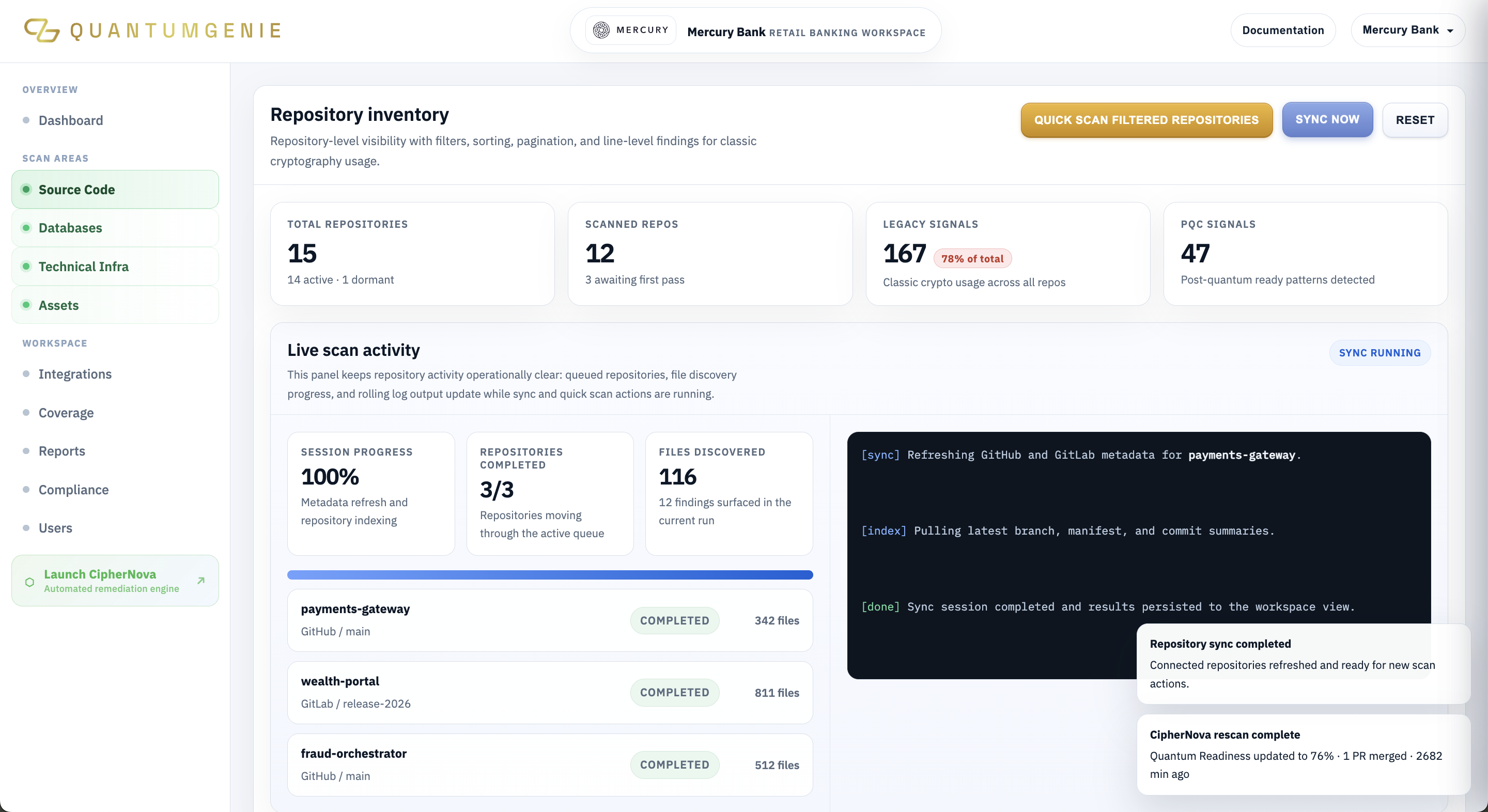
| Visibility | Locating all cryptographic assets scattered across environments | Comprehensive discovery with CipherScan |
| Prioritization | Assessing cryptographic risk and urgency for migration | Risk scoring and CBOM generation |
| Compliance | Meeting NSA deadlines and regulatory requirements | Audit trails and evidence for certification |
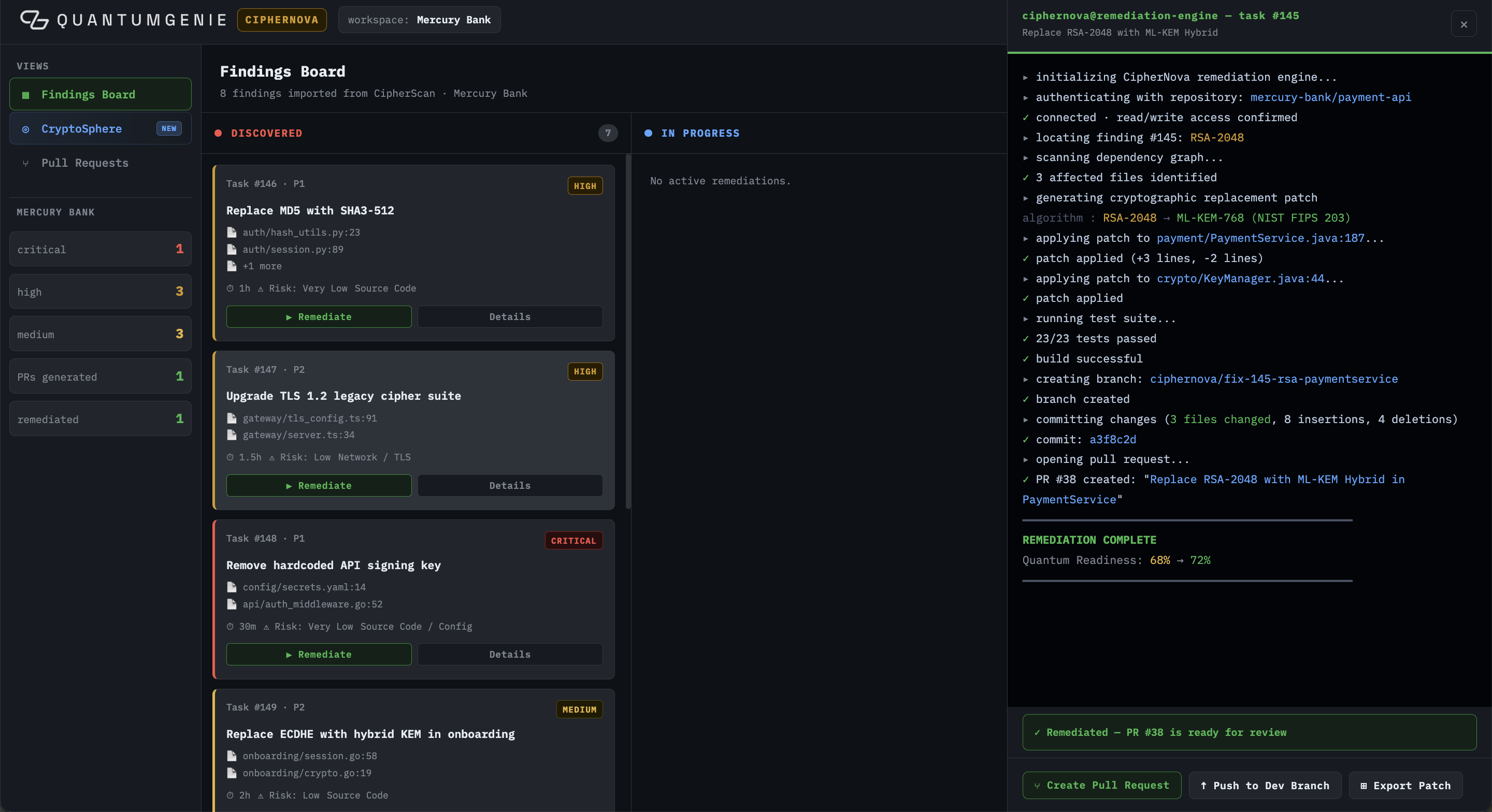
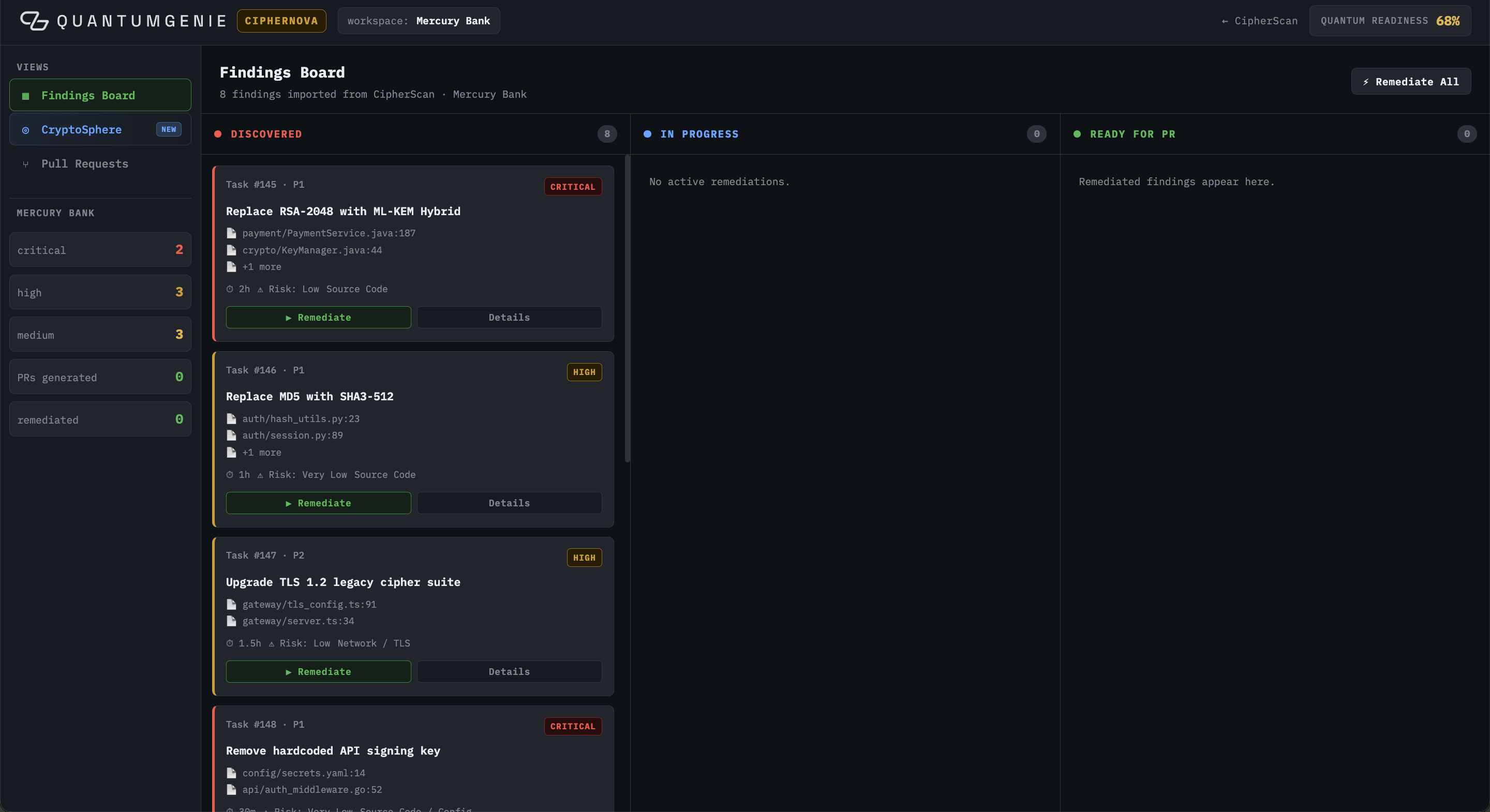
| Migration Execution | Managing upgrades, change workflows, exceptions | CipherNova workflows with review and verification |
How QuantumGenie Fits into the Post-Quantum Migration Landscape
QuantumGenie is designed precisely to address these enterprise challenges. Its CipherScan module provides comprehensive cryptographic discovery and inventory capabilities, identifying all instances of cryptography across websites, certificates, source code, and infrastructure. This enables the creation of a cryptographic bill of materials (CBOM), empowering security teams to understand their exposure thoroughly.
With this foundational insight, QuantumGenie helps enterprises prioritize migration risk and build agile remediation plans aligned with emerging standards and NSA deadlines. Its operational workflow support, including pull requests, change review workflows, and policy enforcement, ensures that post-quantum migration is not just a one-time event but a governed, ongoing process.
Frequently Asked Questions
Why is now the crucial time for enterprises to start post-quantum migration?
With NIST finalizing standards and NSA imposing deadlines, quantum-capable adversaries could compromise current encryption sooner than expected, making early inventory, risk assessment, and migration essential to avoid data breaches and compliance failures.
How does a cryptographic inventory support a smooth migration to post-quantum algorithms?
An accurate inventory reveals all cryptographic dependencies, enabling prioritization of migration efforts, resource allocation, and continuous governance, thus preventing overlooked vulnerabilities and supporting compliance with evolving standards.
Watch The Quantum Threat
Sources And Further Reading
- The $15 Billion Post-Quantum Migration: NIST Standards Are Final, NSA Deadlines Are Set, and Enterprise Cybersecurity Is About to Be Rebuilt from the Ground Up PR Newswire · Mar 31, 2026
- Microsoft Updates Quantum Safe Program Timeline to 2029 Amid Accelerated Quantum Computing Developments PC Gamer · Jul 6, 2026
- NetApp Security Updates Target Future Quantum Threats TechTarget · Apr 29, 2025