In This Article
What This Means
- Hardware Acceleration Signals Enterprise PQC Implementation Maturity
- Migration Challenges and Cryptographic Agility Remain Key
- How QuantumGenie Addresses Hardware-Embedded PQC and Migration Complexity
Hardware Acceleration Signals Enterprise PQC Implementation Maturity
Post-quantum cryptography protocols are computationally demanding, and enterprises must prepare for their integration into existing infrastructure without sacrificing performance. The introduction of PQPerform-Flex—a high-performance, agile accelerator for ML-KEM and ML-DSA PQ algorithms compatible with modern SoC ASICs and FPGAs—represents a vital step toward viable hardware-level PQC deployment.
This development highlights how hardware acceleration can mitigate PQC’s computational overhead, making the cryptographic transition operationally feasible for large-scale enterprise environments. As hardware vendors and chipset makers begin embedding such accelerators, enterprises need visibility and management capabilities to track cryptographic usage across hardware, firmware, and software layers.
Migration Challenges and Cryptographic Agility Remain Key
Despite hardware advances, the foundational challenges of migrating to post-quantum cryptography persist. Legacy systems, diverse cryptographic implementations, and standardization uncertainties require enterprises to embrace cryptographic agility—flexibility to swap cryptographic primitives dynamically without disrupting operations.
The 2019 arXiv research paper on post-quantum migration pitfalls underscores the necessity for structured inventory and migration planning. Enterprises must identify cryptographic assets, assess readiness, and govern the shift in tightly controlled phases to avoid security gaps or accidental exposure. This research context reinforces that hardware acceleration alone is insufficient without comprehensive cryptographic governance.
Key Elements in Enterprise PQC Migration with Hardware Acceleration
| Aspect | Description | Enterprise Implication |
|---|---|---|
| Hardware Acceleration | Dedicated PQC algorithm acceleration integrated at SoC/ASIC/FPGA level | Improves performance but requires inventory and management across hardware and software stack |
| Cryptographic Agility | Ability to switch cryptographic algorithms without significant disruption | Mandatory given evolving PQC standards and deployments |
| Cryptographic Inventory | Comprehensive mapping of all cryptographic components, including embedded hardware | Foundation for risk prioritization and remediation planning |
| Migration Planning | Structured phased approach to replacing vulnerable cryptography | Reduces operational risks and supports compliance |
How QuantumGenie Addresses Hardware-Embedded PQC and Migration Complexity
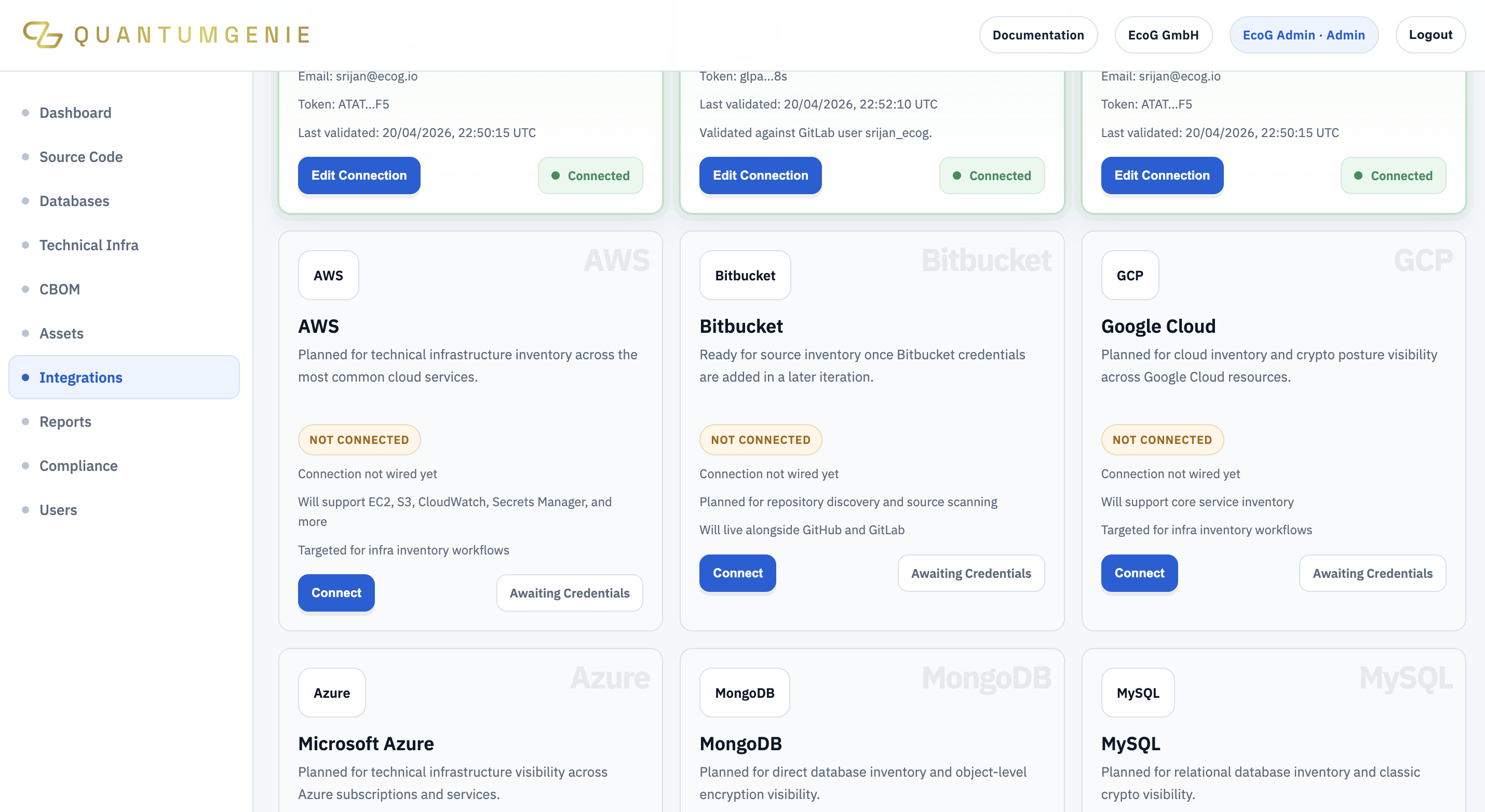
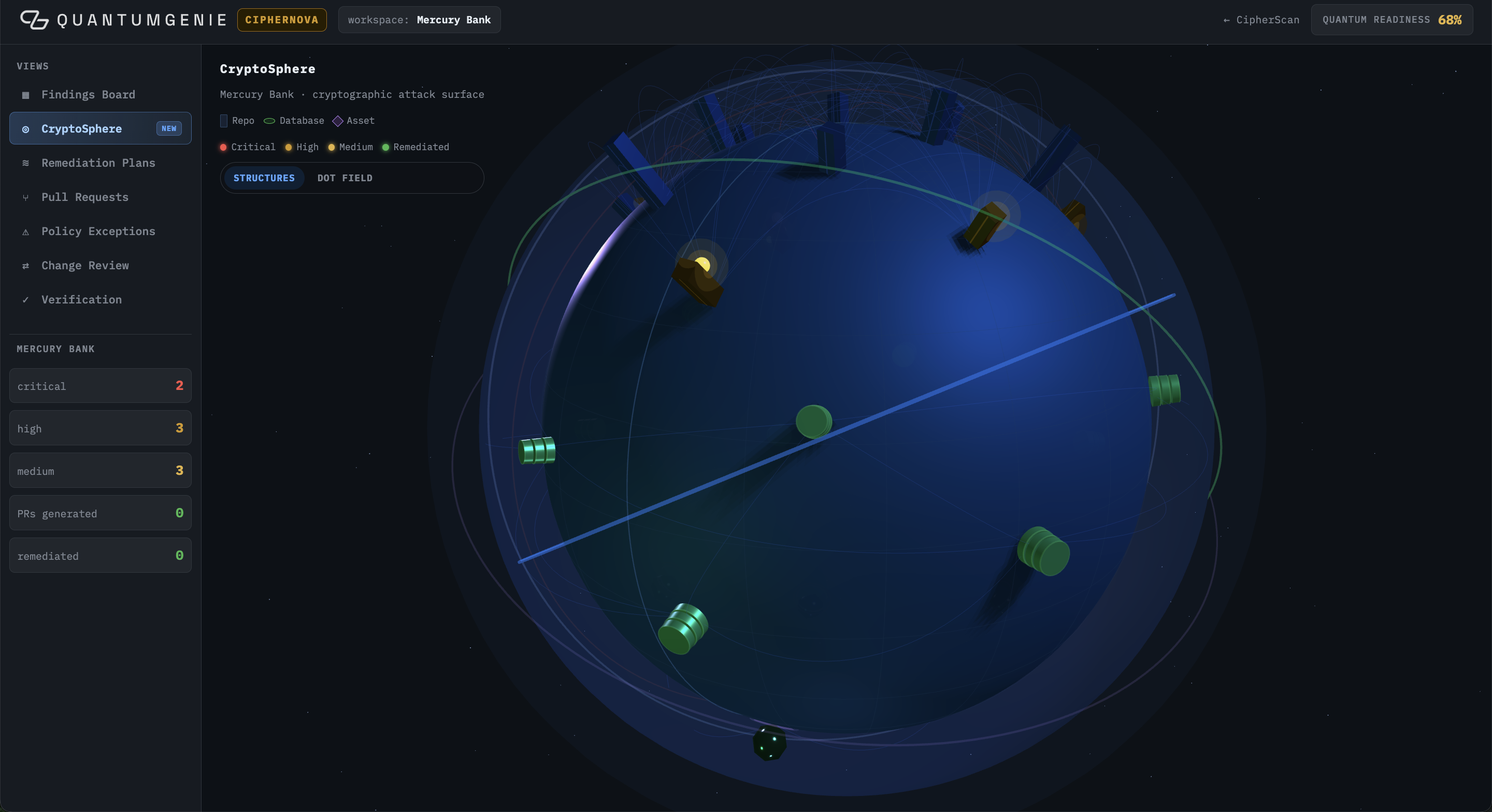
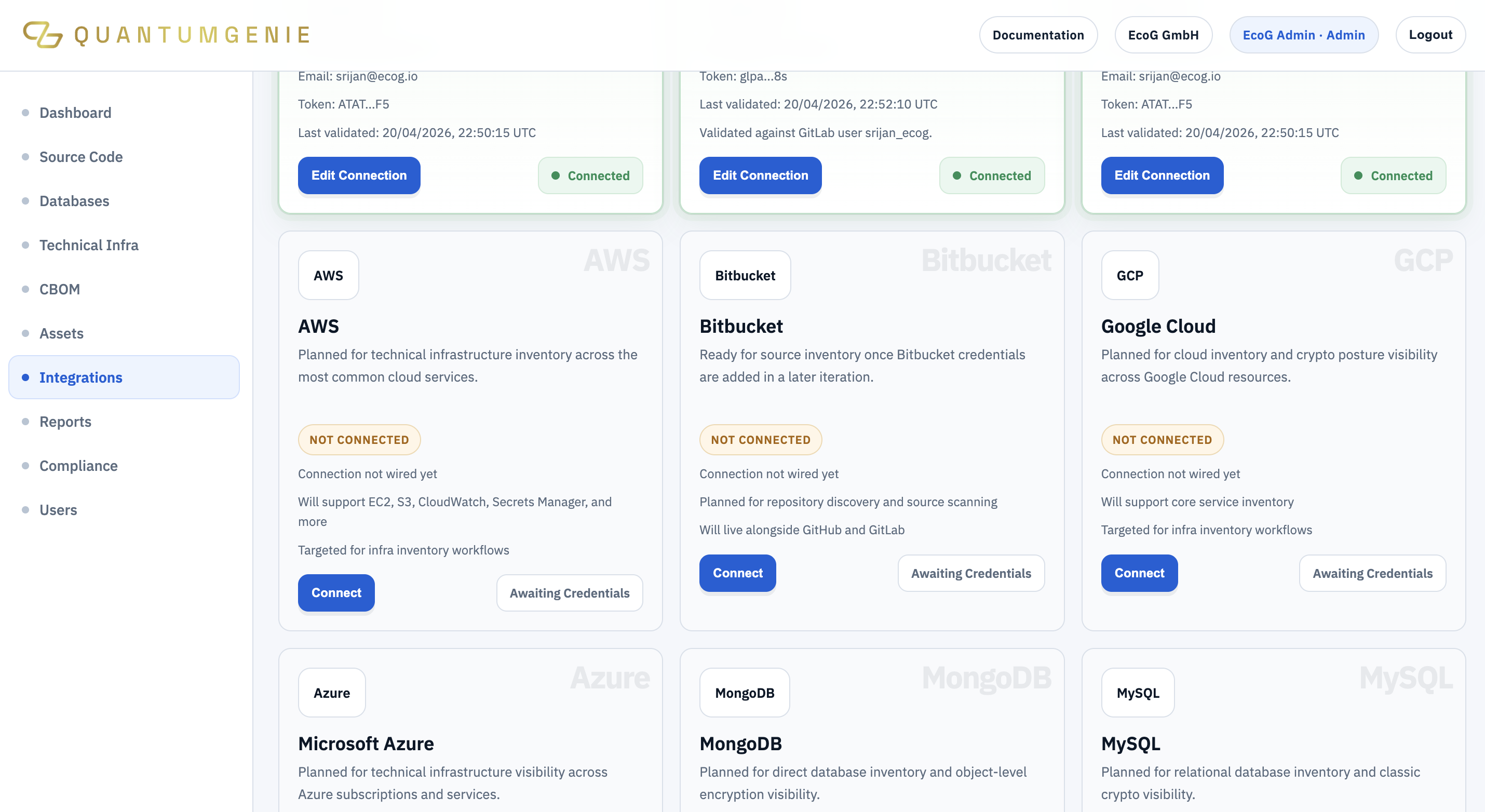
QuantumGenie offers enterprises a practical framework to discover, inventory, and prioritize cryptographic elements spanning software, hardware, certificates, and integrated systems. With accelerators like PQPerform-Flex embedding PQ algorithms in hardware, visibility into device-level cryptographic deployment becomes critical.
QuantumGenie’s CipherScan layer detects cryptographic use, while CipherNova orchestrates remediation workflows, facilitating secure, auditable management of migration plans that include hardware changes. This capability is essential for maintaining compliance, managing risks, and operationalizing cryptographic agility as enterprises upgrade legacy infrastructure to support next-generation encryption techniques.
Frequently Asked Questions
Why is hardware acceleration critical for post-quantum cryptography in enterprises?
Post-quantum cryptographic algorithms generally require more computational resources than classical ones. Hardware acceleration embedded in SoCs or FPGAs can provide the necessary performance improvements to make PQC deployment operationally practical without degrading system responsiveness.
How does QuantumGenie help enterprises manage the complexity of PQC hardware deployment?
QuantumGenie enables enterprises to discover and catalog cryptographic assets across software and hardware components, prioritize migration risks, and orchestrate remediation workflows. This ensures comprehensive governance over the deployment of hardware-accelerated PQC and supports compliance and operational continuity.
Watch The Quantum Threat
Sources And Further Reading
- PQPerform-Flex PQShield · Jul 21, 2026
- Identifying Research Challenges in Post Quantum Cryptography Migration and Cryptographic Agility arXiv · Sep 16, 2019