In This Article
What This Means
- Why a Structured PQC Migration Roadmap Matters
- Implementing the Roadmap Amid Enterprise Realities
- How QuantumGenie Simplifies Enterprise PQC Migration
Why a Structured PQC Migration Roadmap Matters
Quantum advances threaten to undermine current cryptographic standards, compelling enterprises to initiate proactive migration to post-quantum cryptography (PQC). Absent a clear plan, organizations risk operational disruption, compliance failure, and exposure to future decryption attacks. A detailed nine-phase roadmap — from initial inventory and risk assessment to validation and ongoing agility — provides a practical framework to methodically replace legacy algorithms without sacrificing service continuity.
The roadmap stresses early cryptographic asset discovery and creation of a Cryptographic Bill of Materials (CBOM). This inventory underpins prioritization at scale, enabling focused remediation on high-impact systems first. Phased deployment allows enterprises to adapt incrementally while validating each step’s effectiveness. Such discipline addresses the multifaceted challenges posed by sprawling infrastructures, heterogeneous technology stacks, and regulatory mandates shaping the PQC timeline.
Implementing the Roadmap Amid Enterprise Realities
Enterprises must reconcile the roadmap’s ideal phases with operational constraints, including asset visibility gaps, resource limitations, and complex application dependencies. Automated discovery tools are critical to achieve comprehensive cryptographic inventories across certificates, source code, infrastructure, and integrations. Prioritization aggregates risk factors—algorithm vulnerabilities, data sensitivity, and compliance deadlines—to guide migration sequencing rationally.
Moreover, compliance readiness demands consistent evidence of discovery, risk management, and remediation progress for audits. Reporting functions tied to the migration roadmap enable transparency for executive oversight and regulatory bodies alike. Consequently, operationalizing the roadmap requires cohesive tooling to track progress, orchestrate code changes, enforce policy exceptions, and verify security post-migration without slowing business velocity.
Key Phases in the Post-Quantum Cryptography Migration Roadmap
| Phase | Description | Enterprise Impact |
|---|---|---|
| 1. Inventory Discovery | Comprehensive cryptographic asset identification and CBOM creation | Foundation for risk prioritization and planning |
| 2. Risk Assessment | Evaluate cryptographic risk and compliance requirements | Targets resources to critical vulnerabilities |
| 3. Strategy & Roadmap Development | Define phased migration plan aligned to business priorities | Ensures controlled, manageable transition |
| 4. Pilot Deployment | Test PQC implementation in controlled environment | Validates approach and tooling |
How QuantumGenie Simplifies Enterprise PQC Migration
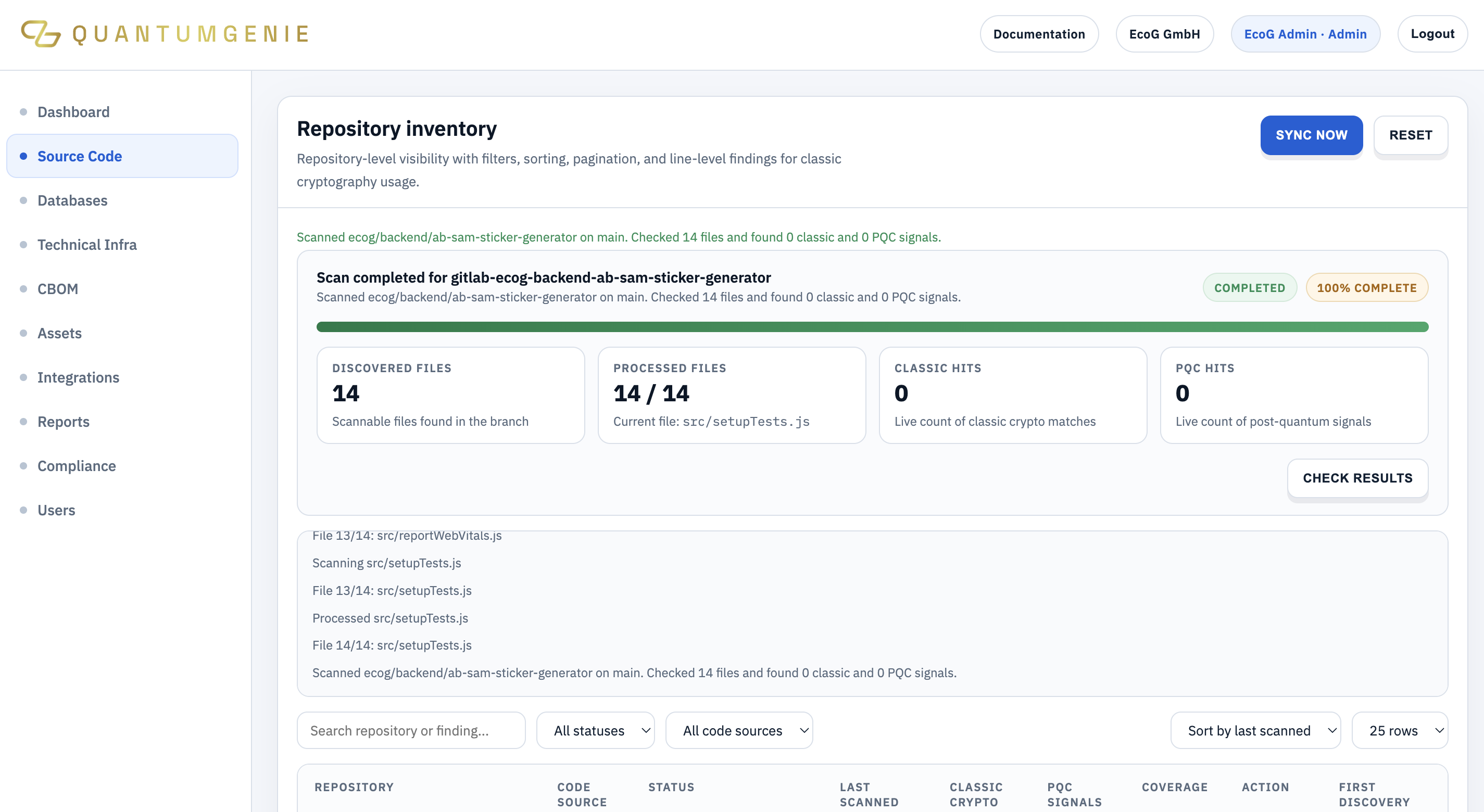
QuantumGenie addresses the core challenge illuminated by the PQC migration guide: establishing and sustaining an enterprise-wide cryptographic inventory that drives intelligent prioritization and streamlined operational workflows. Its CipherScan module discovers cryptographic assets spanning websites, certificates, source code repositories, databases, applications, and integrations, building the foundational CBOM needed for informed decision-making.
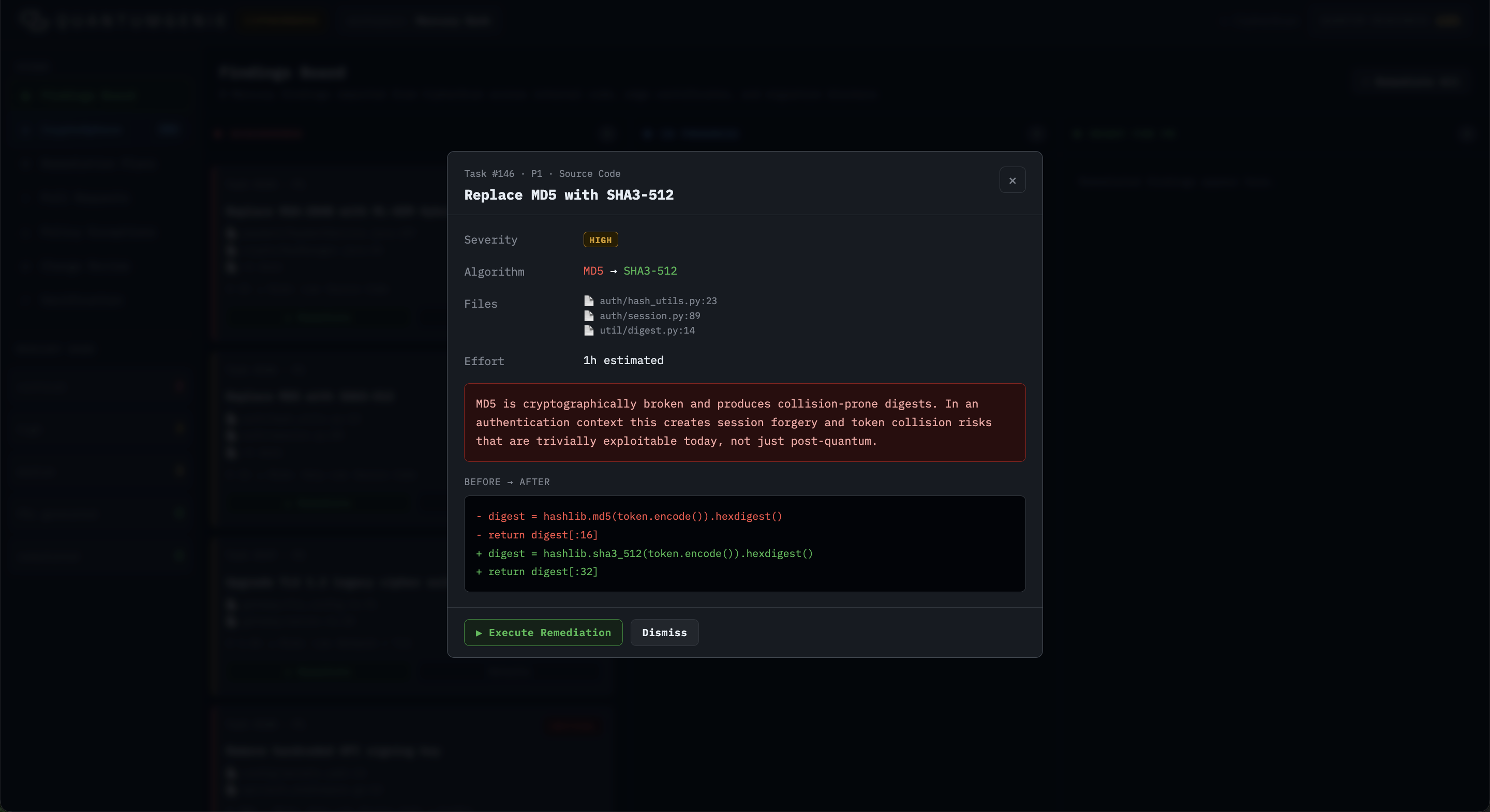
QuantumGenie’s CipherNova platform complements discovery by orchestrating remediation plans, pull requests, policy exception handling, and verification workflows. This practical approach converts the strategic nine-phase roadmap into action, enabling enterprises to plan phased PQC deployment, track compliance readiness, and operationalize ongoing cryptographic agility. In essence, QuantumGenie turns the PQC migration roadmap from theoretical strategy into scalable, manageable reality for today’s complex enterprise ecosystems.
Frequently Asked Questions
Why is cryptographic asset discovery crucial in PQC migration?
Identifying all cryptographic assets across enterprise systems provides the comprehensive visibility necessary to assess risk, prioritize remediation, and plan systematic migration to quantum-safe algorithms.
How does phased deployment minimize risk during PQC migration?
Phased deployment enables incremental replacement of vulnerable cryptography, allowing enterprises to validate changes carefully, address operational issues early, and reduce business disruption.
Watch The Quantum Threat
Sources And Further Reading
- PQC Migration Guide: A Nine-Phase Roadmap to Quantum-Safe Systems Encryption Consulting · Jun 29, 2026
- QuSecure's Integrated Platform for Quantum Readiness QuSecure · Jul 10, 2026