In This Article
What This Means
- Understanding the Nine-Phase PQC Migration Roadmap
- Emerging Enterprise Tools and Standards Supporting PQC Migration
- How QuantumGenie Fits into the PQC Migration Landscape
Understanding the Nine-Phase PQC Migration Roadmap
As quantum computing advances, enterprises must transition from traditional cryptographic algorithms susceptible to quantum attacks to quantum-resistant alternatives. The detailed nine-phase roadmap recently outlined by Encryption Consulting provides a practical framework that begins with comprehensive discovery of cryptographic assets. It stresses the importance of building an exhaustive cryptographic inventory, which includes not only certificates and software but extends deep into application integrations, databases, and infrastructure components.
Following discovery, the roadmap moves into risk assessment and prioritization phases, recognizing that not all cryptographic assets carry equal exposure to quantum risks. These early phases are critical for focusing resources on the most vulnerable areas without disrupting business operations. The roadmap proceeds through phased deployment and rigorous validation, emphasizing cryptographic agility—the ability to adapt cryptographic implementations rapidly in response to evolving threats or standards.
Emerging Enterprise Tools and Standards Supporting PQC Migration
Recent market developments illustrate the growing ecosystem supporting enterprises on this migration journey. For example, CRYPTAGION's platform aligns cryptographic inventories with regulatory frameworks such as DORA and NIS2, making regulatory compliance a strong motivating factor for maintaining rigorous asset inventories and CBOM documentation. Meanwhile, platforms built on emerging NIST PQC standards provide unified control planes that facilitate the replacement of vulnerable algorithms with quantum-resistant counterparts while offering APIs and SDKs to ease integration with existing infrastructures.
Together, these solutions reflect a maturing market that underscores the necessity of structured migration programs combining compliance, inventory management, and cryptographic agility. This ecosystem reinforces the need for enterprises to adopt disciplined, workflow-driven approaches to PQC migration rather than ad hoc or reactive measures.
Summary of Key PQC Migration Roadmap Phases
| Phase | Focus | Enterprise Outcome |
|---|---|---|
| 1-2 | Discovery & Cryptographic Inventory | Comprehensive asset visibility across all IT layers |
| 3-4 | Risk and Impact Prioritization | Focused remediation on high-risk cryptographic elements |
| 5-7 | Phased Deployment & Validation | Controlled replacement minimizing operational disruption |
| 8-9 | Continuous Monitoring & Crypto-Agility | Adaptive security posture with rapid algorithm updates |
How QuantumGenie Fits into the PQC Migration Landscape
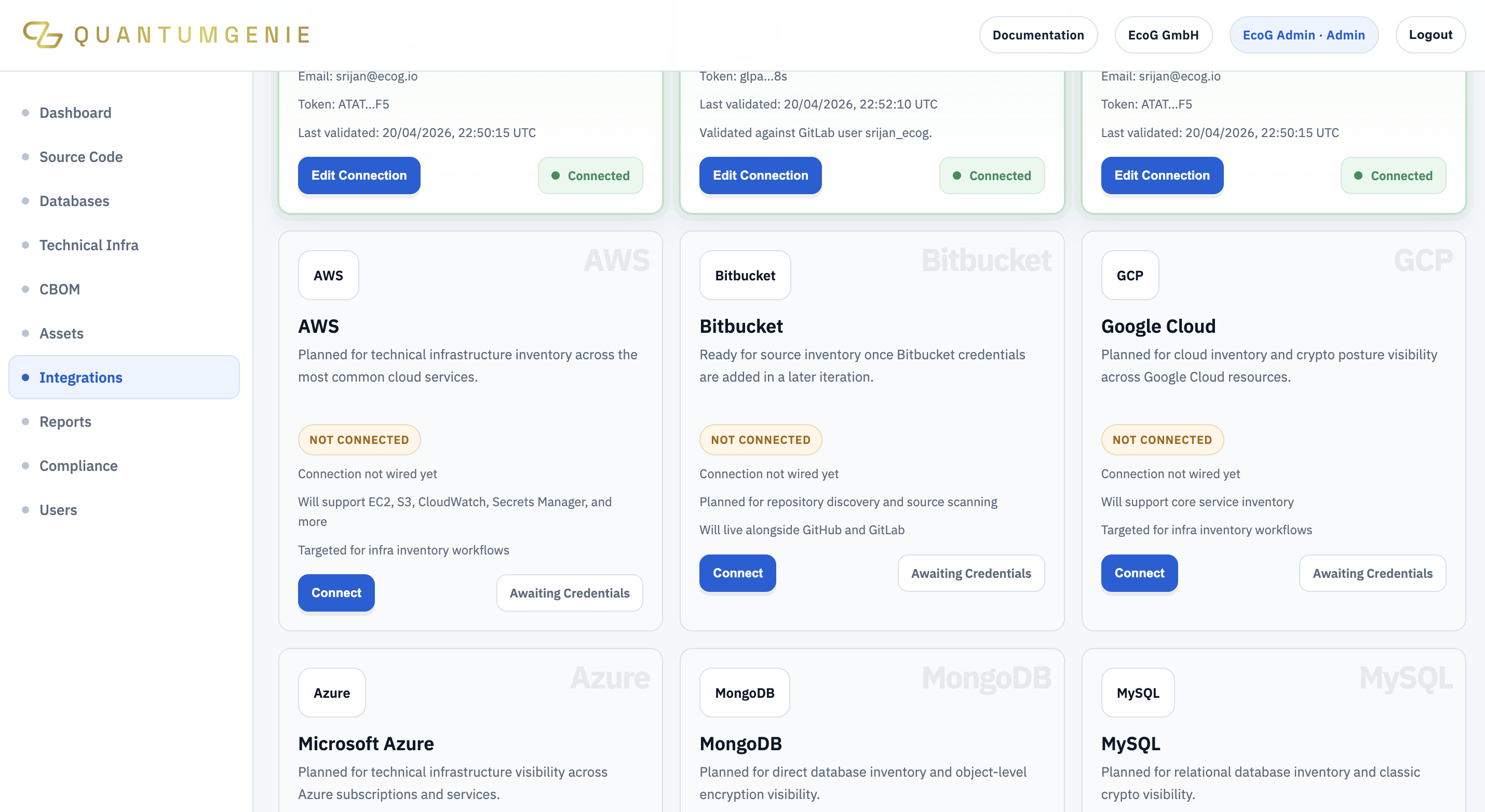
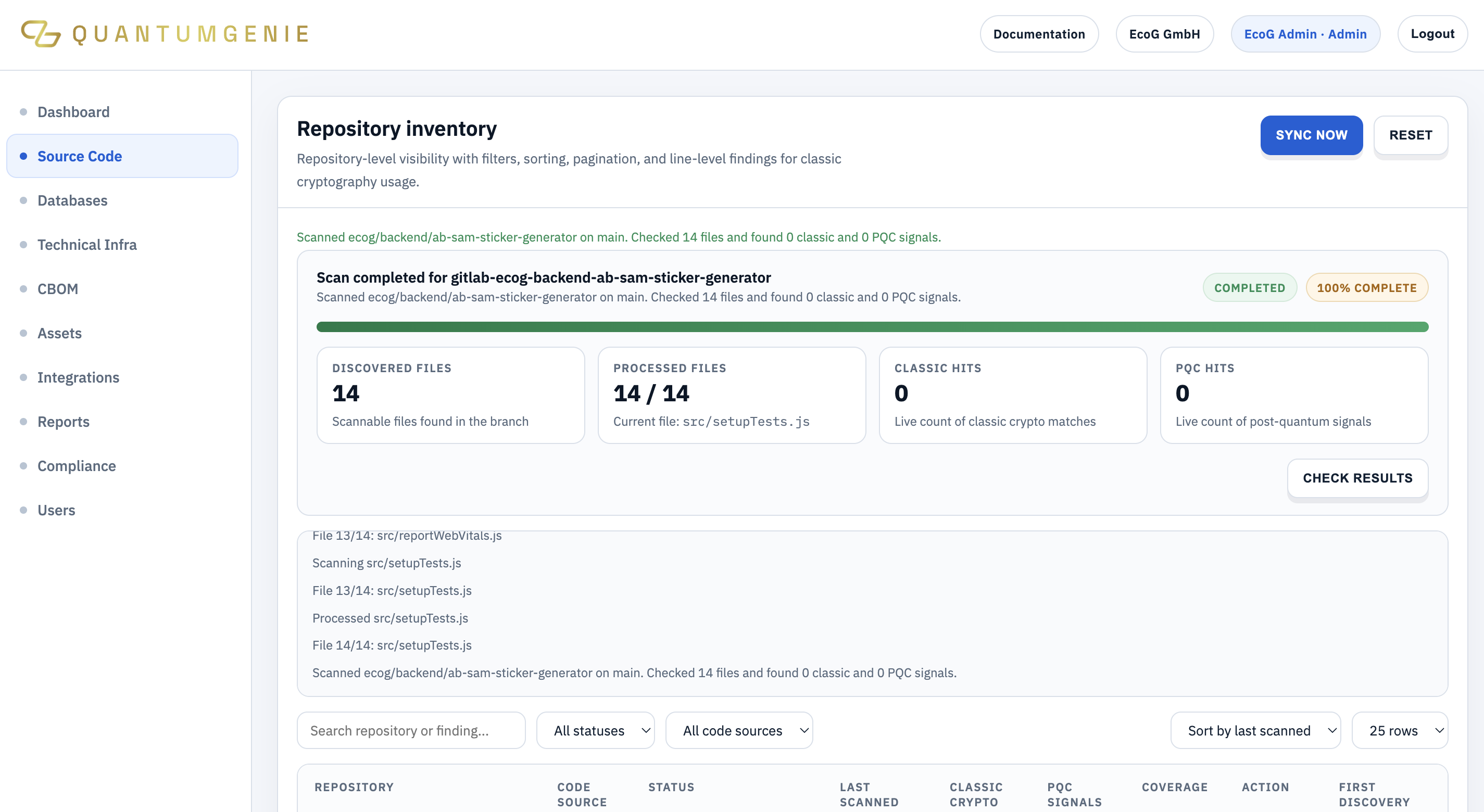
QuantumGenie offers critical infrastructure aligned with the roadmap's first phases: discovery and prioritization. Its CipherScan module automates discovery across websites, certificates, source code, infrastructure, and databases, generating a granular cryptographic asset inventory and CBOM that enterprises can trust for completeness. This inventory underpins risk-based prioritization, enabling CISOs and security teams to understand quantum exposure in context.
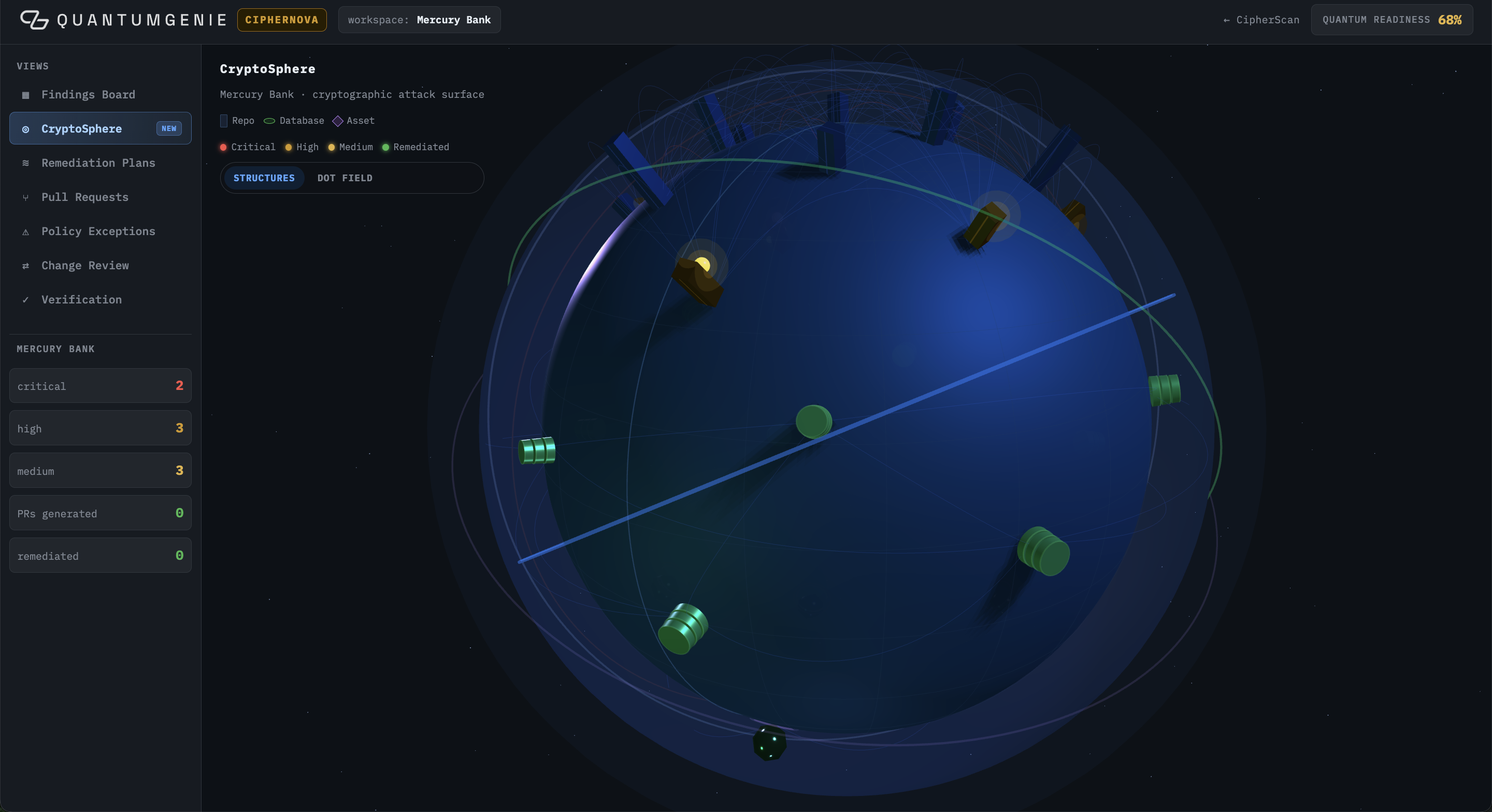
Beyond visibility, QuantumGenie's CipherNova module supports operationalizing remediation workflows essential for controlled migration. It manages pull requests, policy exceptions, change approvals, and verification, providing workflow rigor needed for phased deployment and continuous cryptographic agility. By aligning discovery, prioritization, and remediation orchestration, QuantumGenie holistically supports enterprises in transforming the PQC migration roadmap from theory into practice.
Frequently Asked Questions
Why is building a cryptographic inventory critical before PQC migration?
A complete cryptographic inventory ensures organizations know exactly where and how cryptography is used, enabling accurate risk assessments and targeted migration planning to avoid unplanned outages or security gaps.
How does operationalizing remediation workflows help in PQC migration?
Structured workflows provide accountability, testing, and verification during algorithm replacements, reducing operational risks and supporting continuous crypto-agility needed for evolving post-quantum standards.
Watch The Quantum Threat
Sources And Further Reading
- PQC Migration Guide: A 9-Phase Roadmap to Quantum-Safe Systems Encryption Consulting · Jul 5, 2026
- CRYPTAGION's Solution for Post-Quantum Cryptography Readiness in EU Enterprises CRYPTAGION · Jul 10, 2026
- ANKASecure©: A Unified Platform for Post-Quantum Cryptography Migration ANKATech · Jul 9, 2026