In This Article
What This Means
- The Challenge of Post-Quantum Migration in Enterprises
- A Nine-Phase Roadmap to Quantum-Safe Security
- How QuantumGenie Fits in the PQC Migration Journey
The Challenge of Post-Quantum Migration in Enterprises
As quantum computing accelerates, the cryptographic foundations protecting sensitive enterprise data are under threat. Transitioning to quantum-safe algorithms is no longer theoretical but a concrete imperative. However, the complexity of enterprise environments, with sprawling cryptographic assets embedded in websites, applications, infrastructure, and integrations, makes this migration a daunting endeavor. Without a clear roadmap, organizations risk fragmented efforts, compliance failures, or exposure to quantum vulnerabilities.
A Nine-Phase Roadmap to Quantum-Safe Security
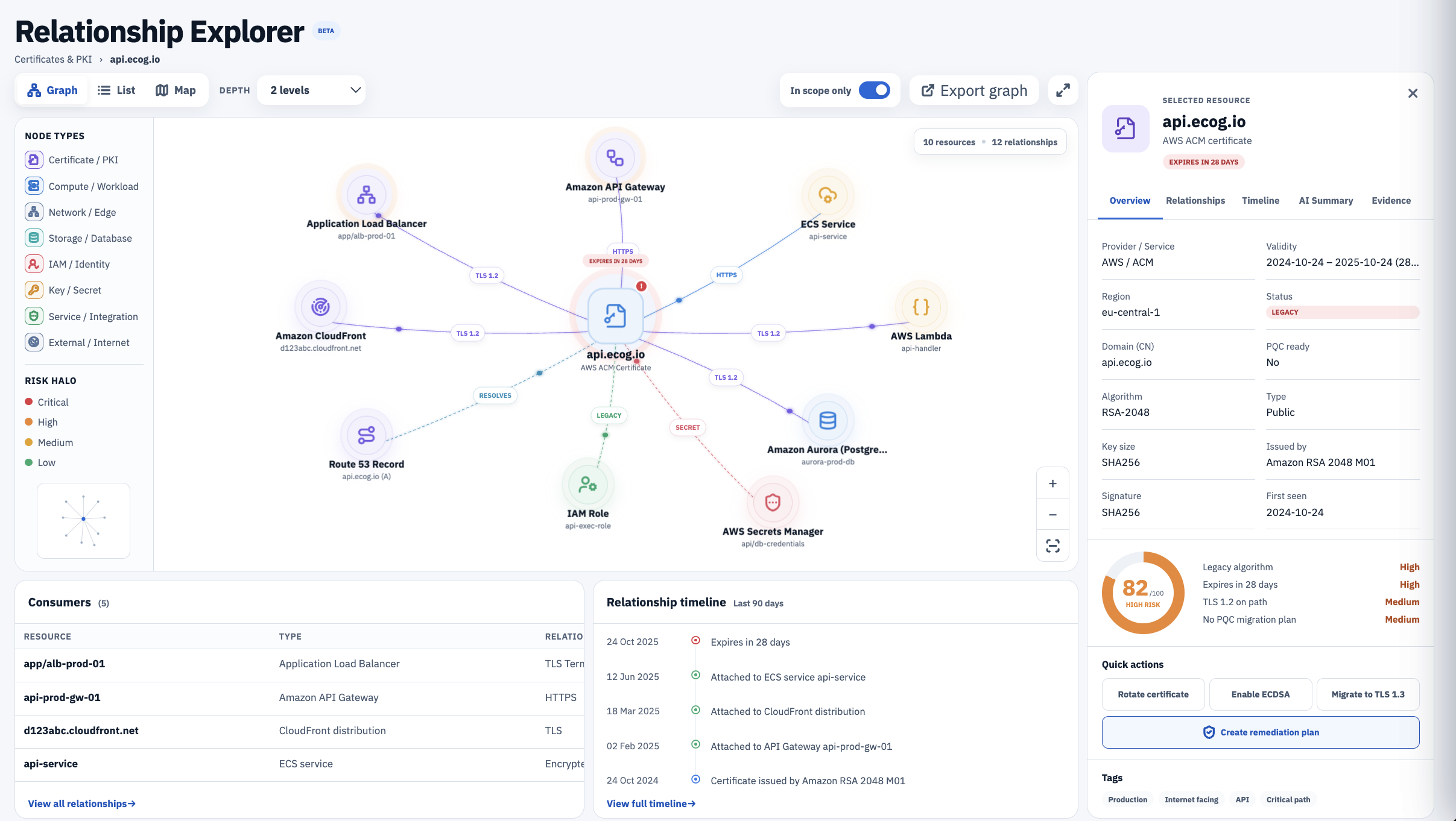
Encryption Consulting’s recent nine-phase guide offers a practical framework to demystify and structure the PQC migration journey. The foundation begins with a comprehensive cryptographic inventory—essential for visibility into every cryptographic use-case. Next, organizations assess risk to prioritize which assets need urgent migration, balancing security needs with business impact. Subsequent phases include architectural crypto-agility design, pilot deployments, phased rollout, compliance verification, and continuous monitoring. This phased approach mitigates operational disruption and embeds post-quantum readiness into organizational fabric.
Supporting sources echo these themes: QNu Labs underscores that cryptographic inventory is non-negotiable for effective planning, and FEDLIN highlights integrating agility architecture and standards compliance as vital for migration success. Together, these insights form a cohesive blueprint for enterprises tackling PQC readiness.
PQC Readiness Snapshot
| Area | Signal Today | Next Step |
|---|---|---|
| Discovery | More signals are becoming visible in public and vendor channels | Inventory exposed crypto across sites, code, and certificates |
| Prioritization | Not every asset carries the same migration urgency | Rank by business criticality and quantum exposure |
| Execution | Roadmaps only matter when teams own them | Assign timelines, owners, and a recurring review loop |
How QuantumGenie Fits in the PQC Migration Journey
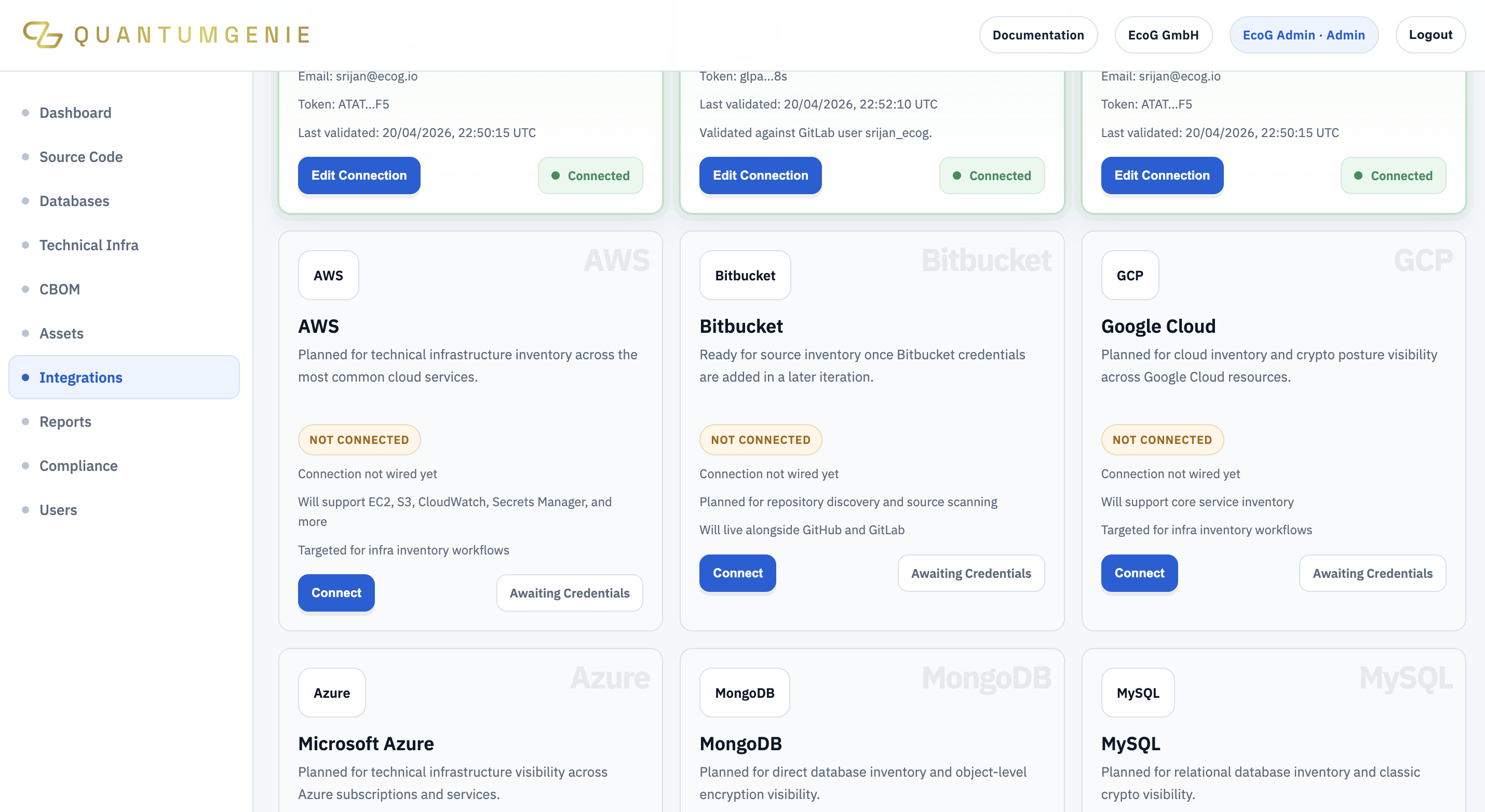
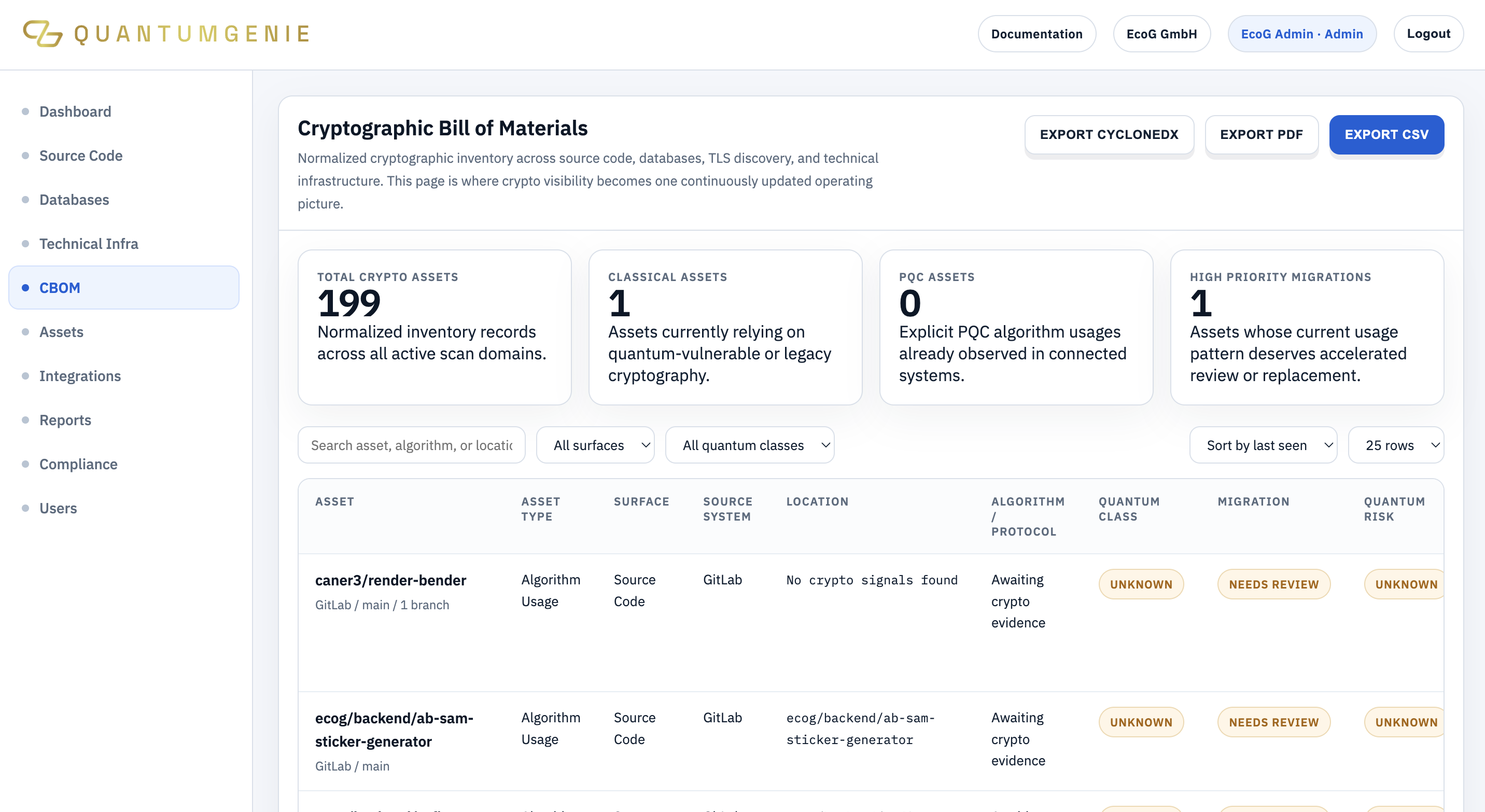
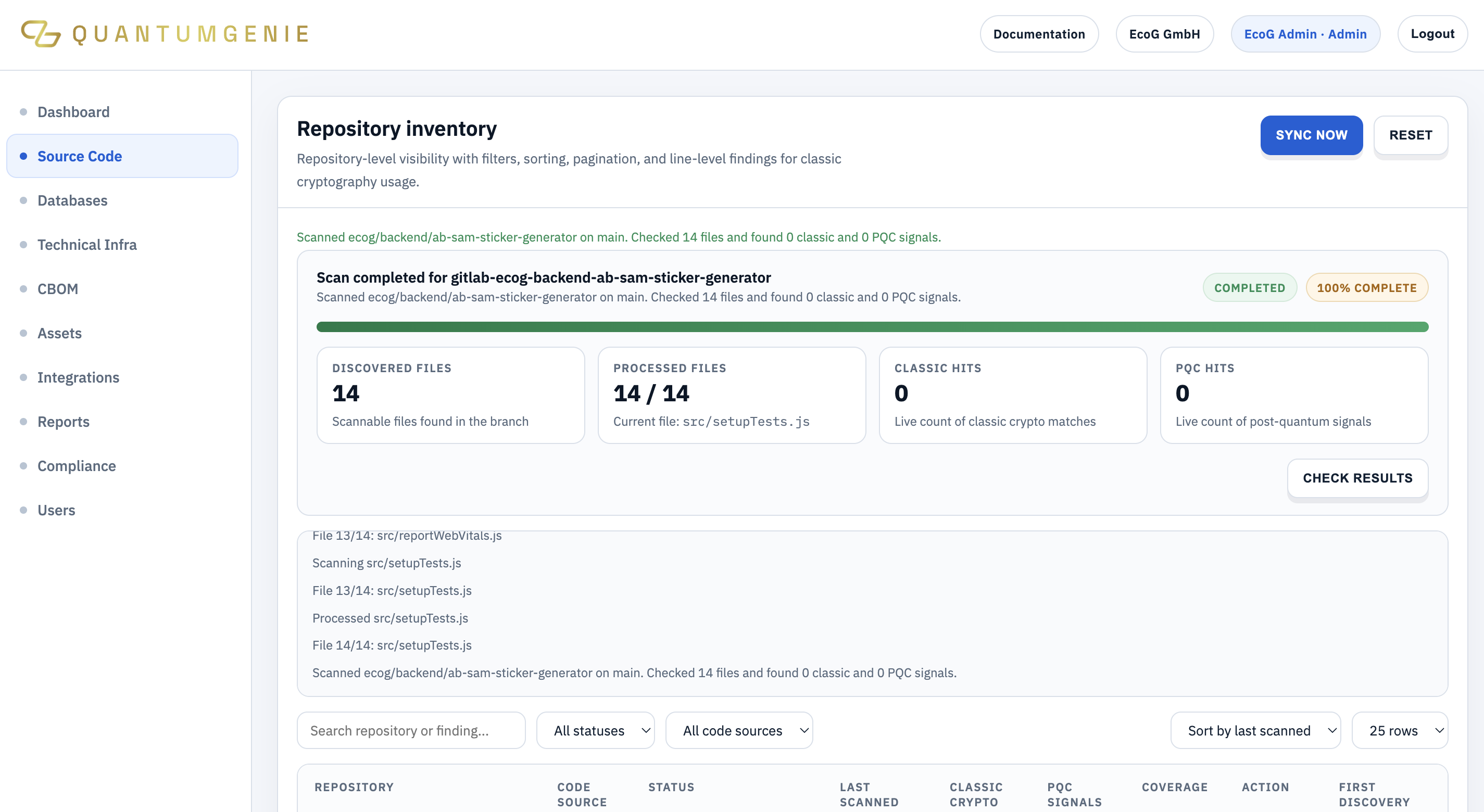
QuantumGenie directly addresses the core challenges outlined in the nine-phase roadmap by empowering enterprises with precise cryptographic discovery across diverse assets through its CipherScan technology. This creates an authoritative cryptographic bill of materials (CBOM), enabling accurate risk prioritization and focused remediation planning. Furthermore, QuantumGenie’s CipherNova platform orchestrates migration workflows—tracking remediation progress, managing pull requests, and ensuring governance compliance. By providing operational visibility and structured remediation orchestration, QuantumGenie transforms PQC migration from an abstract goal into a manageable, auditable process. This integration helps CISOs and security architects control complexity and confidently meet upcoming quantum threats.
Frequently Asked Questions
Why is a cryptographic inventory critical for PQC migration?
A cryptographic inventory provides a complete map of all cryptographic assets, which is essential to understand where vulnerable algorithms are used and to plan effective replacement. Without this visibility, migration efforts risk missing critical components or duplicating work, leading to security gaps.
How does phased deployment reduce risk during PQC migration?
Phased deployment allows organizations to transition in manageable stages, validating new algorithms’ performance and minimizing operational disruption. It helps isolate issues early and prevents large-scale failures by avoiding simultaneous changes across all systems.
Watch The Quantum Threat
Sources And Further Reading
- PQC Migration Guide: 9 Phases to Quantum-Safe Encryption Consulting · Jun 29, 2026
- Cryptographic Inventory: What It Is & Why It Matters QNu Labs · Jun 17, 2026
- Post-Quantum Readiness: ML-KEM & SLH-DSA Migration FEDLIN · Jul 10, 2026