In This Article
What This Means
- Why a Structured 9-Phase Migration Roadmap Matters
- Enterprise Implications: Practical Steps and Challenges
- How QuantumGenie Fits into the Migration Journey
Why a Structured 9-Phase Migration Roadmap Matters
Enterprises face a daunting challenge transitioning from classical cryptographic algorithms vulnerable to quantum attacks to robust post-quantum algorithms. A recent guide published by Encryption Consulting breaks this complex journey into nine distinct phases, each addressing critical technical and operational aspects of migration. This phased approach helps organizations systematically identify their cryptographic dependencies, evaluate risks, plan remediation strategies, and validate successful migration outcomes. The guide underscores that haphazard or reactive efforts risk gaps and compliance failures, making a well-defined roadmap indispensable for enterprise risk management and operational continuity.
This structured framework is timely as quantum computing capabilities advance and regulatory pressures around post-quantum readiness intensify. Enterprises can no longer defer migration planning without risking data exposure or loss of secure communication channels. The roadmap’s emphasis on methodical progression from discovery through phased implementation reflects industry best practices poised to become standard in enterprise cybersecurity strategies.
Enterprise Implications: Practical Steps and Challenges
The migration roadmap begins with intensive discovery phases to build a comprehensive cryptographic inventory across websites, applications, infrastructure, and codebases. This inventory acts as the foundational source of truth for assessing quantum risk exposure and determining migration priorities. Importantly, the process calls for a cryptographic Bill of Materials (CBOM) to document dependencies and support audits, elevating governance and compliance readiness.
Subsequent phases focus on risk prioritization, cryptographic design evaluations, hybrid algorithm deployments, testing, and incremental rollout of quantum-safe primitives. Enterprises must balance operational disruption with security imperatives and iteratively adapt migration plans as standards evolve. This underlines the need for constant visibility and workflow orchestration to manage changes across disparate teams and assets efficiently. The advisory services highlighted by sources like ProteQC reinforce that vendor-neutral guidance and cross-functional coordination are essential to avoid siloed efforts and conflicting implementations.
Summary of the 9-Phase Migration Roadmap for Post-Quantum Cryptography
| Phase | Focus Area | Enterprise Action |
|---|---|---|
| Phase 1 | Discovery & Inventory | Identify all cryptographic assets and build a CBOM |
| Phase 2 | Risk Assessment | Evaluate exposure to quantum threats |
| Phase 3 | Strategy Development | Define migration priorities and timelines |
| Phase 4 | Hybrid Algorithm Design | Design hybrid classical/post-quantum solutions |
How QuantumGenie Fits into the Migration Journey
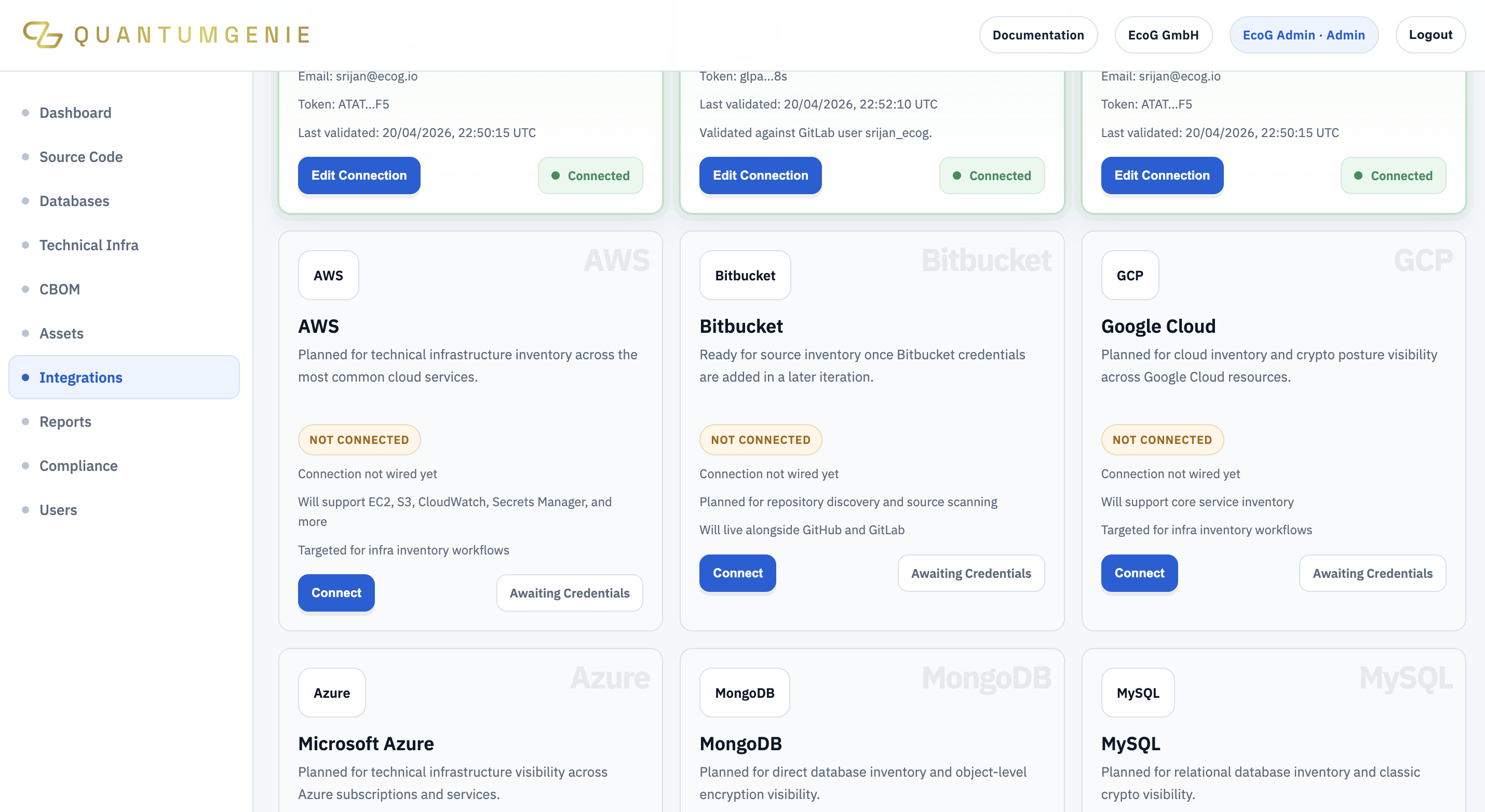
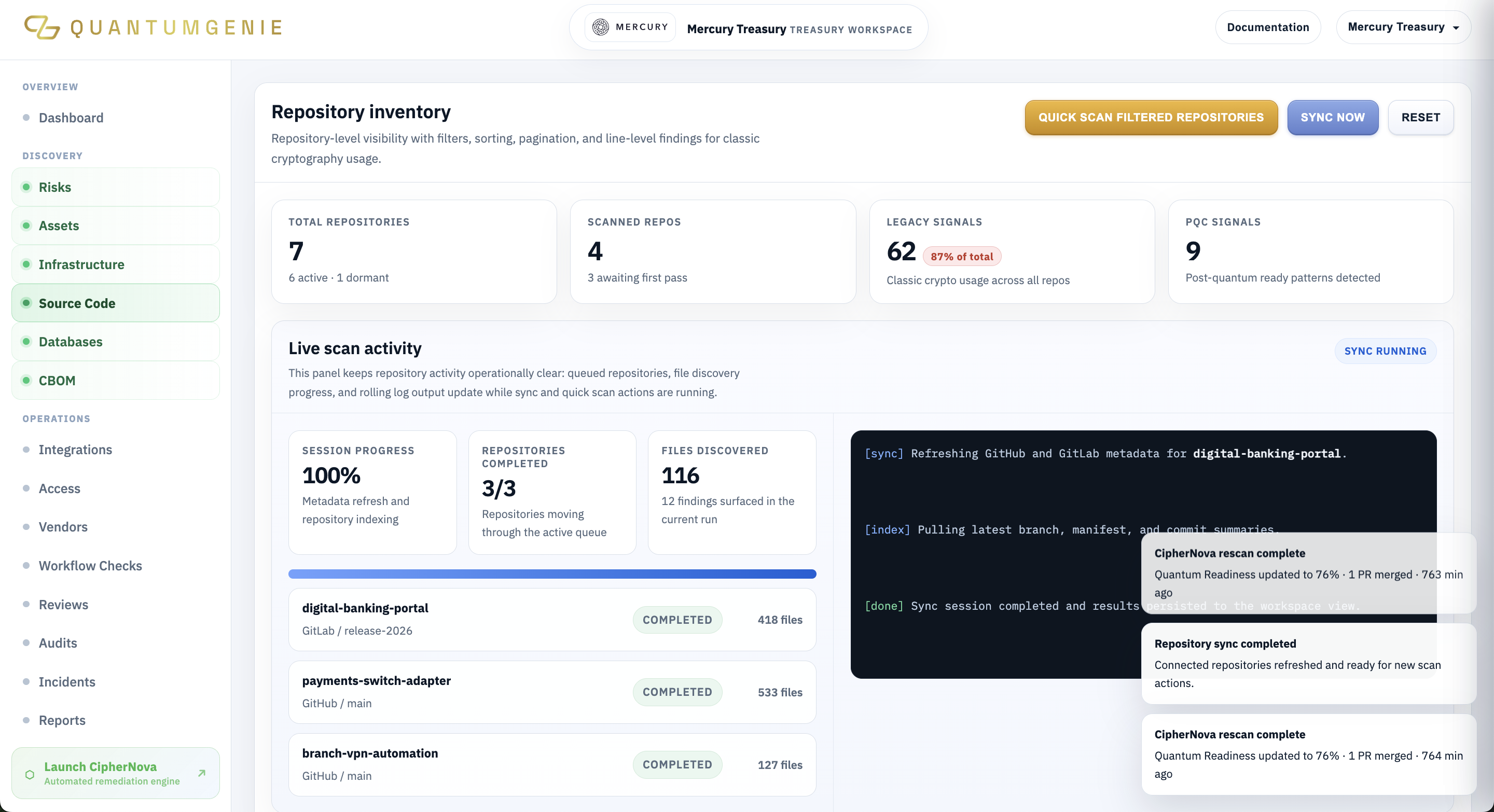
QuantumGenie aligns closely with the structured migration roadmap by enabling enterprises to automate the discovery of cryptographic assets and build a dynamic, enterprise-wide CBOM. Its CipherScan component identifies cryptographic exposures across cloud, container, certificate, source code, and infrastructure layers, eliminating blind spots crucial for initial phases of the migration roadmap.
Beyond inventory, QuantumGenie’s CipherNova orchestrates remediation workflows, including risk-based prioritization, policy exception handling, pull requests for code remediation, and verification. This workflow enforcement ensures that each migration phase progresses with controlled change management and audit trails — addressing operational complexities identified in the roadmap. For CISOs and architects deploying the 9-phase migration framework, QuantumGenie provides both the telemetry and the procedural rigor needed for scalable, compliant PQC adoption.
Frequently Asked Questions
Why is a phased migration approach critical for post-quantum cryptography?
A phased approach breaks down the complex migration into manageable steps, ensuring comprehensive discovery, risk prioritization, and operational control to minimize disruptions and compliance risks during the transition.
How does QuantumGenie support the cryptographic inventory phase?
QuantumGenie’s CipherScan automates the discovery of cryptographic assets across multiple enterprise environments, delivering a comprehensive inventory and CBOM that form the foundation for risk assessment and migration planning.
Watch The Quantum Threat
Sources And Further Reading
- Post-Quantum Cryptography Migration Guide: 9 Phases to Quantum-Safe Encryption Consulting · Jun 29, 2026
- ProteQC Offers Post-Quantum Cryptography Advisory for Financial Services ProteQC · Jul 8, 2026