In This Article
What This Means
- Why a Phased Approach to PQC Migration Matters
- Enterprise Implications and Supporting Perspectives
- How QuantumGenie Fits into the PQC Migration Playbook
Why a Phased Approach to PQC Migration Matters
The journey to post-quantum cryptography (PQC) is an urgent, yet intricate, enterprise challenge. Encryption Consulting's recent nine-phase migration guide offers a crucial blueprint, underscoring that success hinges on disciplined crypto-agility and detailed planning. Enterprises cannot simply flip a switch; they must iterate through discovery, inventory, risk assessment, prioritization, testing, pilot deployments, and staged rollouts.
This phased strategy helps manage complexity and risk by decomposing migration into manageable stages. It recognizes multiple cryptographic assets, from certificates and source code to infrastructure and applications, must be inventoried before remediation efforts begin. This prevents the all-too-common scenario where unknown cryptography silently jeopardizes compliance or data security.
Enterprise Implications and Supporting Perspectives
Drawing on the guide's roadmap, enterprises must cultivate continuous discovery and posture management as a foundation. Supporting this, platforms like Qinsight have recently showcased how continuous cryptographic asset inventory and analysis drive informed risk management and timely migration execution. Together, these insights highlight that PQC readiness is an ongoing operational discipline, not a one-off project.
The guide and complementary insights reinforce that without comprehensive visibility, enterprises risk exposure to harvest-now-decrypt-later attacks and compliance gaps. Hence, preparation extends beyond selecting PQC algorithms to embracing full lifecycle management—discovering cryptographic dependencies, building a Cryptographic Bill of Materials (CBOM), prioritizing high-risk touchpoints, and orchestrating remediation workflows.

Nine-Phase PQC Migration Roadmap Overview
| Phase | Focus Area | Key Objective |
|---|---|---|
| 1 | Discovery | Identify all cryptographic assets and dependencies |
| 2 | Inventory | Build a comprehensive cryptographic bill of materials (CBOM) |
| 3 | Risk Assessment | Evaluate exposure and prioritize based on threat |
| 4 | Planning | Develop a migration strategy and roadmap |
How QuantumGenie Fits into the PQC Migration Playbook
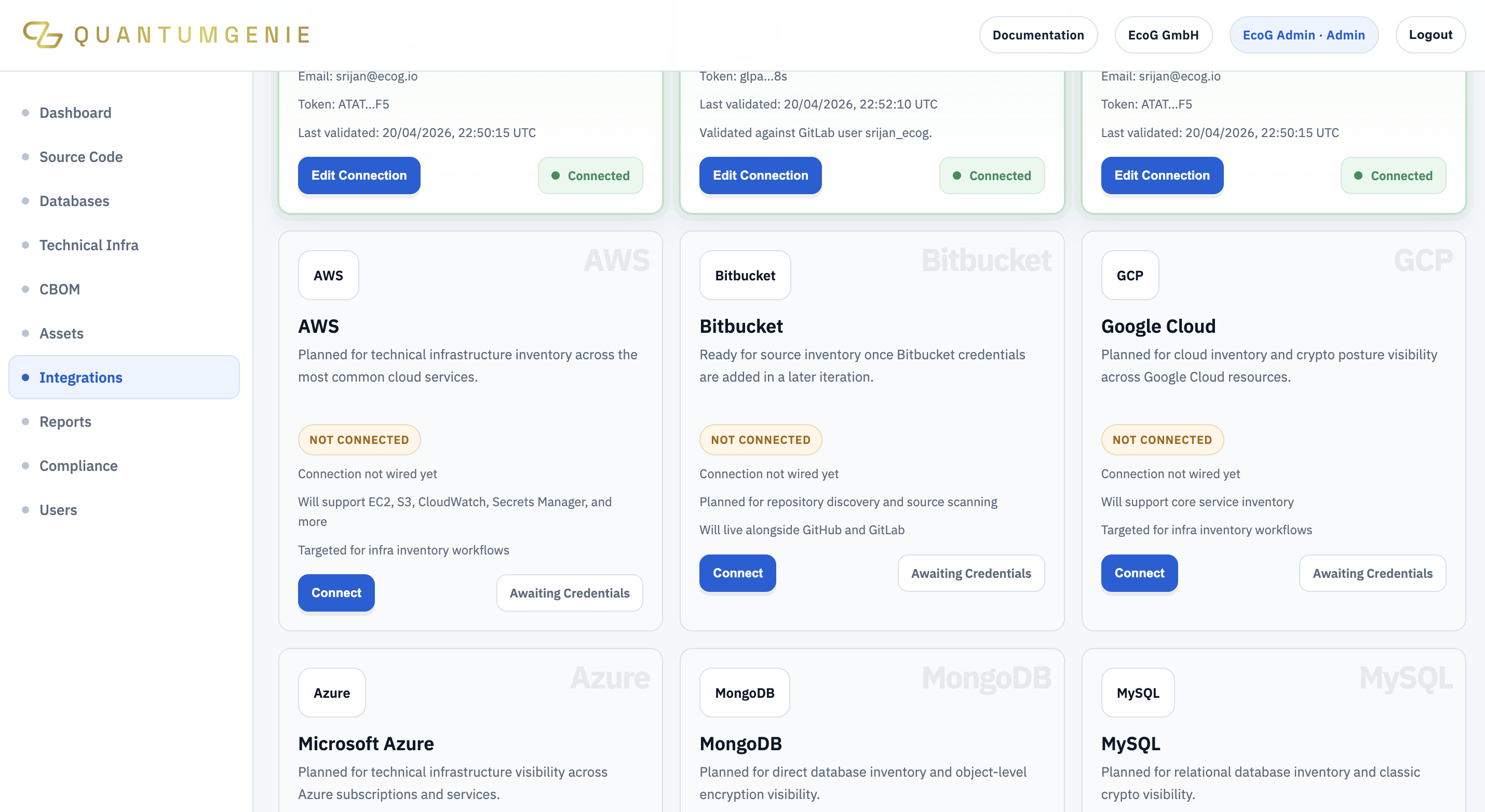
QuantumGenie aligns directly with the detailed migration phases outlined in Encryption Consulting's guide by delivering the critical early and continuous discovery layers that enterprises need. Its CipherScan module facilitates deep cryptographic inventory across websites, certificates, codebases, and integrations, creating a reliable CBOM as the foundation for migration planning.
Beyond discovery, QuantumGenie's CipherNova orchestrates the remediation process—helping teams prioritize risk, manage pull requests, track exceptions, and verify changes in a controlled workflow, thereby ensuring operational agility throughout the migration. This integrated approach addresses the puzzle pieces of the guide’s phases—mapping inventory to mitigation and governance—making QuantumGenie a practical infrastructure asset for enterprise PQC transformation.
Frequently Asked Questions
Why is cryptographic inventory critical before starting PQC migration?
Without a detailed inventory, enterprises risk missing cryptographic assets that require migration, leaving vulnerabilities open and impeding compliance efforts. Inventory forms the foundation for risk prioritization and effective remediation.
How does crypto-agility impact the success of post-quantum migration?
Crypto-agility enables enterprises to adapt quickly to evolving cryptographic standards and threats, allowing phased, manageable transitions and ongoing security updates essential for resilient PQC deployment.
Watch The Quantum Threat
Sources And Further Reading
- Post-Quantum Cryptography Migration Guide Encryption Consulting · Jul 6, 2026
- Qinsight's Cryptographic Posture Management Platform Qinsight · Jul 9, 2026