In This Article
What This Means
- Why Now? The Quantum Threat Landscape and Enterprise Imperatives
- Navigating the Migration Challenge: From Inventory to Execution
- How QuantumGenie Enables Enterprise Post-Quantum Migration Success
Why Now? The Quantum Threat Landscape and Enterprise Imperatives
The recent finalization of NIST's post-quantum cryptography standards combined with the NSA’s defined migration deadlines signals a seismic shift for enterprise cybersecurity. Intelligence agencies collecting encrypted traffic today for future quantum decryption underscore that enterprises cannot wait to address quantum risks. Delaying migration until quantum computers mature means risking exposure to harvest-now-decrypt-later attacks, which threaten to compromise long-term confidentiality of critical data.
Enterprises must interpret these signals as a call to action. Post-quantum cryptography (PQC) is no longer theoretical—it is becoming a regulatory and strategic imperative. The cost benchmark—an estimated $15 billion industry-wide migration—reflects both the scale and urgency. CISOs and cybersecurity architects are tasked with charting clear PQC migration paths before 2030 to maintain trust and compliance.
Navigating the Migration Challenge: From Inventory to Execution
Effective migration to post-quantum algorithms requires more than swapping out cryptographic primitives. Enterprises need granular visibility into where and how cryptography is used across certificates, applications, databases, and infrastructure. Without a complete cryptographic inventory and risk prioritization, migration efforts risk delays and gaps that adversaries can exploit.
This migration involves developing an enterprise crypto bill of materials (CBOM), assessing exposure, aligning remediation plans with compliance timelines, and operationalizing these plans via workflows that deliver verifiable results. The journey is complex, demanding tools and strategies that ensure agility to adapt as PQC standards evolve and new threats surface.

Key Post-Quantum Migration Imperatives for Enterprises
| Imperative | Enterprise Impact | QuantumGenie Role |
|---|---|---|
| Complete cryptographic inventory | Understand full scope of quantum-risk-exposed assets | Automated discovery and CBOM generation |
| Prioritize migration efforts | Focus resources on highest risk cryptographic components | Risk-based asset prioritization |
| Align with regulatory timelines | Meet NSA, NIST, and other deadlines to avoid compliance risk | Planning and reporting tools |
| Operationalize remediation | Enable workflows for systematic crypto algorithm replacement | Policy enforcement and workflow orchestration systems |
How QuantumGenie Enables Enterprise Post-Quantum Migration Success
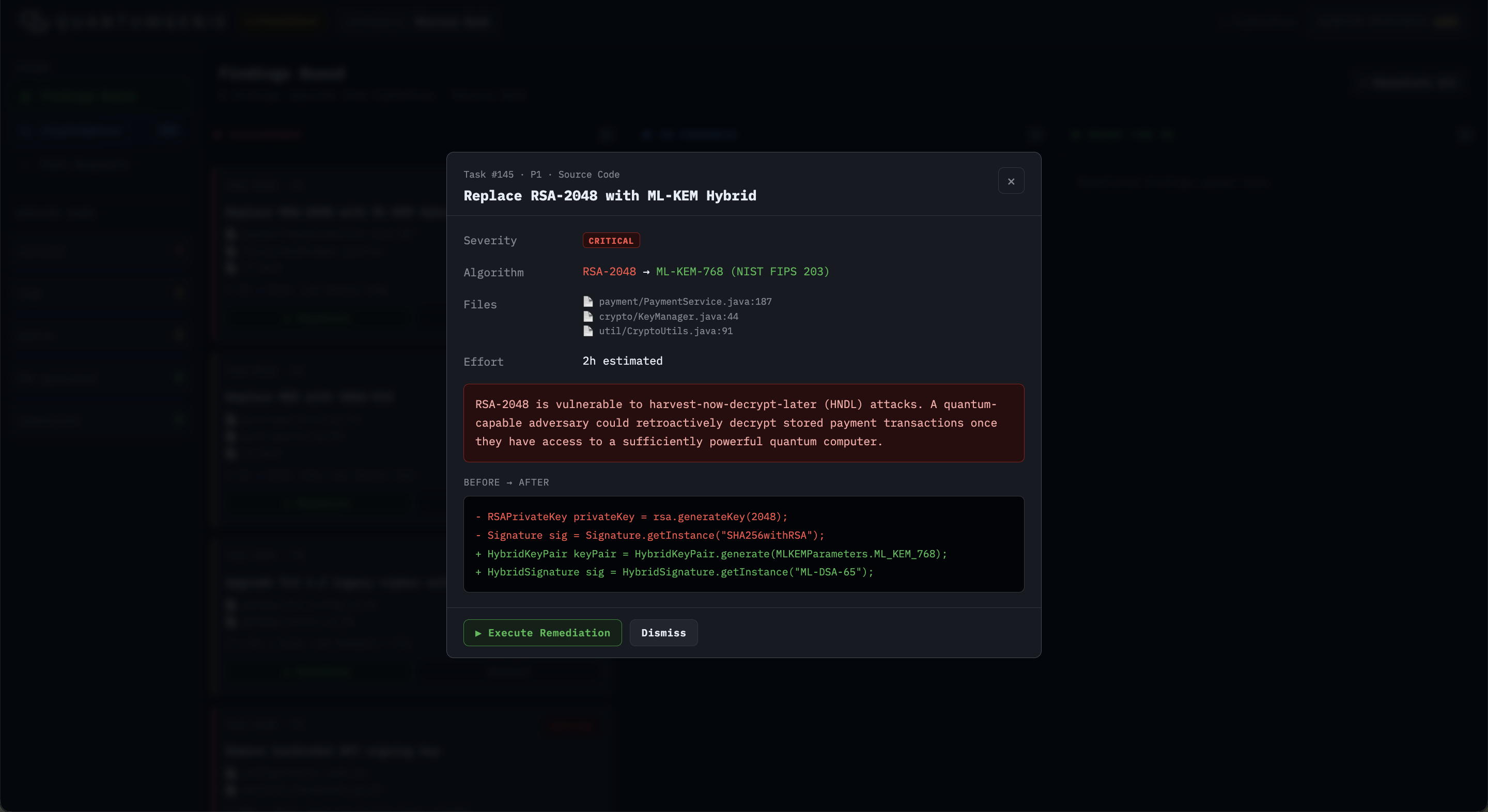
QuantumGenie addresses the enterprise PQC challenge head-on by providing an integrated platform for cryptographic discovery, inventory, and migration management. By automating the detection of cryptography across an enterprise’s entire IT estate, QuantumGenie builds a comprehensive CBOM crucial for planning and prioritization.
This capability empowers security teams to identify high-risk assets quickly, plan phased migration strategies in alignment with evolving standards and deadlines, and operationalize remediation workflows with policy and verification controls. QuantumGenie thus serves as essential infrastructure for enterprises to transition securely and efficiently toward quantum-safe encryption, meeting both strategic and compliance demands.
Frequently Asked Questions
Why is post-quantum cryptography migration urgent for enterprises today?
Because adversaries or nation-states are already harvesting encrypted data to decrypt with future quantum computers, enterprises risk data exposure unless they proactively migrate to quantum-safe algorithms before these threats materialize.
How does having a cryptographic inventory help in PQC migration?
A cryptographic inventory provides comprehensive visibility into where and how encryption is used, enabling enterprises to prioritize and plan migration efforts accurately to avoid gaps and ensure complete coverage.