In This Article
What This Means
- Why Enterprises Need a Structured Post-Quantum Cryptography Strategy Now
- Practical Roadmap and Emerging Capabilities for Managing Post-Quantum Migration
- How QuantumGenie Fits in the Enterprise Post-Quantum Readiness Landscape
Why Enterprises Need a Structured Post-Quantum Cryptography Strategy Now
With the accelerating standardization of post-quantum algorithms by NIST and growing industry adoption, enterprises face mounting pressure to future-proof their encryption. The recently published comprehensive guide by Cyber Technology Insights outlines the quantum threat timeline and emphasizes that ad-hoc or piecemeal approaches are insufficient. Leading organizations must adopt integrated strategies that encompass inventorying cryptographic assets, assessing exposure, and planning migrations well before quantum-capable adversaries can exploit vulnerabilities.
This strategic approach is reinforced by the 'harvest-now-decrypt-later' threat model, which underscores the urgency: sensitive data intercepted today may be decrypted in the future once quantum computers are mature. Hence, enterprises must act proactively to implement quantum-safe security measures to preserve long-term confidentiality and compliance. The report further stresses that readiness involves cross-functional collaboration and alignment with emerging standards, not just cryptography teams working in isolation.
Practical Roadmap and Emerging Capabilities for Managing Post-Quantum Migration
Supporting the strategic need, LayerLogix’s practical 2026 roadmap breaks down the post-quantum migration journey into phased initiatives: initial discovery, risk prioritization, pilot deployments, and eventually broad remediation. This phased approach tackles complexity by integrating continuous discovery and validation to reduce operational overhead and risk of misconfiguration.
Moreover, the innovation announced by PKWARE on agent-based deployment for continuous key and algorithm management signals an evolution in crypto-agility. Moving away from heavy, multi-quarter migrations toward adaptive, incremental algorithm updates can dramatically reduce blockage points. Enterprises should monitor such emerging capabilities to enhance their cryptographic management frameworks and accelerate quantum-safe transitions while maintaining business continuity.
Phased Enterprise Post-Quantum Cryptography Migration Roadmap
| Phase | Objectives | Key Actions |
|---|---|---|
| Discovery | Identify cryptographic assets and exposure | Perform comprehensive inventory using automated tools; assess current algorithms |
| Risk Prioritization | Evaluate cryptographic risk based on sensitivity and quantum threat | Rank assets using criteria such as data criticality and use case |
| Pilot Deployment | Test post-quantum algorithms in isolated environments | Deploy quantum-safe algorithms on limited production systems; monitor performance and compatibility |
| Broad Migration | Roll out post-quantum cryptography across enterprise | Execute governance workflows for change management; comprehensive rollout |
How QuantumGenie Fits in the Enterprise Post-Quantum Readiness Landscape
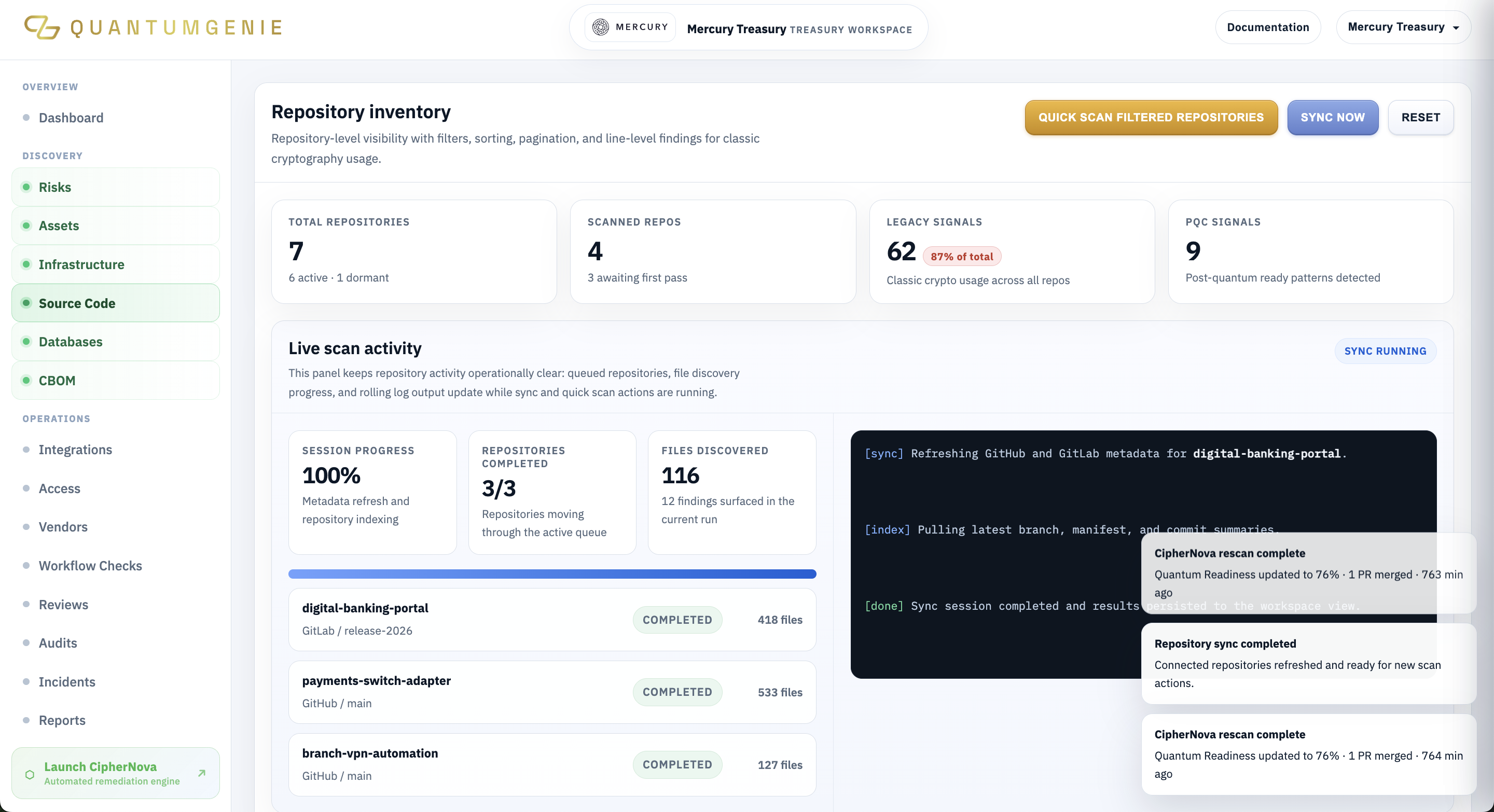
QuantumGenie provides enterprises with the infrastructure to operationalize the recommendations embodied in these reports and roadmaps. Its CipherScan module performs granular discovery across websites, certificates, source code, infrastructure, applications, and integrations, enabling the creation of a comprehensive cryptographic bill of materials (CBOM). This visibility is critical for identifying vulnerable assets and prioritizing remediation efforts based on risk.
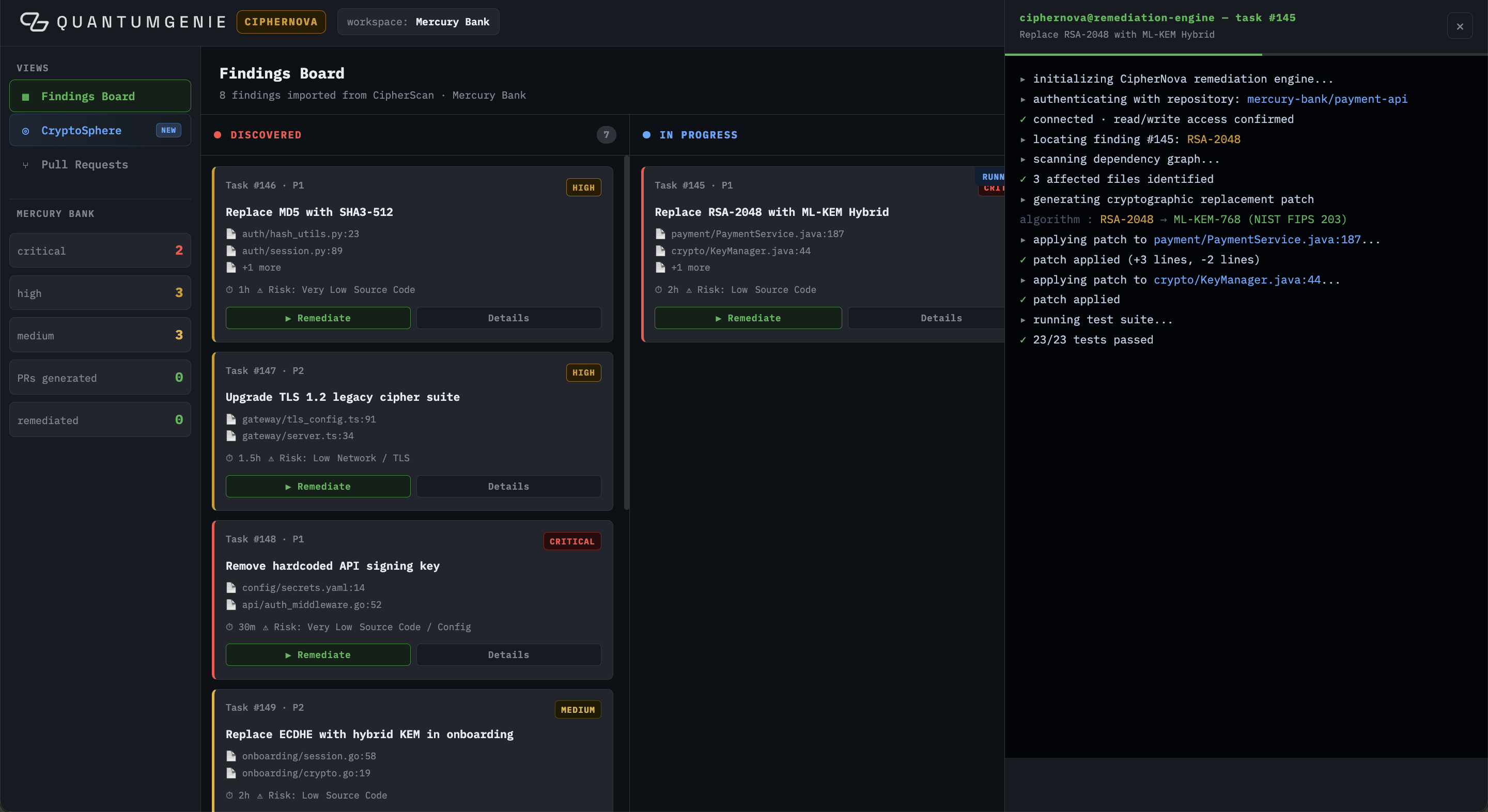
Beyond discovery, QuantumGenie orchestrates migration workflows through CipherNova, managing remediation plans, pull requests, policy exceptions, and verification workflows. This end-to-end platform aligns tightly with enterprise needs for governance, compliance readiness, and operational risk management in post-quantum cryptography projects. By integrating continuous assessment and providing actionable insights, QuantumGenie helps organizations advance beyond planning into controlled, measurable execution of their quantum-safe transformation journeys.
Frequently Asked Questions
What is cryptographic agility and why is it critical for enterprises?
Cryptographic agility is the ability of systems to quickly and safely switch between cryptographic algorithms and protocols. It is critical because it allows enterprises to adapt to evolving quantum threats and new standards without extensive system overhauls, reducing risk and migration costs.
How does building a Cryptographic Bill of Materials (CBOM) help in post-quantum readiness?
A CBOM provides a detailed inventory of all cryptographic assets and their attributes within an enterprise environment. This insight is essential for identifying vulnerable points, prioritizing remediation, ensuring compliance, and planning an effective, risk-based migration strategy to post-quantum cryptography.
Watch The Quantum Threat
Sources And Further Reading
- Post-Quantum Cryptography: Enterprise Guide to Quantum-Safe Security Cyber Technology Insights · May 14, 2026
- Post-Quantum Cryptography Migration: 2026 Roadmap LayerLogix · Jun 12, 2026
- PKWARE Re-Engineers Key Management for Continuous Cryptographic Change PKWARE · Jun 1, 2026