In This Article
What This Means
- The EU’s 2026 Cryptographic Inventory Requirement: What Enterprises Must Know
- Why Cryptographic Inventory Is the Bedrock of Post-Quantum Migration
- How QuantumGenie Empowers Compliance and Migration Success
The EU’s 2026 Cryptographic Inventory Requirement: What Enterprises Must Know
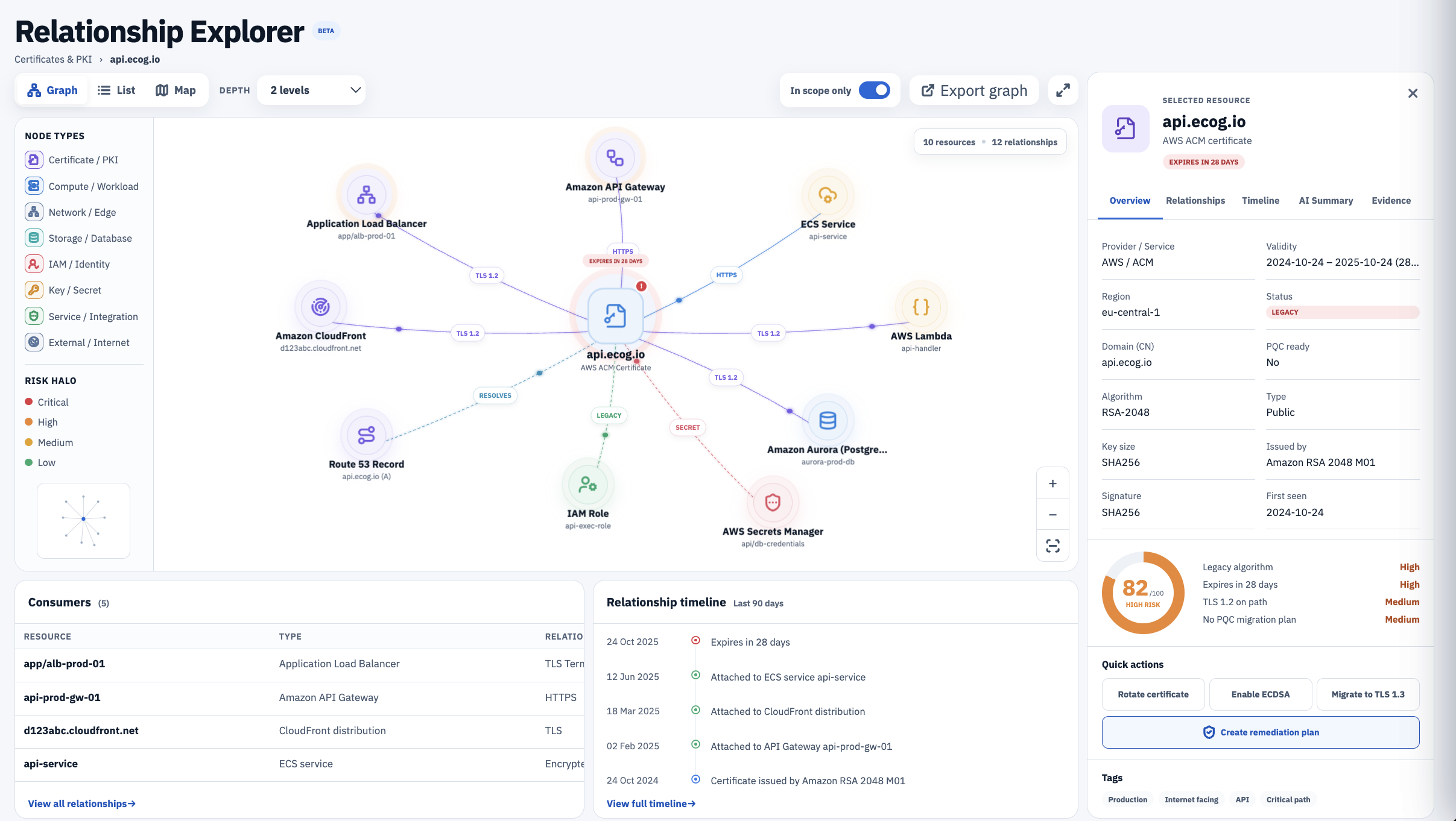
The European Union has set a firm deadline requiring all regulated organizations to produce a complete cryptographic inventory by the end of 2026. This mandate compels enterprises to systematically identify and catalog every cryptographic asset embedded across their IT landscape—covering websites, certificates, source code, infrastructure, applications, databases, and integrations. The objective is clear: organizations must know exactly what cryptography they use before planning and implementing migration strategies to post-quantum cryptography (PQC).
This inventory acts as a foundational step towards demonstrating compliance and preparing for the transition to quantum-resistant algorithms, a task that will become indispensable as quantum computing threatens to undermine legacy cryptographic assurances. Enterprises ignoring this compliance milestone risk facing regulatory penalties and cyber vulnerabilities from insufficient preparation.
Why Cryptographic Inventory Is the Bedrock of Post-Quantum Migration
Beyond mere compliance, conducting a rigorous cryptographic inventory equips enterprises with critical visibility and control over their security posture. Identifying cryptographic assets in silos—like certificates or application-level encryptions—fails to provide the holistic insight needed to prioritize migration risks. A complete inventory is essential to manage the “crypto-agility” that PQC migration demands, enabling informed decisions around which algorithms and systems require urgent remediation.
Supporting this view, recent industry analyses highlight that cryptographic inventories are becoming the latest imperative in enterprise cybersecurity best practices. They ensure security teams can defend against the mounting threat of “harvest-now, decrypt-later” attacks by prioritizing assets vulnerable to quantum adversaries. This comprehensive visibility is a prerequisite to designing phased, risk-aware transition roadmaps.
Key Cryptographic Inventory Considerations for EU Enterprises
| Consideration | Enterprise Impact | QuantumGenie Role |
|---|---|---|
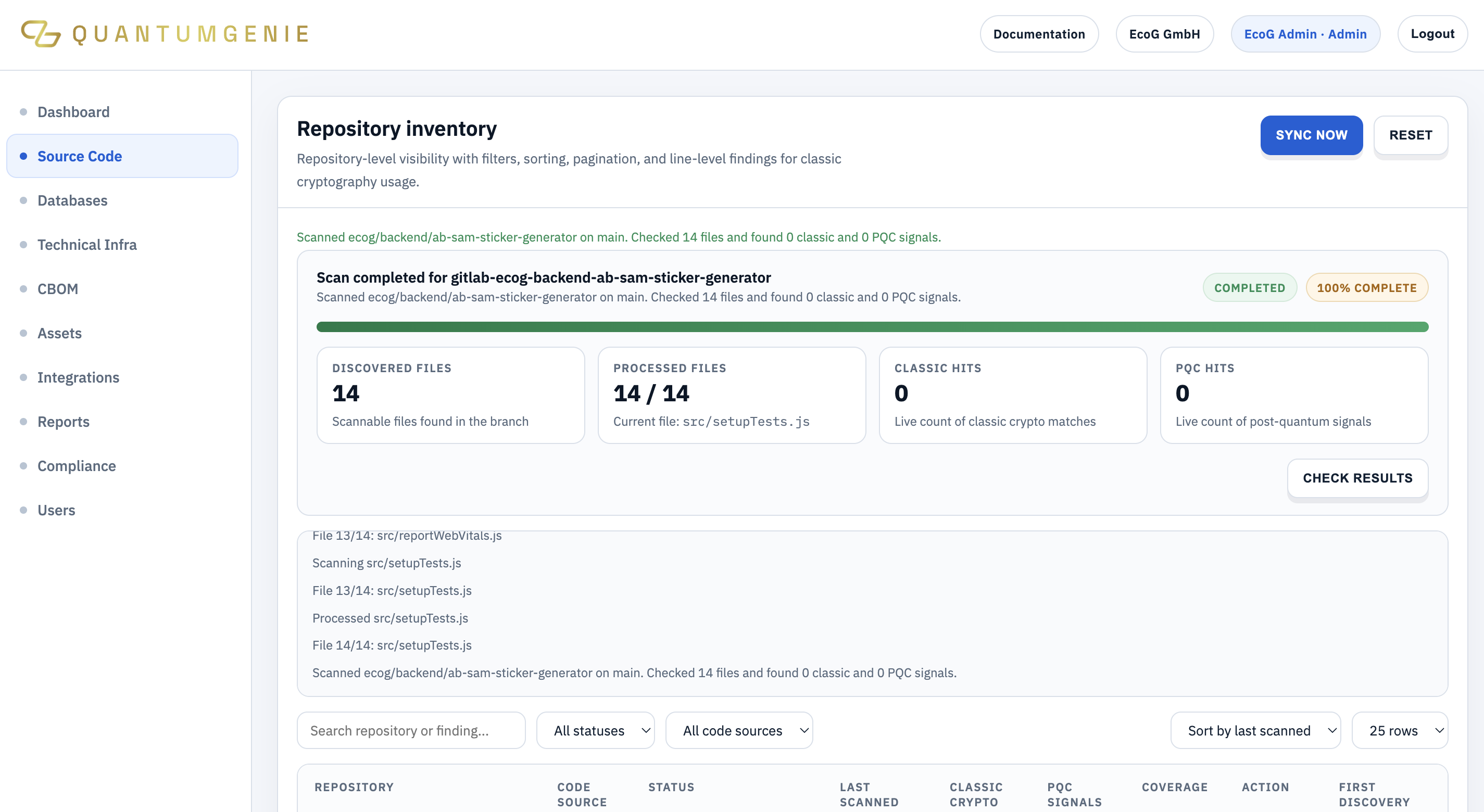
| Complete Asset Identification | Avoids blind spots that could lead to compliance breaches or migration failures | Automated discovery across websites, applications, infrastructure and code |
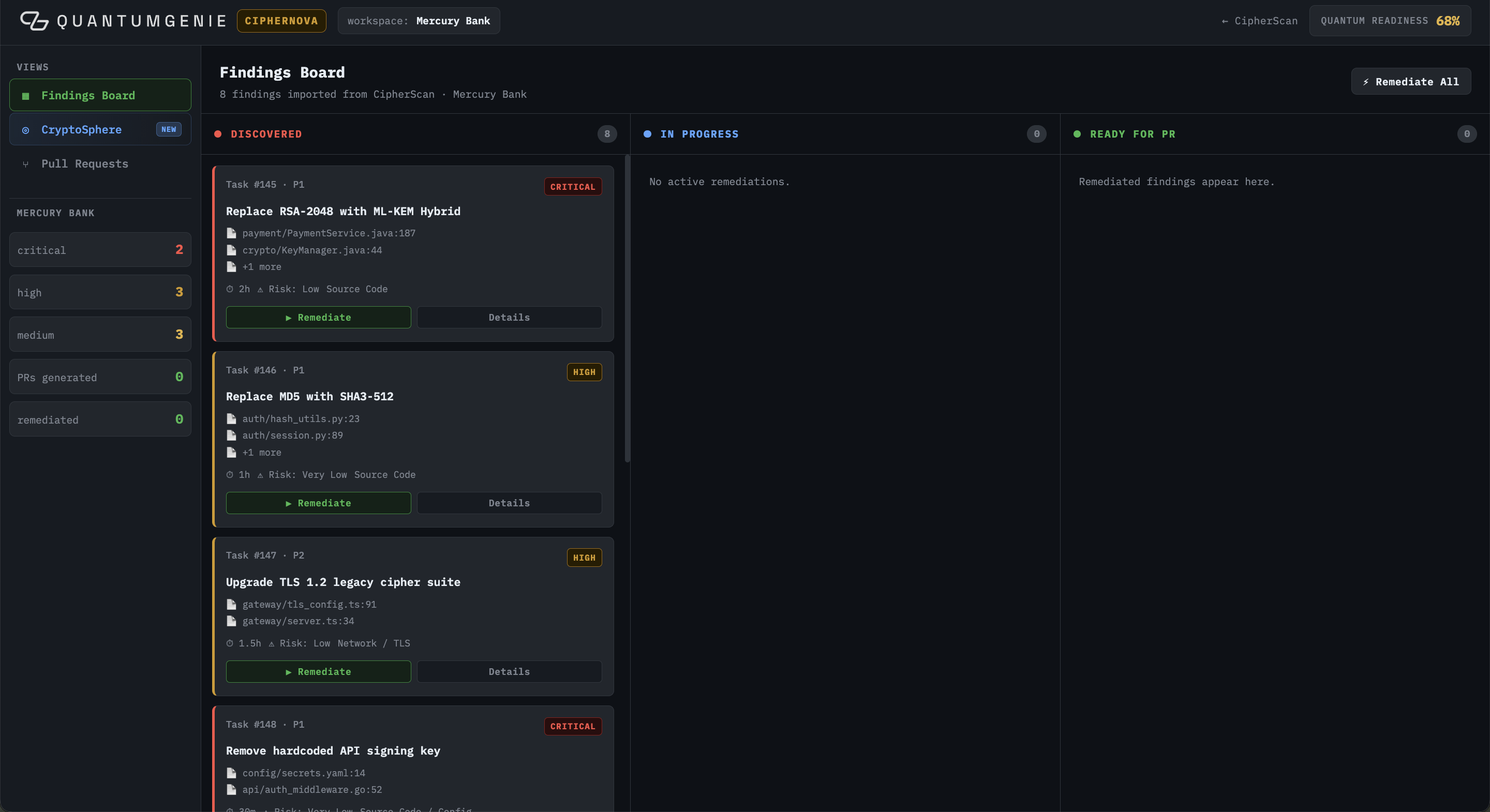
| Prioritization by Risk and Exposure | Ensures critical cryptographic elements are remediated first to mitigate quantum threats | Risk scoring and impact assessment workflows |
| Compliance Reporting and Audit Evidence | Supports transparent regulatory submissions and readiness reviews | Generation of detailed cryptographic inventory reports |
| Operationalizing Migration | Turns cryptographic insights into actionable remediation plans | Integrated change management and pull request orchestration |
How QuantumGenie Empowers Compliance and Migration Success
QuantumGenie’s CipherScan delivers automated discovery and comprehensive cataloging of cryptographic assets across the full enterprise attack surface, merging visibility from websites to source code repositories and PKI infrastructure. This capability directly addresses the EU’s cryptographic inventory exigency by simplifying compliance while creating a single source of truth for cryptographic risk management.
Furthermore, QuantumGenie’s platform facilitates prioritized migration planning and risk-based remediation workflows that enterprises need to operationalize their PQC transition. By bridging compliance readiness with practical execution, QuantumGenie helps organizations not just satisfy regulatory demands, but build a sustainable, agile cryptographic posture that withstands the advent of quantum computing threats. The EU mandate is thus not only a regulatory checkpoint but also a strategic catalyst for meaningful cybersecurity transformation, with QuantumGenie as a practical enabler.
Frequently Asked Questions
Why is a cryptographic inventory critical for EU regulatory compliance in 2026?
The EU mandates a comprehensive inventory to ensure organizations are fully aware of all cryptographic assets they deploy, which is essential to plan and validate their transition to post-quantum cryptography, thereby meeting security and compliance requirements.
How can enterprises begin preparing for the cryptographic inventory mandate?
Enterprises should adopt automated discovery tools to identify all cryptographic use across their environment, integrate risk prioritization, and develop migration plans aligned with regulatory timelines to ensure readiness by the 2026 deadline.
Watch The Quantum Threat
Sources And Further Reading
- Post-Quantum Cryptography and the 2026 Cryptographic Inventory Requirement Zynap · Jul 8, 2026
- Post-quantum cryptographic inventory – the latest PQC buzzword and why you need to know it Cybernews · Jul 1, 2025
- Post-Quantum Cryptography Migration: 2026 Roadmap LayerLogix · Jun 12, 2026