In This Article
What This Means
- The Foundation of Post-Quantum Preparedness: Cryptographic Inventory
- The Enterprise Stakes: Beyond Buzzwords to Practical Action
- How QuantumGenie Addresses the Cryptographic Inventory Challenge
The Foundation of Post-Quantum Preparedness: Cryptographic Inventory
As the quantum computing threat looms closer, enterprises are awakening to the urgency of transitioning to post-quantum cryptography (PQC). However, migrating to PQC is not as simple as flipping a switch. It demands a clear, comprehensive understanding of where cryptography currently lives within an organization's environment. This is where the concept of a cryptographic inventory emerges as a foundational step. The Cybernews article introduces this crucial enterprise function, emphasizing that without full visibility into all cryptographic assets—ranging from websites and certificates to applications and integrations—organizations risk missing vulnerable points during migration.
Moreover, the cryptographic inventory is not just a technical artifact; it’s a strategic asset that underpins migration planning, risk prioritization, compliance readiness, and operational agility. It transforms a traditionally opaque and fragmented landscape into a structured map that security and IT teams can act upon systematically. This foundational groundwork is what differentiates successful PQC programs from costly, disruptive, or incomplete attempts.
The Enterprise Stakes: Beyond Buzzwords to Practical Action
The urgency for cryptographic inventory extends beyond mere preparation; it is a response to evolving threats and market signals. For instance, the recent TechSpot story highlights ransomware groups exploiting 'post-quantum' terminology to amplify victim intimidation, revealing the complexity of the PQC ecosystem. This misuse of PQC buzzwords underscores how enterprises must diligently understand and control their cryptographic environment rather than react to hype-driven narratives.
Capturing a full cryptographic inventory allows organizations to identify legacy algorithms, unpatched endpoints, and insecure configurations—spotting the very weaknesses ransomware actors might exploit. Without this clarity, enterprises risk falling prey to advanced adversaries leveraging both quantum and classical attacks. The cryptographic inventory thus becomes a critical tool in risk exposure assessment and strategic mitigation, safeguarding future data confidentiality and integrity.
Key Enterprise Implications of Cryptographic Inventory for PQC Migration
| Implication | Description | Enterprise Impact |
|---|---|---|
| Discovery of cryptographic assets | Identify all cryptography usage across systems and code | Enables accurate risk assessment and migration scope definition |
| Cryptographic bill of materials (CBOM) | Structured cataloging of all cryptographic components | Facilitates prioritization and compliance reporting |
| Risk prioritization | Rank cryptographic elements by vulnerability and impact | Focuses remediation efforts efficiently |
| Governance and audit readiness | Maintain inventory for regulatory compliance | Reduces audit risk and evidences PQC readiness |
How QuantumGenie Addresses the Cryptographic Inventory Challenge
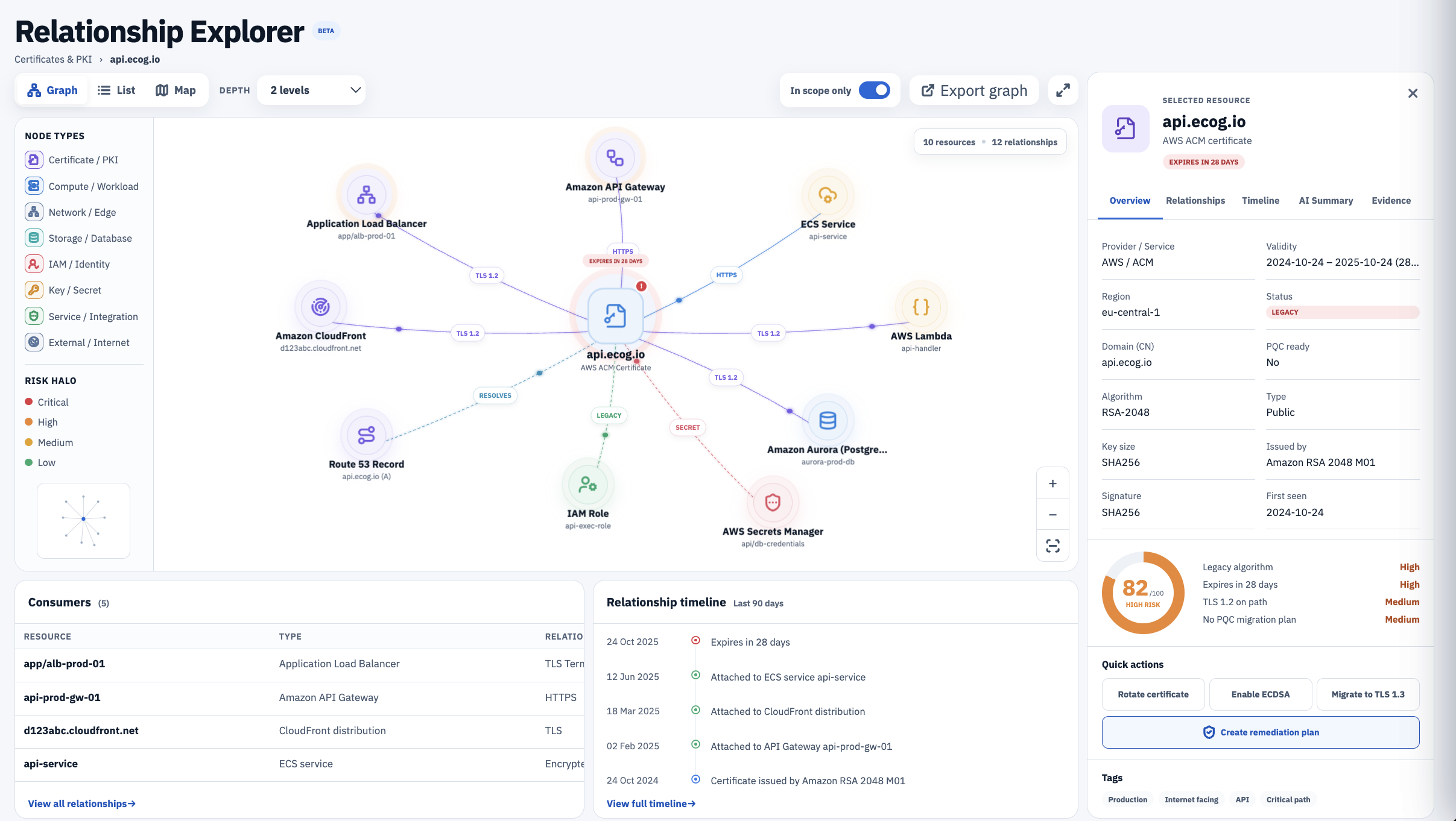
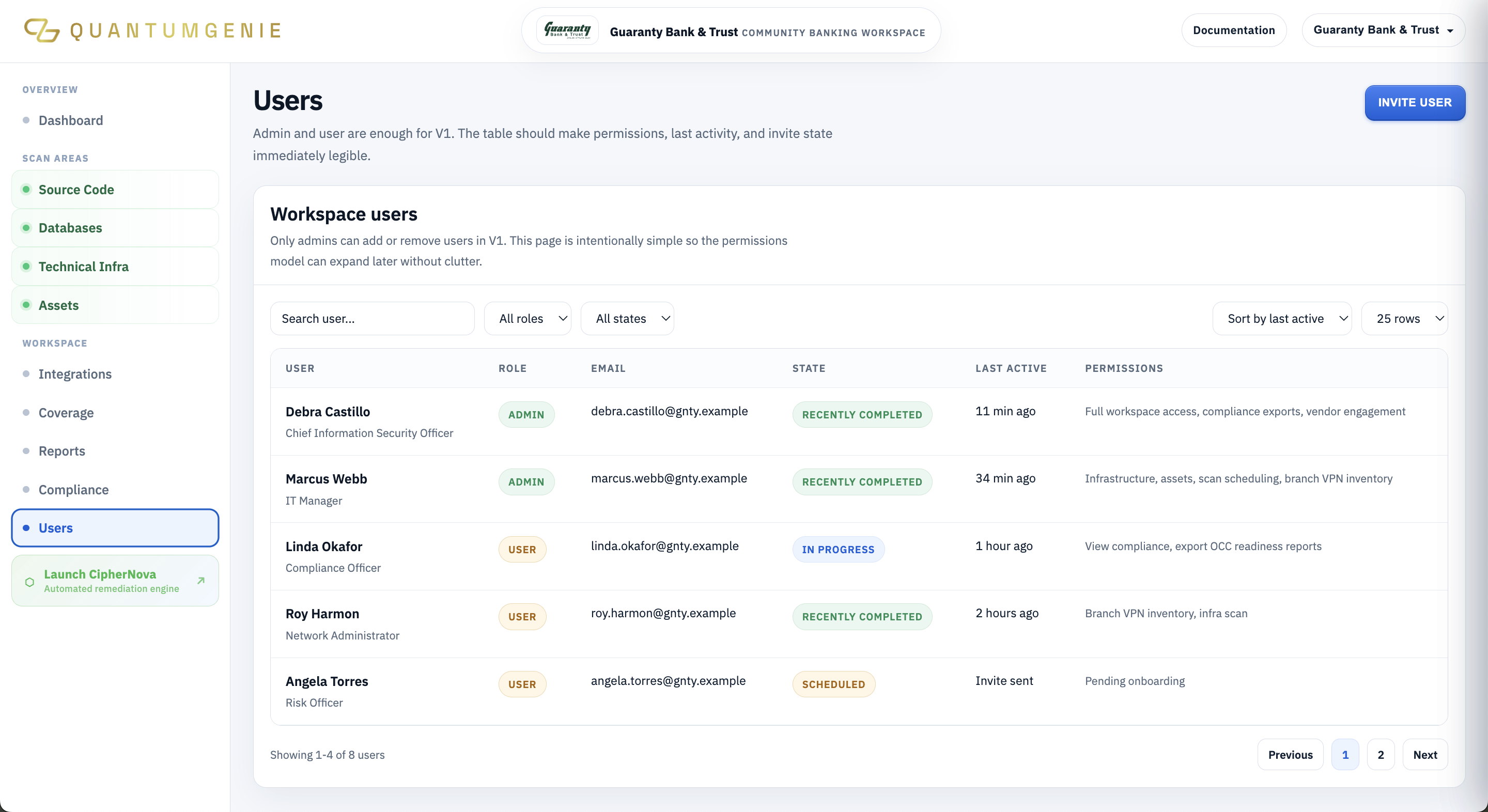
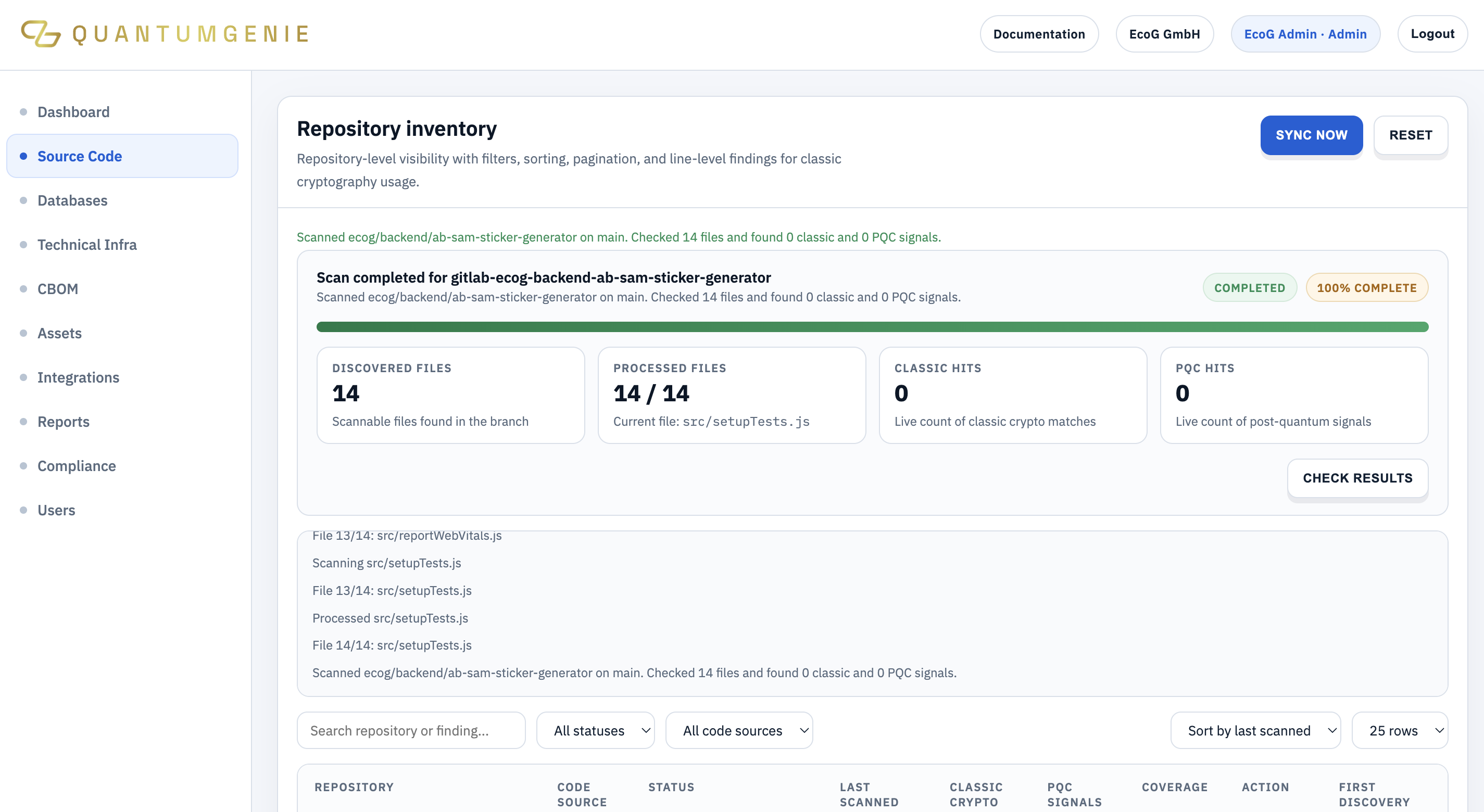
QuantumGenie’s platform was designed exactly for this pivotal requirement. Its discovery layer, CipherScan, provides deep visibility into cryptographic usage across the enterprise's web assets, certificates, codebases, infrastructure, applications, and integrations, enabling the assembly of a comprehensive cryptographic inventory and CBOM. This visibility is essential to understand the scope and depth of cryptographic exposure accurately.
Beyond discovery, QuantumGenie facilitates risk prioritization and migration planning, helping teams create actionable remediation strategies with workflow orchestration, exception management, and compliance tracking. By embedding cryptographic inventory in a governed lifecycle, QuantumGenie empowers enterprises to meet regulatory demands, manage crypto-agility, and seamlessly transition to post-quantum safe algorithms with minimal disruption. Thus, it transforms cryptographic inventory from a buzzword to a practical, business-critical capability.
Frequently Asked Questions
What is a cryptographic inventory and why is it important?
A cryptographic inventory is a comprehensive catalog of all cryptographic assets and their usage within an enterprise. It is important because it provides visibility needed to identify vulnerabilities, plan migrations to post-quantum algorithms, ensure compliance, and manage cryptographic risk effectively.
How does building a cryptographic inventory fit into post-quantum migration strategies?
Building a cryptographic inventory is the foundational first step in migration strategies. It enables enterprises to understand where and how cryptography is used, prioritize remediation efforts, plan workload changes, and track progress, ensuring a structured, risk-aware transition to post-quantum cryptography.
Watch The Quantum Threat
Sources And Further Reading
- Post-quantum cryptographic inventory – the latest PQC buzzword and why you need to know it Cybernews · Jun 15, 2025
- Ransomware groups are using 'post-quantum' hype to intimidate victims TechSpot · Apr 24, 2026