In This Article
What This Means
- Transforming Post-Quantum Migration with Continuous Key Management
- Challenges Behind the Shift: Inventory and Compliance Imperatives
- How QuantumGenie Fits the Picture: Enabling Agile and Compliant Migration
Transforming Post-Quantum Migration with Continuous Key Management
The accelerating pace of cryptographic change fueled by post-quantum cryptography adoption has exposed inherent weaknesses in traditional key management and migration approaches. Enterprises historically relied on long migration cycles, often spanning multiple quarters or years, to manually update cryptographic algorithms and keys. However, this model is increasingly unsustainable given the evolving quantum threat and regulatory pressure demanding swift and comprehensive upgrades.
Recent developments highlighted by PKWARE’s re-engineering of their key management layer demonstrate how continuous, agent-based deployment can shift this dynamic. By replacing batch migrations with real-time cryptographic updates, organizations can achieve true crypto agility. This new approach allows security teams to adapt quickly to new standards or vulnerabilities without the operational disruptions typical of staggered migration projects. Continuous key management thus represents a strategic evolution from reactive patching to proactive, resilient cryptographic governance.
Challenges Behind the Shift: Inventory and Compliance Imperatives
Real-world migration programs underscore challenges far beyond technology alone. Federal agencies have reported difficulty comprehensively identifying cryptographic assets and managing legacy protocols while transitioning to post-quantum standards. Without a full cryptographic inventory, efforts to update keys and algorithms risk gaps and compliance failures.
Regulatory deadlines, such as the upcoming EU mandate requiring cryptographic inventories by the end of 2026, add urgency to enterprises’ preparedness. These inventories are foundational: they provide the visibility needed to prioritize systems demanding urgent remediation and establish a proof framework for auditors and oversight bodies. Simply put, continuous cryptographic management demands not only flexible key deployment, but also exhaustive discovery and cataloging capabilities to track what needs change and when.

Comparing Traditional and Continuous Cryptographic Key Management
| Aspect | Traditional Key Management | Continuous Key Management (PKWARE Model) |
|---|---|---|
| Update Frequency | Periodic, multi-quarter projects | Real-time, agent-based continuous updates |
| Migration Model | Batch migrations causing disruptions | Non-disruptive, incremental cryptographic changes |
| Visibility Requirement | Often incomplete, manual audits | Automated comprehensive cryptographic inventory |
| Agility to Evolving Threats | Slow adaptation to new vulnerabilities | Rapid adaptability to new cryptographic standards |
How QuantumGenie Fits the Picture: Enabling Agile and Compliant Migration
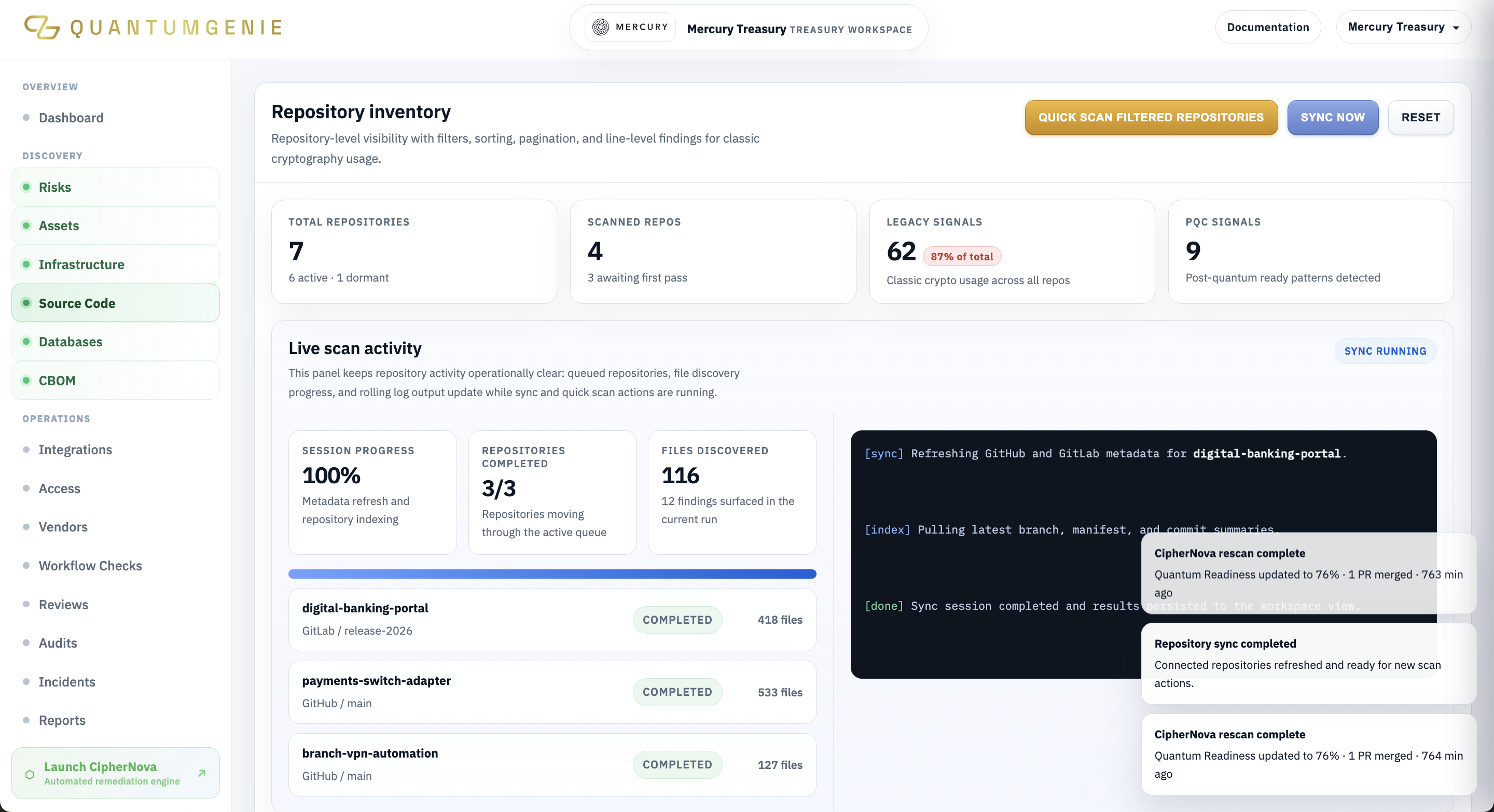
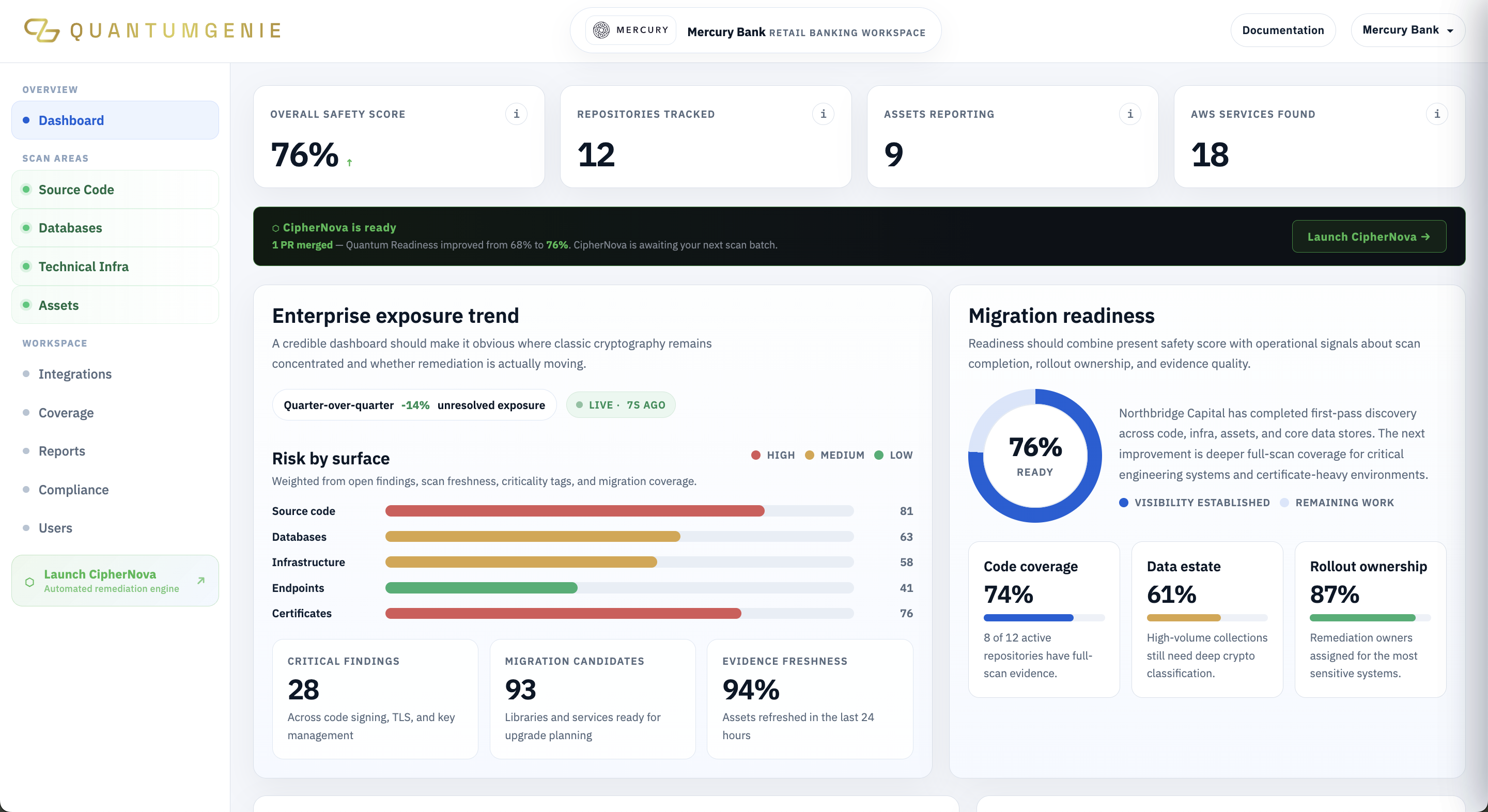
QuantumGenie addresses these critical needs by delivering enterprise-grade cryptographic discovery and remediation orchestration. Its CipherScan component uncovers and inventories cryptographic assets across websites, certificates, source code, infrastructure, and applications, producing a comprehensive cryptographic bill of materials (CBOM).
Built for continuous operation, QuantumGenie’s platform supports prioritization based on risk and compliance stance, allowing security teams to focus on the most critical updates first. Coupled with CipherNova’s workflow automation for remediation pull requests, policy exceptions, and change verification, enterprises can operationalize post-quantum migration activities efficiently and with high assurance.
Frequently Asked Questions
Why is continuous key management important for post-quantum cryptography?
Continuous key management allows enterprises to adapt cryptographic algorithms and keys in real time as new post-quantum standards emerge or vulnerabilities are discovered, providing agility and reducing the operational risks of slow, batch-based migrations.
How can enterprises prepare for regulatory cryptographic inventory requirements?
Enterprises should implement automated discovery tools to build and maintain comprehensive inventories of all cryptographic assets. This enables prioritization for migration and evidences compliance during regulatory audits, ensuring readiness for post-quantum transitions.
Watch The Quantum Threat
Sources And Further Reading
- PKWARE Re-Engineers Key Management for Continuous Cryptographic Change PKWARE · Jun 1, 2026
- Agencies Question Security Protocols Amid Shift to Post-Quantum Cryptography FedTech Magazine · May 21, 2026
- Post-Quantum Cryptography and the 2026 Cryptographic Inventory Requirement Zynap · Jul 10, 2026