In This Article
What This Means
- Post-Quantum Key Management Enters a New Phase
- Implications for Enterprise Security and Migration Strategies
- Comment QuantumGenie s'intègre : la plateforme pour l'agilité cryptographique continue
Post-Quantum Key Management Enters a New Phase
The rapid maturation of post-quantum cryptographic (PQC) standards has ushered enterprises into a complex security landscape where algorithm longevity is no longer guaranteed. PKWARE’s recent re-architecture of its key management system—highlighted by The Qubit Report—illustrates a pivotal shift towards continuous cryptographic agility. By enabling agent-based deployment of post-quantum algorithm updates, this approach supports seamless adaptation to emergent PQC protocols without disruptive overhauls.
This capability is crucial as enterprises face evolving cryptographic risks that demand not only one-time migrations but ongoing updates to key materials and algorithms. Continuous key management architectures respond directly to this challenge by ensuring organizations can pivot promptly as new PQC standards gain favor or vulnerabilities emerge in existing schemes.
Implications for Enterprise Security and Migration Strategies
With continuous cryptographic agility becoming a practical reality, enterprises must reconsider their post-quantum migration frameworks. Static, one-off cryptography upgrades risk rapid obsolescence and increased exposure, especially given the long tail of legacy systems and complex integration points.
Practically, this means enterprises must develop dynamic, risk-prioritized workflows that integrate discovery, impact assessment, and automated remediation of cryptographic assets across IT environments. The ability to deploy updated algorithms incrementally and verify their operational integrity without wholesale system disruptions is now a foundational component of effective security hygiene in a post-quantum world.
PQC Readiness Snapshot
| Area | Signal Today | Next Step |
|---|---|---|
| Discovery | More signals are becoming visible in public and vendor channels | Inventory exposed crypto across sites, code, and certificates |
| Prioritization | Not every asset carries the same migration urgency | Rank by business criticality and quantum exposure |
| Execution | Roadmaps only matter when teams own them | Assign timelines, owners, and a recurring review loop |
Comment QuantumGenie s'intègre : la plateforme pour l'agilité cryptographique continue
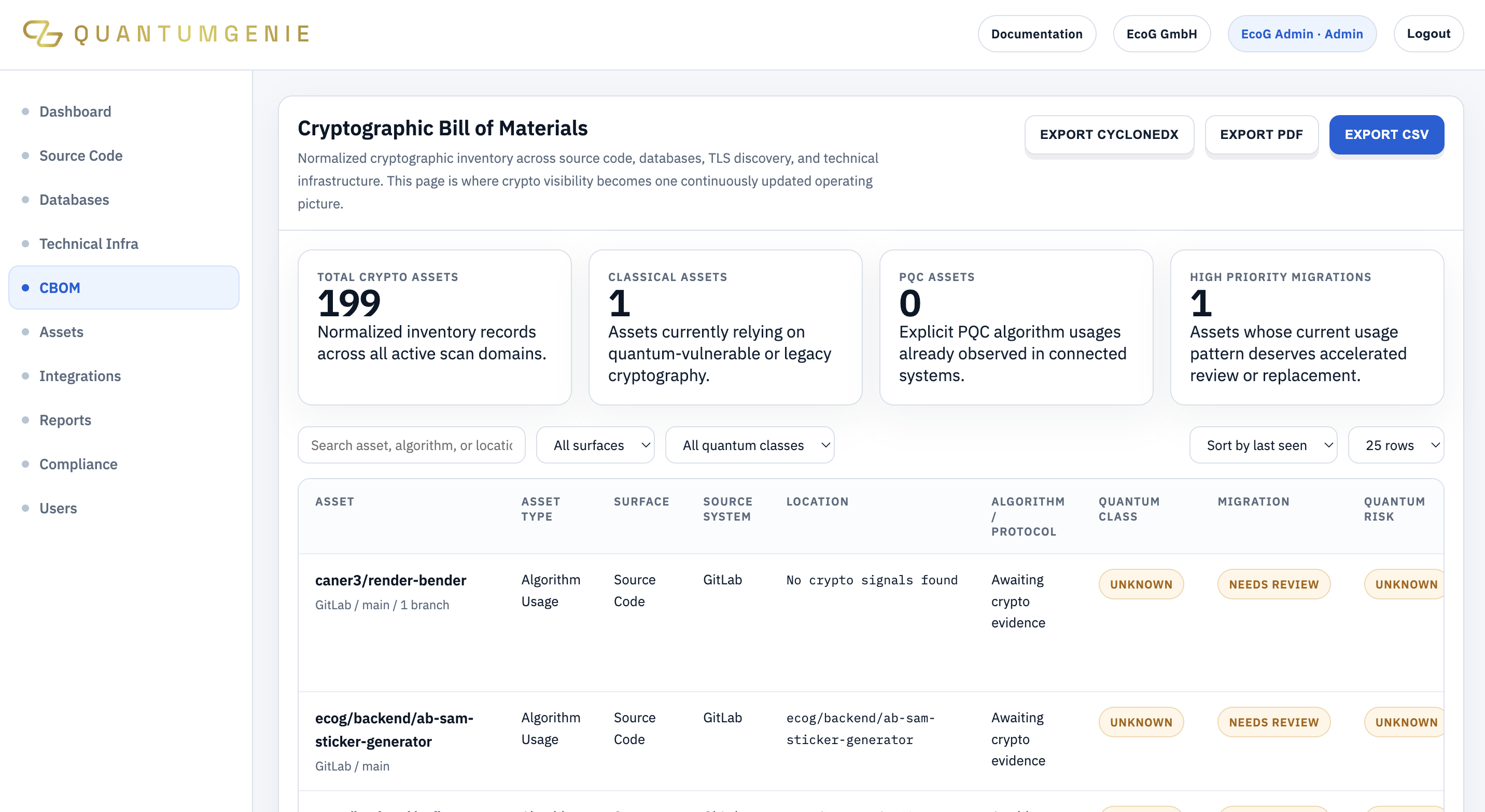
QuantumGenie répond directement à ce besoin de gestion continue des cryptographies post-quantiques. Sa couche CipherScan établit une visibilité exhaustive sur l’ensemble des actifs cryptographiques d’une organisation, des certificats aux bibliothèques applicatives, en créant un inventaire et une CBOM (Bill of Materials Cryptographique).
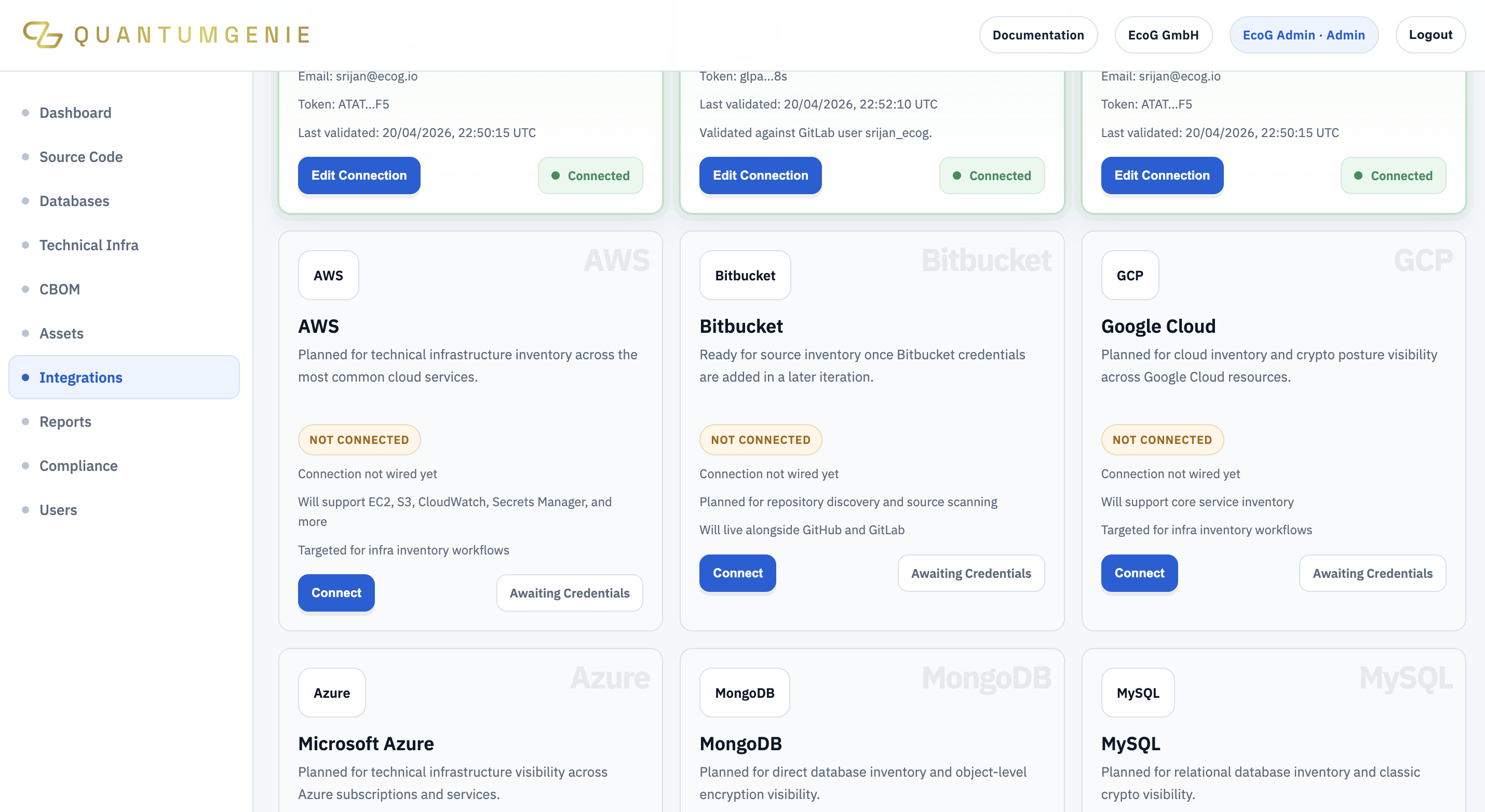
Avec CipherNova, QuantumGenie offre une orchestration fine des plans de remédiation, des demandes de modification et des politiques d’exception, facilitant ainsi des cycles itératifs de migration et d’adaptation cryptographique. Ce modèle de contrôle intégré garantit que les entreprises peuvent opérer une agilité cryptographique continue, réduire les risques liés aux changements et assurer la conformité réglementaire à mesure que les standards PQC évoluent.
Frequently Asked Questions
Why is continuous cryptographic agility necessary in the post-quantum era?
Post-quantum cryptographic standards and threat models evolve rapidly, making one-time migrations insufficient. Continuous agility allows enterprises to update keys and algorithms responsively to maintain security.
How does comprehensive cryptographic discovery enable effective post-quantum migration?
Without a detailed inventory of where and how cryptography is used, enterprises cannot accurately assess risk or prioritize migration efforts, potentially leaving vulnerabilities unaddressed.
Watch The Quantum Threat
Sources And Further Reading
- PKWARE Re-Architects Key Management for Continuous Post-Quantum Cryptographic Agility The Qubit Report · Jun 1, 2026