In This Article
What This Means
- The Emergence of a Structured Post-Quantum Framework
- Practical Implications for Enterprise Migration Efforts
- How QuantumGenie Supports Crypto-Agility and Strategic PQC Migration
The Emergence of a Structured Post-Quantum Framework
The Open Security Architecture's newly released guide on post-quantum cryptography offers enterprises a much-needed structured approach to replacing vulnerable asymmetric algorithms with quantum-resistant alternatives. What sets this guide apart from prior high-level advice is its pragmatic emphasis on crypto-agility—the ability to adapt cryptographic systems flexibly—and hybrid migration strategies that combine classical and post-quantum algorithms during transition phases. This approach recognizes the complexity and risk of cryptographic changes in sprawling enterprise environments and aims to minimize disruption while managing evolving threats.
Enterprises today face an accelerating risk landscape as quantum computing progresses. The guide highlights that a blind ‘rip-and-replace’ effort is fraught with operational and security risks; instead, organizations need a carefully planned, phased migration roadmap. Central to this is building comprehensive cryptographic inventories, analyzing dependencies, and creating adaptable configurations that can pivot as new PQC standards and implementations solidify. This groundwork makes crypto-agility less an abstract goal and more a measurable capability that can save tremendous time and cost later.
Practical Implications for Enterprise Migration Efforts
The guide’s framework directly addresses the multifaceted challenges CISOs and enterprise architects face: discovering where cryptography resides across software, infrastructure, and data flows; validating crypto controls; and governing changes with minimal business interruption. Hybrid approaches allow enterprises to deploy post-quantum algorithms alongside classical schemes, preserving compatibility and enabling continuous security validation during migration.
Supporting this perspective, recent platforms launched by innovators like 4 Qubits underscore the market validation of these needs, offering solutions that automate asset discovery, key management governance, and compliance attestation tailored for post-quantum readiness. Combined, these developments highlight a clear message for enterprises—success in PQC migration depends not on theoretical cryptography alone, but on systematic, inventory-driven processes and agile operational workflows.

Key Components for Enterprise Post-Quantum Cryptography Readiness
| Component | Description | Enterprise Benefit |
|---|---|---|
| Cryptographic Inventory | Comprehensive mapping of where cryptography is used across all enterprise assets | Enables accurate risk assessment and migration prioritization |
| Crypto-Agility | Capability to switch or combine cryptographic algorithms with minimal disruption | Supports phased migration and adapts to evolving PQC standards |
| Hybrid Migration Strategies | Using classical and quantum-resistant algorithms concurrently during transition | Ensures compatibility and continuous security validation |
| Governance and Workflow Management | Policy enforcement, change reviews, and exception handling for crypto changes | Reduces operational risks during migration and improves compliance |
How QuantumGenie Supports Crypto-Agility and Strategic PQC Migration
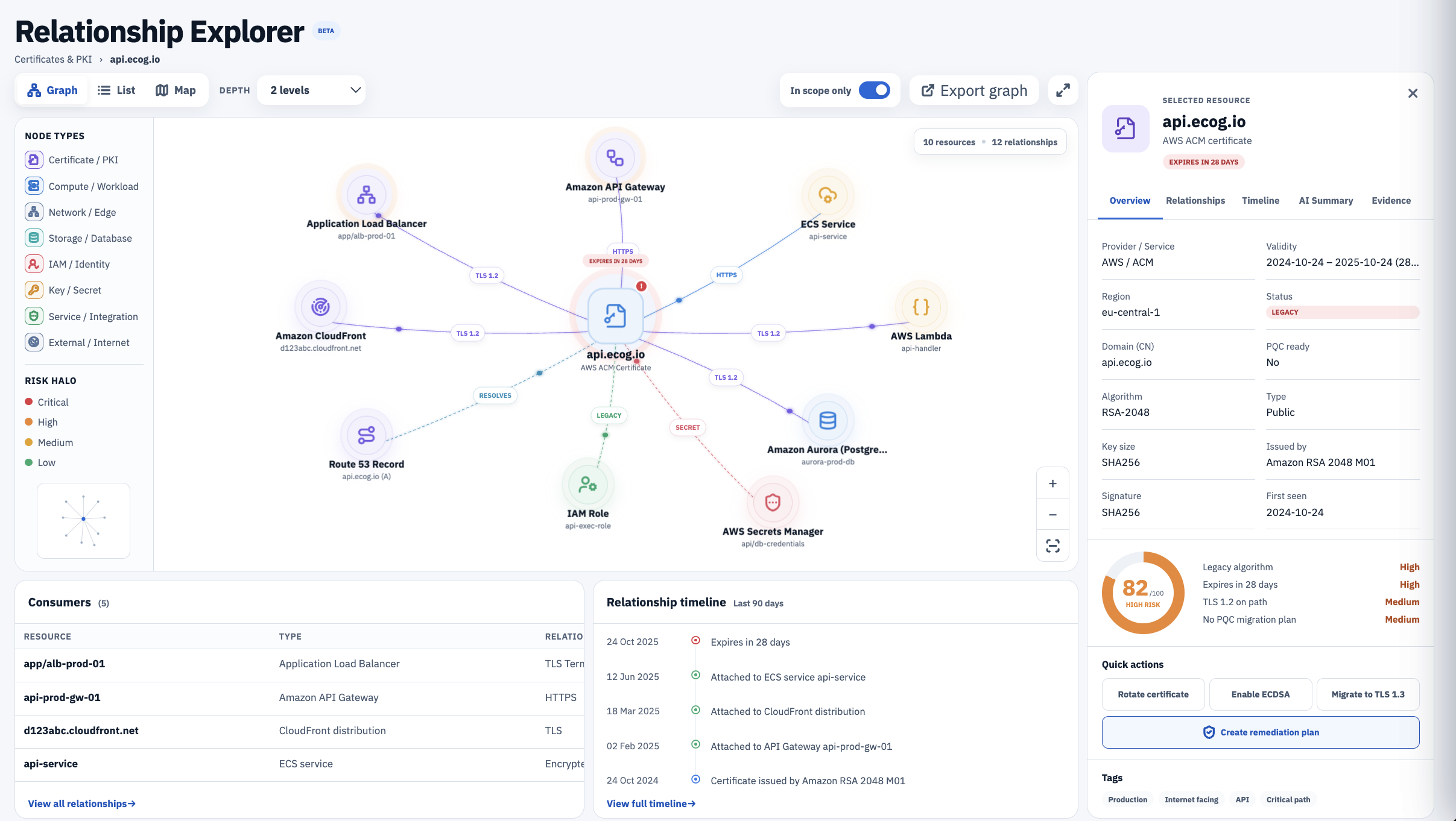
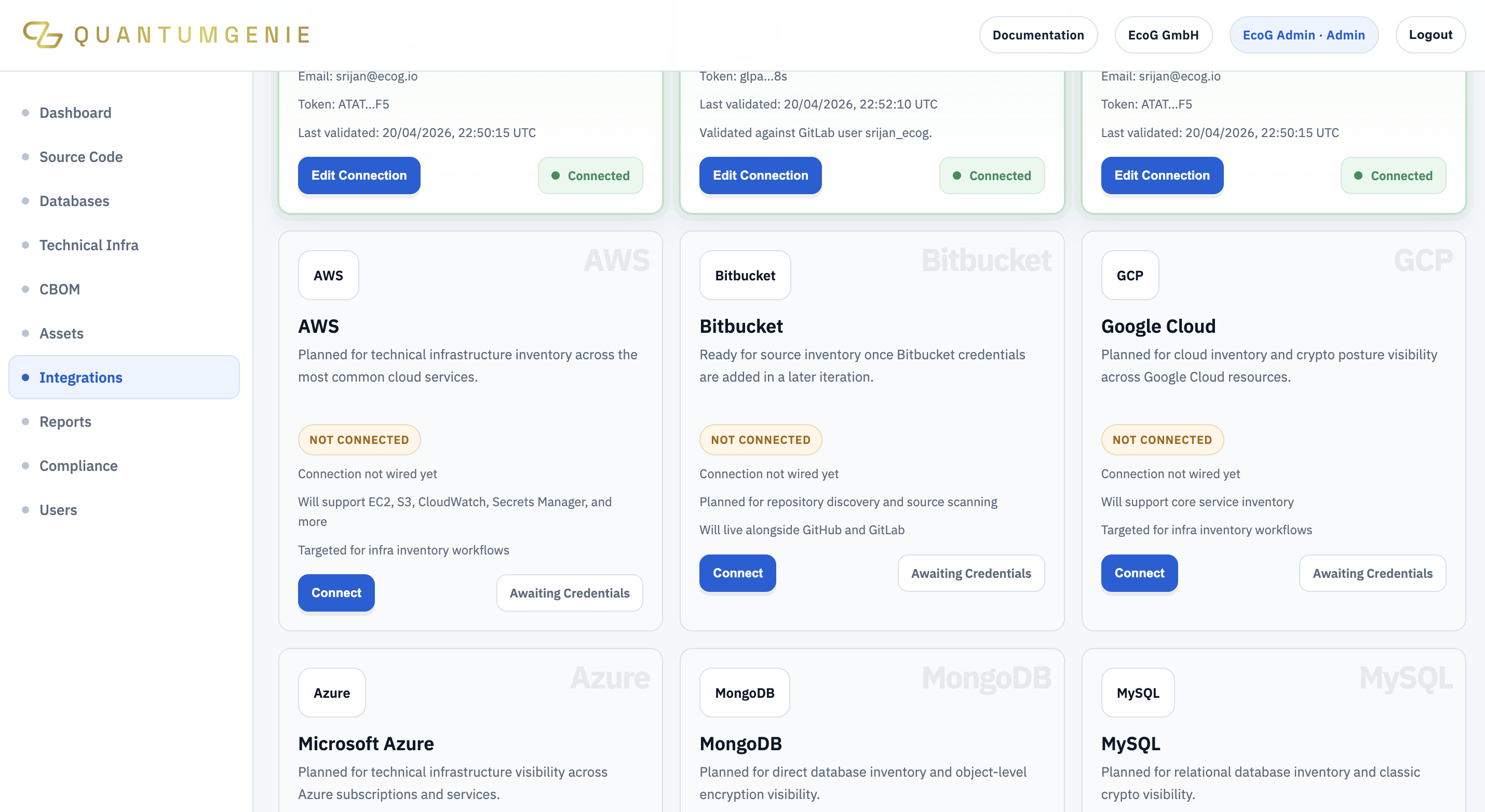
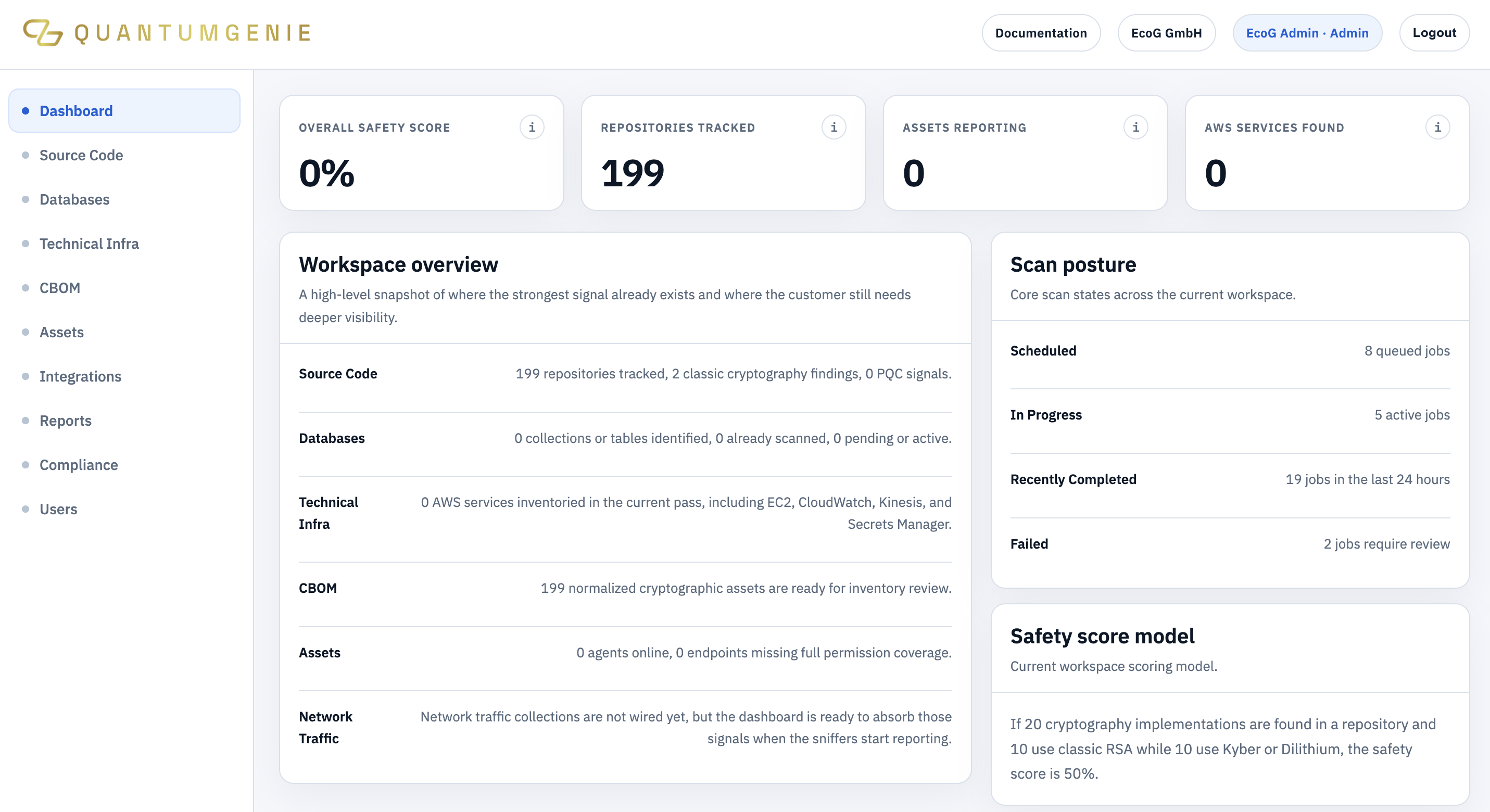
QuantumGenie fits naturally into this evolving enterprise landscape by providing the foundational infrastructure for comprehensive cryptographic discovery and risk-based prioritization across complex IT ecosystems. Its CipherScan layer offers unparalleled visibility into cryptographic use in websites, certificates, source code, infrastructure, databases, applications, and integrations. This creates a detailed cryptographic inventory and SBOM (Software Bill of Materials), essential for the hybrid migration planning that Open Security Architecture advocates.
Moreover, QuantumGenie's CipherNova remediation and orchestration layer empowers teams to operationalize migration workflows—managing remediation plans, pull requests, policy exceptions, change reviews, and validation checks. This capacity for end-to-end workflow execution removes friction from crypto-agility initiatives, helping organizations move from planning to measurable PQC readiness with confidence. In short, QuantumGenie provides the practical tools needed to implement the structured, agile frameworks promoted by authoritative guides, closing the gap between strategy and execution in post-quantum cryptography migration.
Frequently Asked Questions
What is crypto-agility and why is it critical for enterprises?
Crypto-agility refers to an organization's ability to quickly adapt cryptographic systems by replacing or upgrading algorithms without major disruption. It is critical because quantum computing threatens existing algorithms, and agile systems allow smooth, phased migration to quantum-resistant cryptography.
How does a cryptographic inventory facilitate post-quantum migration?
A cryptographic inventory identifies all instances where cryptography is used across an enterprise's assets—such as applications, certificates, databases, and infrastructure. This visibility enables risk prioritization and targeted remediation, making migration to post-quantum cryptography more efficient and less error-prone.
Watch The Quantum Threat
Sources And Further Reading
- Open Security Architecture Releases Post-Quantum Cryptography and Quantum-Safe Security Guide Open Security Architecture · Feb 1, 2026
- 4 Qubits Launches Post-Quantum Cryptography Compliance Platform for Enterprises 4 Qubits · Jul 8, 2026