In This Article
What This Means
- NIST’s Finalization: A Quantum Leap for Enterprise Security
- Implications for Enterprise Cryptographic Inventory and Migration Planning
- How QuantumGenie Fits into the PQC Transition Landscape
NIST’s Finalization: A Quantum Leap for Enterprise Security
In August 2024, NIST officially announced its first three finalized post-quantum encryption standards aimed at securing electronic information against future quantum-enabled threats. This milestone clearly signals the end of the exploratory phase and the start of broad enterprise adoption. Enterprises can no longer treat post-quantum cryptography (PQC) as an abstract future concern; these standards are ready for deployment now.
Implications for Enterprise Cryptographic Inventory and Migration Planning
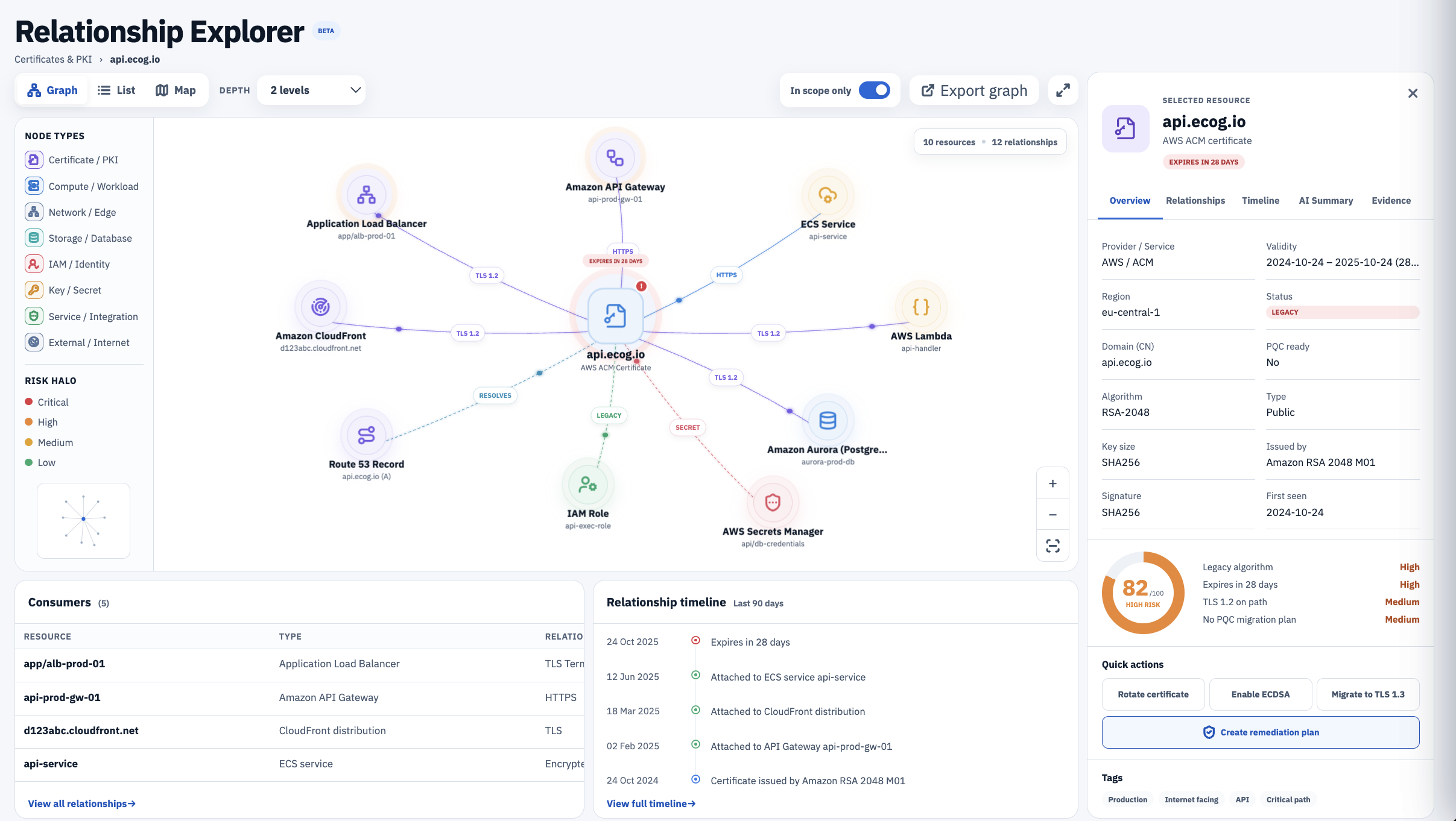
The practical effect of NIST’s standards is to accelerate the urgency for enterprises to comprehensively map and understand their cryptographic assets. Cryptographic inventory is foundational: without a clear map of where current encryption algorithms reside—across websites, certificates, source code, databases, and applications—enterprises risk gaps in security coverage or inefficient migration efforts. Beyond discovery, enterprises need to prioritize based on risk exposure and plan migration pathways that maintain business continuity while ensuring cryptographic agility.
However, integration of NIST’s standards is not a simple upgrade - it requires meticulous operational processes to orchestrate remediation and verify cryptographic correctness at scale.

Key Enterprise Actions Post-NIST PQC Standard Finalization
| Action | Description | QuantumGenie Capability Support |
|---|---|---|
| Comprehensive Cryptographic Discovery | Map all existing cryptographic assets across infrastructure and codebases | CipherScan provides automated inventory and vulnerability exposure analysis |
| Risk-Based Prioritization | Identify highest exposure and prioritize migration workflows | CipherNova enables risk-ranking and remediation orchestration |
| Operational Remediation and Verification | Manage workflow-driven code, certificate, and configuration updates | CipherNova facilitates pull requests, policy exceptions, and verification |
| Compliance Evidence and Audit Support | Maintain records demonstrating adherence to NIST PQC standards | Cryptographic inventory reports and remediation logs support compliance documentation |
How QuantumGenie Fits into the PQC Transition Landscape
QuantumGenie’s platform directly addresses these challenges by providing comprehensive discovery of cryptographic usage across the enterprise to build an authoritative cryptographic inventory and CBOM. Its CipherScan layer offers the visibility needed to identify vulnerable legacy algorithms and footprint cryptographic exposure accurately.
Moreover, the CipherNova remediation layer supports prioritization and workflow-driven remediation planning aligned with the evolving NIST standards, enabling enterprises to operationalize cryptographic agility efficiently. This capability is vital for enterprises to demonstrate compliance readiness and respond nimbly as PQC migration efforts ramp up.
Frequently Asked Questions
Why is the finalization of NIST’s post-quantum encryption standards important now?
NIST’s finalization signals that enterprise-grade, quantum-resistant encryption algorithms are ready for implementation, shifting PQC from theoretical to actionable, and accelerating enterprise migration programs.
How does QuantumGenie help enterprises comply with emerging PQC standards?
QuantumGenie offers automated cryptographic discovery and remediation orchestration, enabling enterprises to build detailed cryptographic inventories, prioritize risk-based migration, and operationalize PQC adoption workflows aligned with NIST standards.
Watch The Quantum Threat
Sources And Further Reading
- NIST Finalizes First Three Post-Quantum Encryption Standards National Institute of Standards and Technology · Aug 13, 2024
- Ransomware Groups Exploit 'Post-Quantum' Hype to Intimidate Victims TechSpot · Apr 24, 2026