In This Article
What This Means
- Kyber Ransomware’s Pioneering Use of Post-Quantum Cryptography
- Implications for Enterprise Cryptographic Hygiene and Readiness
- How QuantumGenie Supports Operational Visibility and Mitigation
Kyber Ransomware’s Pioneering Use of Post-Quantum Cryptography
Kyber ransomware has become the first confirmed criminal group actively deploying a NIST-standardized post-quantum cryptographic algorithm, ML-KEM-1024, in its encryption toolkit. This adoption is unprecedented: while enterprises are still preparing for PQC migration, threat actors are already wielding it to secure their ransomware communications and extort victims. The Cloud Security Alliance’s recent research note reveals this practical, albeit risky, implementation of PQC in the wild. Despite questions about the true quantum resistance of this deployment, it underscores a significant operational security challenge—attackers exploiting the cryptographic arms race to deepen their hold and complicate incident response.
Implications for Enterprise Cryptographic Hygiene and Readiness
The Kyber ransomware case diversifies the crypto threat landscape far beyond traditional asymmetric and symmetric algorithms. Enterprises can no longer isolate PQC as a distant technical upgrade but must address cryptographic visibility today. Ransomware leveraging PQC schemes complicates decryption and forensic analysis, increasing the cost of breaches and ransomware recovery. At the same time, the broad ransomware ecosystem’s rhetorical use of 'post-quantum' jargon aims to intimidate victims, adding social engineering layers to cryptographic complexity. Enterprises must inventory, assess, and segment their cryptographic assets and dependencies rigorously. Cryptographic Agility programs must now include operational readiness to detect misuse of PQC protocols and keys internally and in external exchanges.

Comparison of Cryptographic Preparedness Aspects in Light of Kyber Ransomware PQC Use
| Aspect | Traditional Cryptography State | Challenges with PQC in Threat Use |
|---|---|---|
| Visibility | Limited visibility into cryptographic usage | Need to detect new PQC algorithms in wild |
| Agility | Rarely updated crypto policies | Must adapt quickly to new cryptographic threats |
| Risk Prioritization | Based on known algorithm weaknesses | Must consider misuse of PQC by adversaries |
| Compliance | Focus on legacy crypto standards | Emerging regulations incorporate PQC readiness |
How QuantumGenie Supports Operational Visibility and Mitigation
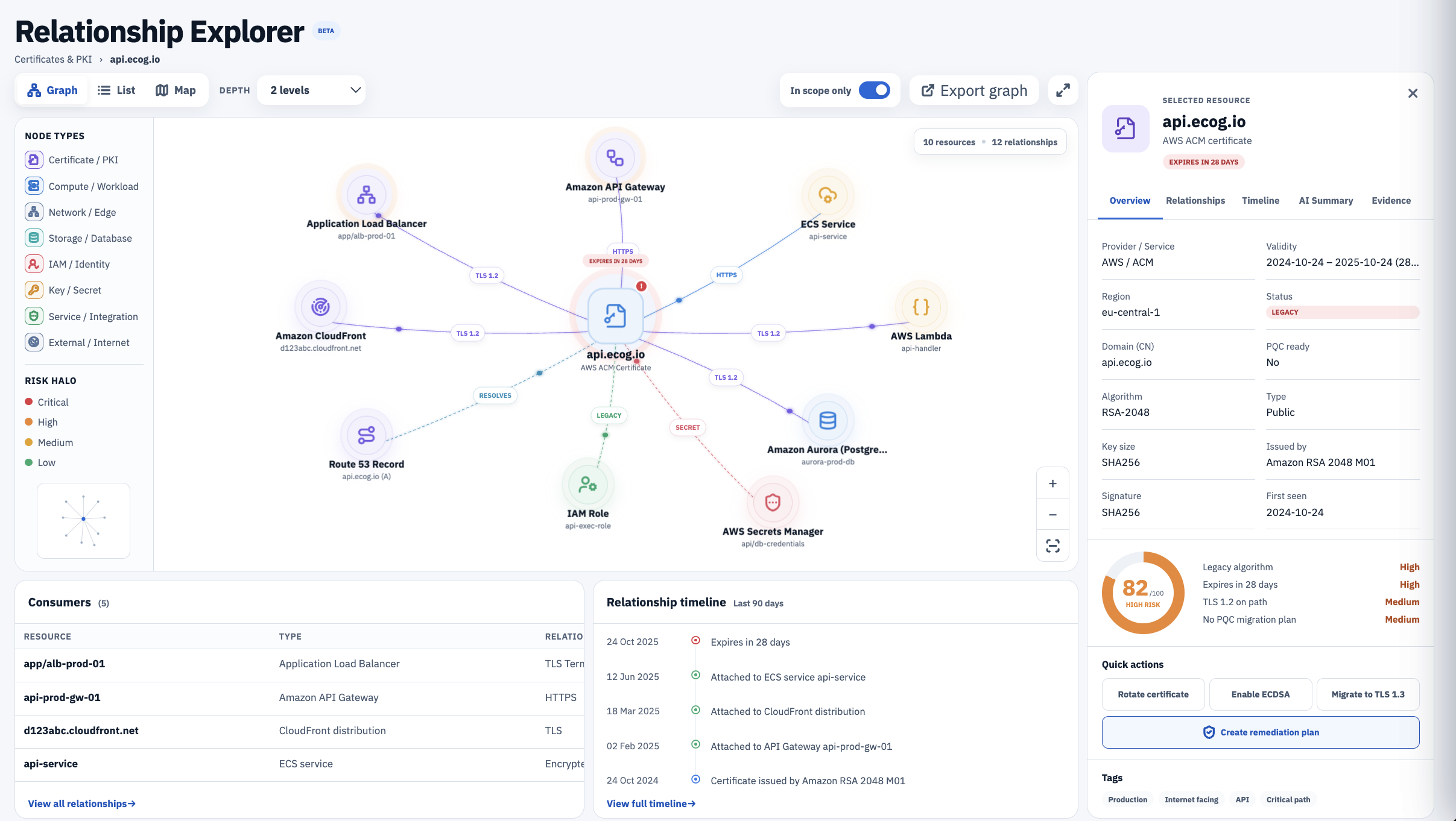
QuantumGenie’s platform is uniquely positioned to assist enterprises navigating this emergent reality. By providing comprehensive cryptographic discovery across websites, certificates, source code, and infrastructure, QuantumGenie enables security teams to build actionable inventories and component bills of materials (CBOM). This inventory is critical to prioritize remediation workflows and plan agile migrations before and after PQC adoption. As threat actors adopt post-quantum cryptography, operational visibility to cryptographic usage patterns and anomalies is paramount. QuantumGenie’s CipherScan and CipherNova tools empower teams to monitor cryptographic exposure continuously and orchestrate remediation workflows with compliance and risk priorities in mind. This ensures that organizations maintain control of their cryptographic estate amidst an evolving threat landscape where PQC is weaponized.
Frequently Asked Questions
Why does Kyber ransomware’s use of PQC increase urgency for enterprises?
Because criminals operationalizing NIST-standard post-quantum algorithms demonstrate that PQC is no longer theoretical. Enterprises need operational visibility and readiness to identify and remediate cryptographic risks before they can be exploited by threat actors.
How can cryptographic inventory help mitigate risks from PQC-enabled ransomware?
A thorough cryptographic inventory helps organizations understand where and how cryptography is deployed, enabling them to detect anomalous or unauthorized use of PQC and prioritize remediation or migration actions timely and efficiently.
Watch The Quantum Threat
Sources And Further Reading
- Kyber Ransomware: First Criminal Use of Post-Quantum Encryption Cloud Security Alliance · Apr 24, 2026
- Ransomware Groups Exploit 'Post-Quantum' Hype to Intimidate Victims TechSpot · Apr 24, 2026
- PKWARE Re-Engineers Key Management for Continuous Cryptographic Change PKWARE · Jun 1, 2026