In This Article
What This Means
- Quantum-Safe Ransomware Signals a New Paradigm
- The Imperative of Crypto-Agility Amid Rising Threats
- How QuantumGenie Fits into This Evolving Threat Landscape
Quantum-Safe Ransomware Signals a New Paradigm
The cybersecurity landscape has witnessed a profound shift with the confirmation that the Kyber ransomware family employs ML-KEM, a post-quantum cryptographic algorithm. This milestone, reported by Ars Technica, illustrates that threat actors are no longer just a step behind but are proactively integrating quantum-resistant technologies. For enterprises, this elevates the urgency to rethink existing cryptographic defenses—not only scrambling to prepare for future quantum computers but also contending with adversaries using these advanced cryptographic tools today.
This development implies that criminals are hardening their payloads against any prospective decryption attempts, effectively extending the shelf life of stolen data and ransom schemes. Enterprises now face a dual challenge: shielding against conventional threats while anticipating quantum-era capabilities in active attacks. This scenario underscores the need for comprehensive cryptographic asset discovery and an adaptable, prioritized migration approach.
The Imperative of Crypto-Agility Amid Rising Threats
The rising surge in ransomware, coinciding with early post-quantum cryptography transitions, exacerbates risks during periods of cryptographic change. As highlighted by BBC News and further emphasized by TechRadar, achieving crypto-agility—rapidly reconfiguring cryptographic systems and protocols—is paramount for maintaining resilience. Enterprises must embed flexibility to pivot promptly to quantum-safe standards to mitigate vulnerabilities exposed during migration phases.
Without precise inventory and classification of cryptographic assets, organizations risk blind spots that threat actors exploiting post-quantum ransomware can easily leverage. Therefore, crypto-agility requires not just the cryptographic algorithms themselves, but holistic operational visibility and prioritized workflows to ensure that defenses evolve fast enough to keep adversaries at bay.
Strategies to Counter Post-Quantum Ransomware Threats
| Strategy | Enterprise Action | QuantumGenie Capability |
|---|---|---|
| Comprehensive Discovery | Build a full cryptographic inventory across all assets | CipherScan identifies cryptographic use and exposure |
| Risk Prioritization | Focus migration and remediation on high-risk cryptographic elements | Risk scoring and prioritization dashboards |
| Crypto-Agility Enablement | Facilitate rapid algorithm transitions and verification | CipherNova workflow orchestration and pull request management |
| Compliance Readiness | Support auditing against emerging PQC regulations | Evidence capture and policy exception tracking |
How QuantumGenie Fits into This Evolving Threat Landscape
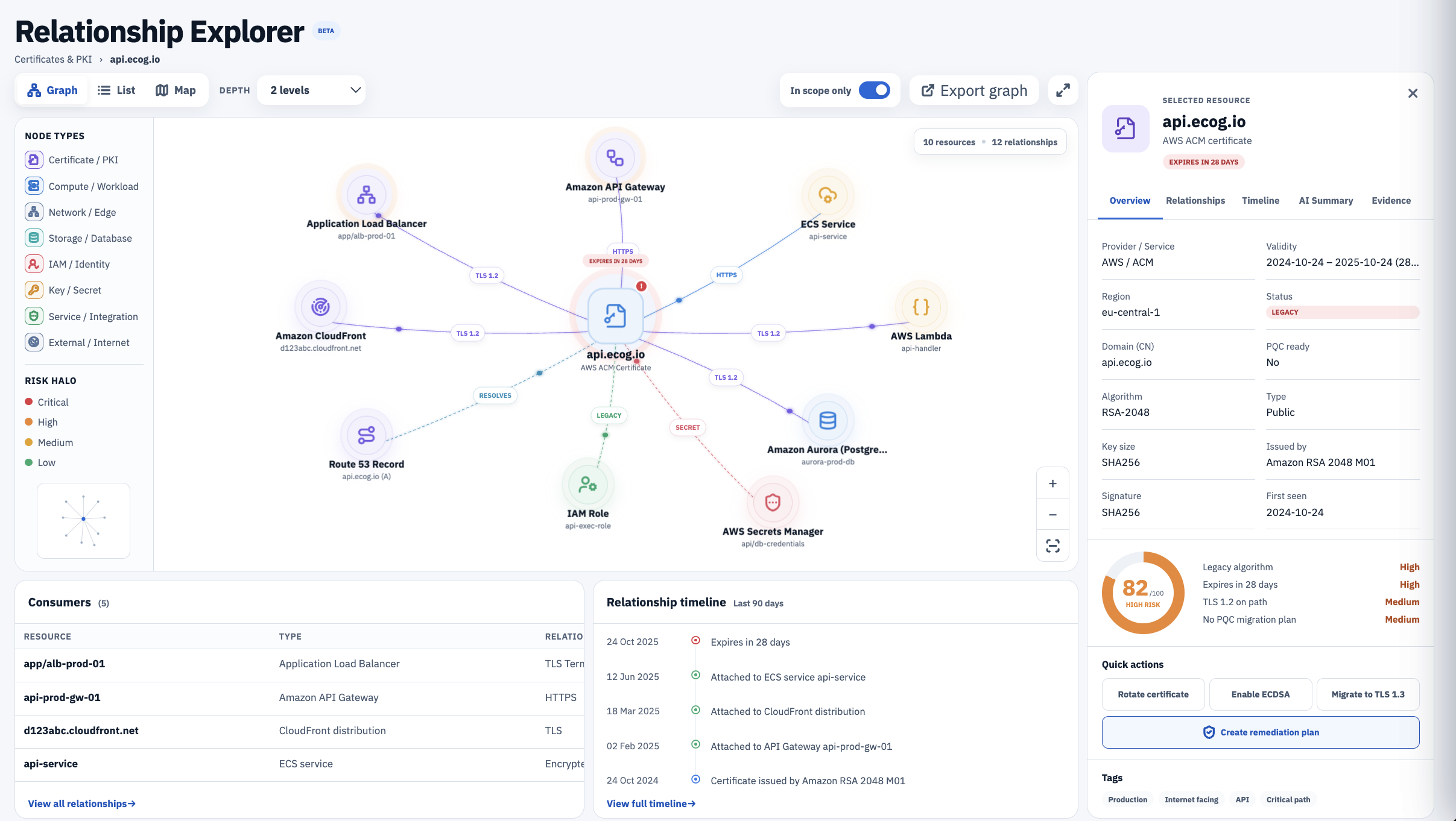
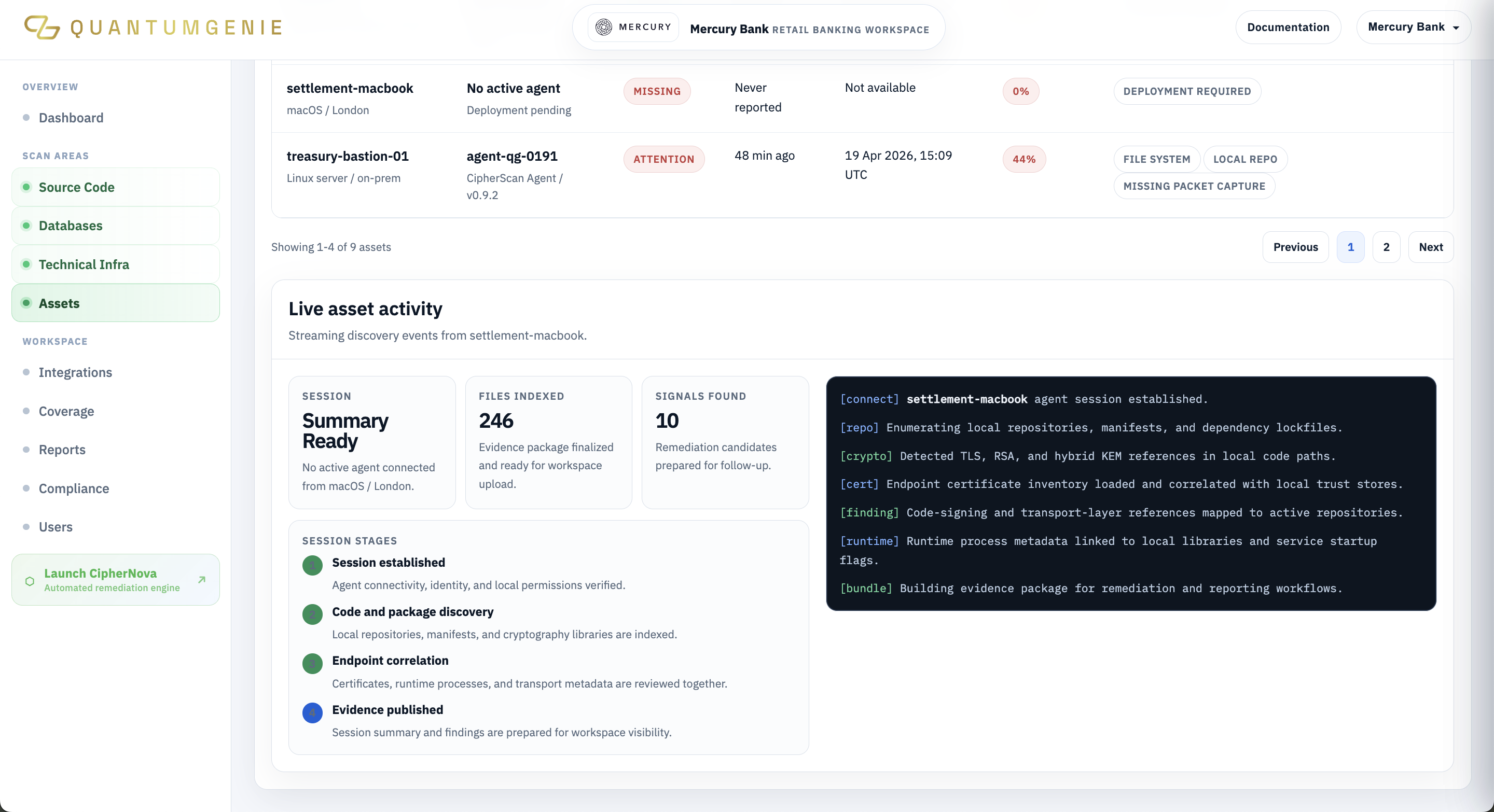
QuantumGenie equips enterprises with the essential toolset to navigate this complex transition. With CipherScan providing exhaustive discovery across websites, certificates, source code, databases, and integrations, organizations gain a clear cryptographic inventory. This intelligence is pivotal to prioritizing remediation efforts where exposure to quantum-safe ransomware risk is highest.
Moreover, QuantumGenie orchestrates migration workflows that foster tactical crypto-agility, enabling teams to respond to the newly emergent ransomware threat vectors intelligently and swiftly. By facilitating controlled, policy-driven change and verification, QuantumGenie actively reduces the attack surface during these critical post-quantum deployments. In this way, QuantumGenie empowers enterprises not just to prepare for the quantum future but to defend effectively against its present manifestations.
Frequently Asked Questions
Why is ransomware adopting post-quantum cryptography a significant concern for enterprises?
Ransomware using post-quantum cryptography like ML-KEM strengthens its encryption, making data recovery without paying ransom more difficult even if quantum decryption technologies become available in the future. This raises the stakes for enterprises to detect and mitigate such threats proactively.
How does crypto-agility help enterprises manage the transition to post-quantum cryptography?
Crypto-agility allows enterprises to rapidly switch cryptographic algorithms and protocols in response to new threats or standards, reducing vulnerable windows during migration and ensuring continuous security against evolving quantum and classical attacks.
Watch The Quantum Threat
Sources And Further Reading
- In a first, a ransomware family is confirmed to be quantum-safe Ars Technica · Apr 23, 2026
- Ransomware Surge Amid PQC Transition: Why Enterprises Must Harden Their Cryptographic Migration Strategy BBC News · Jul 15, 2026
- Cyber resilience in the post-quantum era: the time of crypto-agility TechRadar · Aug 25, 2025