In This Article
What This Means
- The Imperative of a Multi-Phase Crypto Agility Framework
- Foundational Role of Cryptographic Inventory and Risk Prioritization
- How QuantumGenie Fits the Enterprise Crypto Agility Landscape
The Imperative of a Multi-Phase Crypto Agility Framework
The transition to post-quantum cryptography is no longer theoretical; it is a pressing reality for enterprises facing the imminent threat of quantum-enabled cyber attacks. A recent article from PQC Today distills this challenge into a practical seven-phase migration framework: assessment and inventory, risk prioritization, preparation and tooling, testing and validation, hybrid migration, production deployment, and ongoing monitoring. This phased strategy embodies the core principle of crypto agility — the ability to seamlessly swap cryptographic algorithms within operational systems to maintain security resilience. Implementing such an approach allows organizations to systematically identify cryptographic assets, prioritize remediation efforts based on risk, and foster adaptable systems capable of rapid cryptographic updates.
Foundational Role of Cryptographic Inventory and Risk Prioritization
Supporting this framework, the importance of building a detailed cryptographic inventory cannot be overstated, as highlighted by QNu Labs. Organizations need a unified and comprehensive catalog of all cryptographic elements — including algorithms, protocols, certificates, and keys — across their heterogeneous IT environments. Without this visibility, attempts at migration risk missing critical assets or creating gaps in protection. In parallel, risk-based prioritization enables focused remediation where quantum threats pose the highest business impact, aligning scarce resources with urgency. Services like those offered by FEDLIN further underline the necessity of aligning such inventories and architectures with recognized standards (NIST 800-53) and producing audit-ready evidence — essential for governance and compliance frameworks in regulated industries.
PQC Readiness Snapshot
| Area | Signal Today | Next Step |
|---|---|---|
| Discovery | More signals are becoming visible in public and vendor channels | Inventory exposed crypto across sites, code, and certificates |
| Prioritization | Not every asset carries the same migration urgency | Rank by business criticality and quantum exposure |
| Execution | Roadmaps only matter when teams own them | Assign timelines, owners, and a recurring review loop |
How QuantumGenie Fits the Enterprise Crypto Agility Landscape
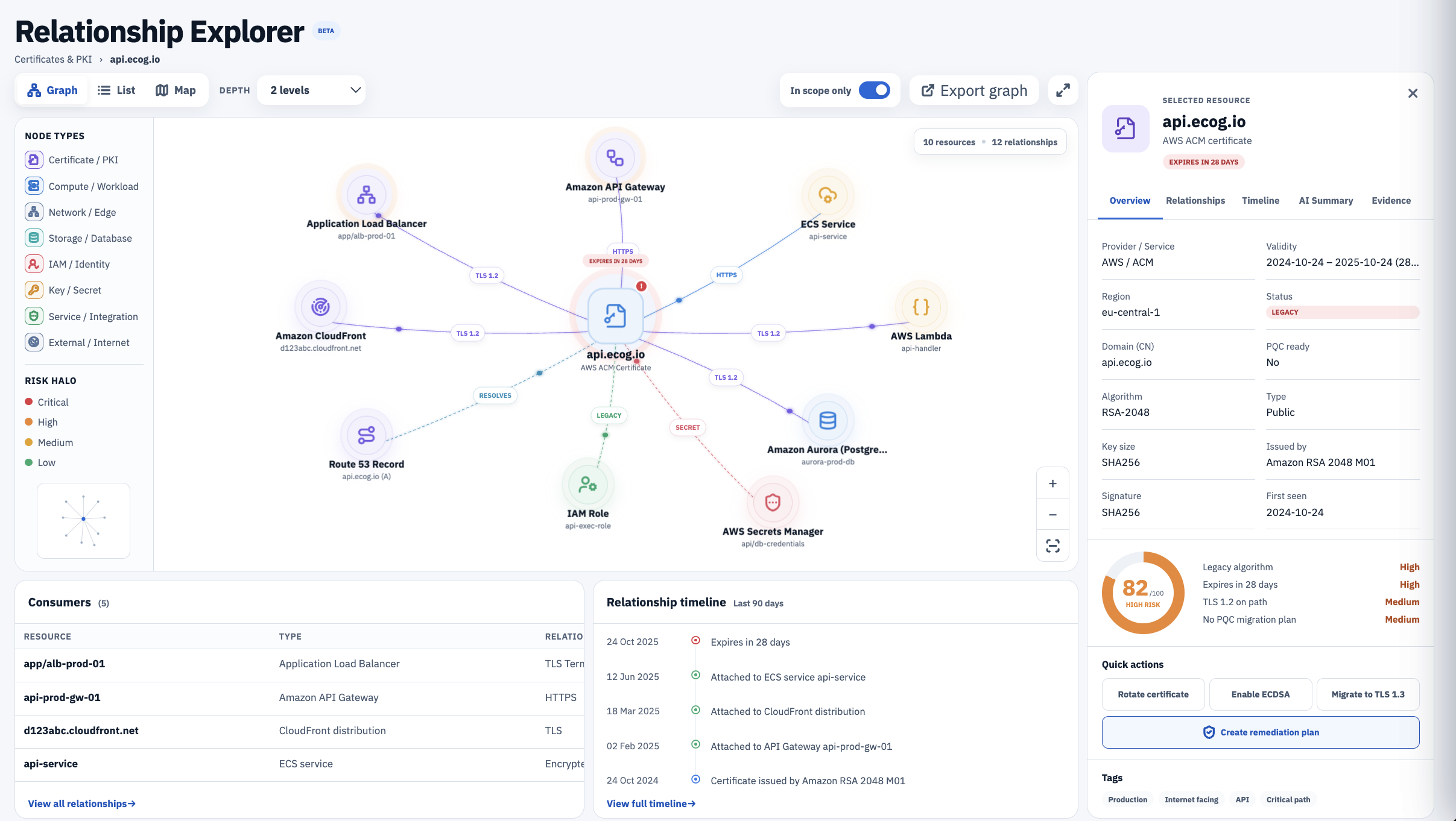
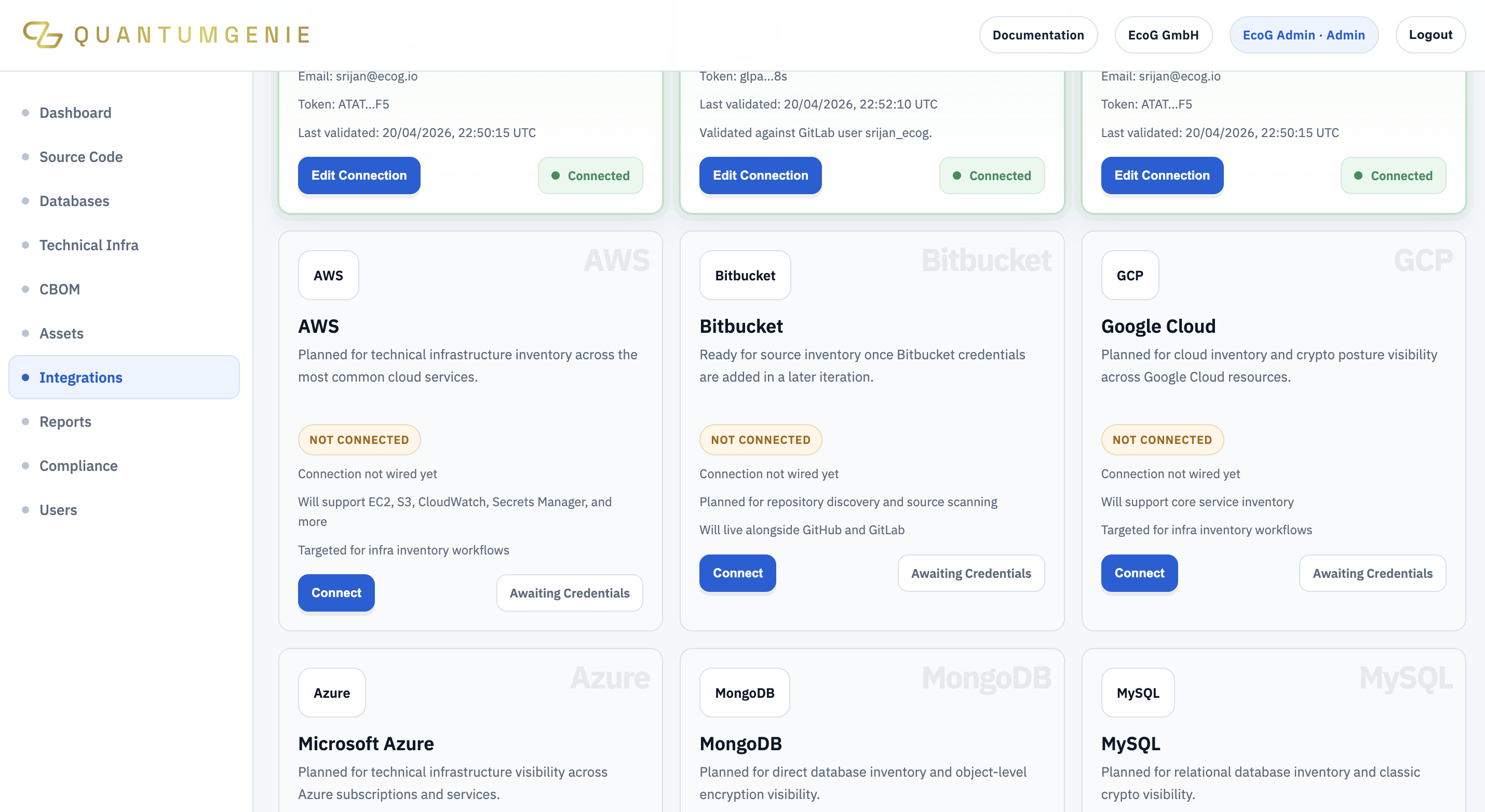
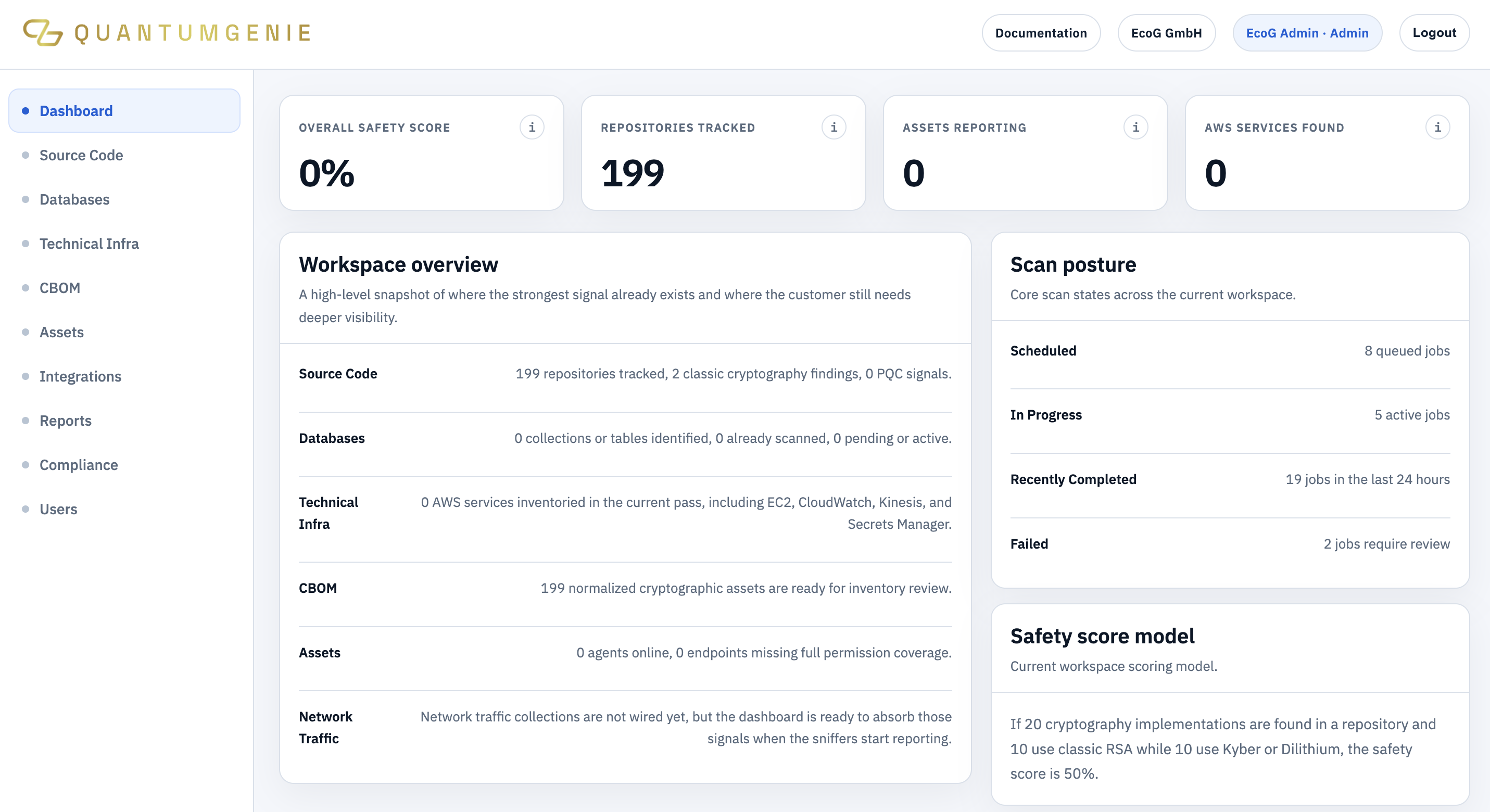
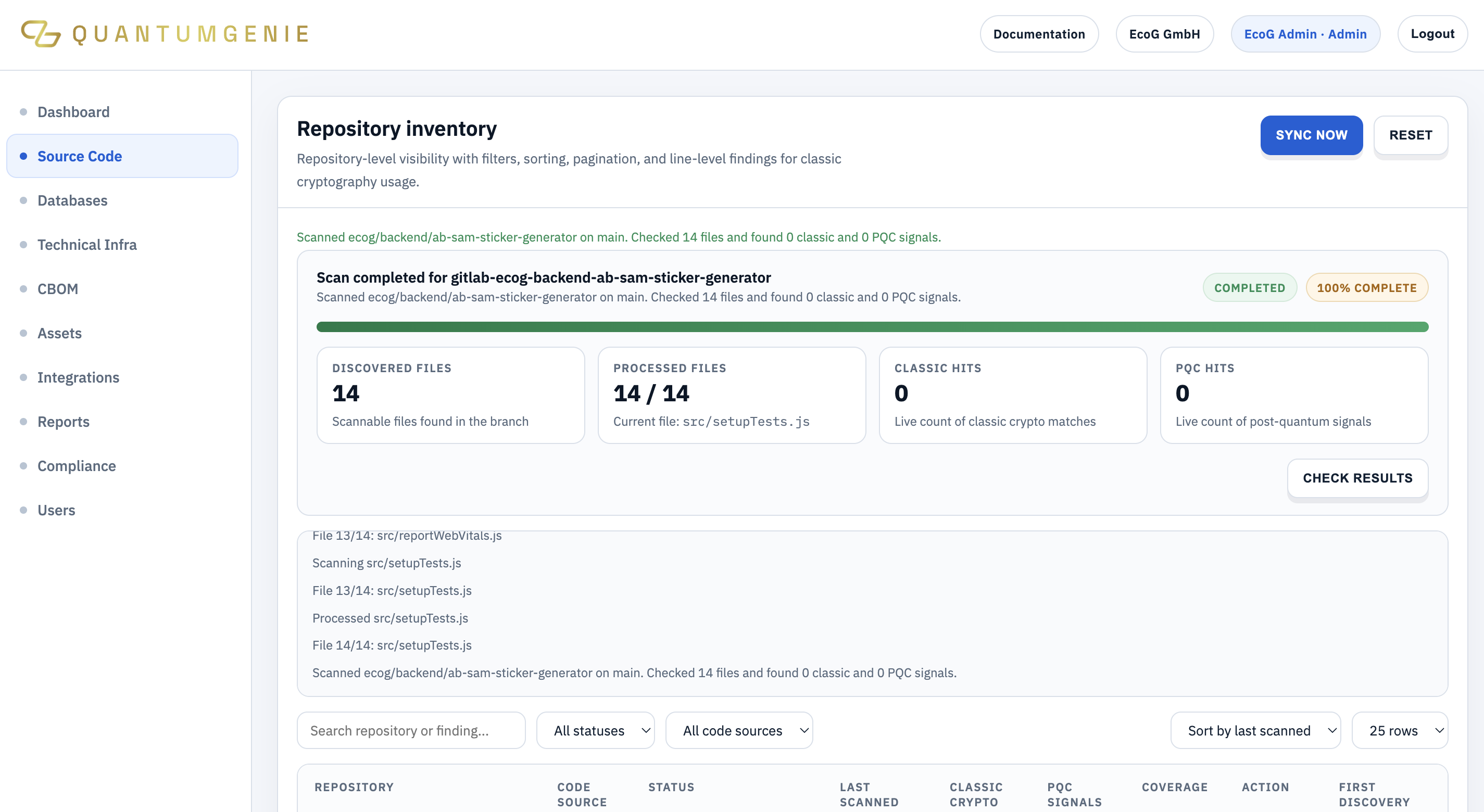
QuantumGenie directly addresses these imperatives by providing enterprises with a comprehensive platform for cryptographic discovery, inventory, prioritization, and remediation workflow orchestration. By surfacing cryptographic exposures across diverse assets like websites, certificates, source code, infrastructure, databases, and applications, QuantumGenie empowers organizations to assemble a complete cryptographic bill of materials (CBOM). This visibility forms the foundation for phase one of the migration framework: assessment and inventory. Further, QuantumGenie's capabilities for operationalizing remediation — from planning to pull requests and change reviews — enable the critical preparation, testing, deployment, and monitoring phases. Through its practical tooling designed specifically for enterprise-scale crypto agility challenges, QuantumGenie equips teams to implement the PQC migration roadmap with confidence, accuracy, and audit readiness.
Frequently Asked Questions
Why is cryptographic inventory critical for post-quantum migration?
A detailed cryptographic inventory ensures that no cryptographic component is overlooked during migration, minimizing the risk of exposure and ensuring a comprehensive transition to quantum-safe algorithms.
How does crypto agility differ from a simple cryptographic upgrade?
Crypto agility involves designing systems that can rapidly and seamlessly switch cryptographic algorithms without significant operational disruption, enabling continuous adaptation as quantum threats evolve, unlike a one-time upgrade that can be rigid and slow.
Watch The Quantum Threat
Sources And Further Reading
- Implementing Crypto Agility: A 7-Phase Framework for Post-Quantum Cryptography Migration PQC Today · Jul 6, 2026
- Understanding Cryptographic Inventory and Its Role in Post-Quantum Readiness QNu Labs · Jun 17, 2026
- FEDLIN's Post-Quantum Readiness Services Align with NIST Standards for ML-KEM and SLH-DSA Migration FEDLIN · Jul 9, 2026