In This Article
What This Means
- Phased Migration: Aligning Security with Regulatory Timelines
- The Critical Role of Cryptographic Inventory and Crypto-Agility
- How QuantumGenie Supports Practical Enterprise Migration
Phased Migration: Aligning Security with Regulatory Timelines
As global standards for post-quantum cryptography mature and federal mandates crystallize, enterprises must pivot from theoretical risk to structured action. FEDLIN's approach to post-quantum readiness introduces a phased implementation roadmap embedding hybrid cryptography and hash-based signatures, balancing security innovation with compliance to NIST directives. This pragmatic sequencing aims to minimize operational disruption while ensuring resilience against emerging quantum threats.
The Critical Role of Cryptographic Inventory and Crypto-Agility
Foundational to any successful migration program is a comprehensive cryptographic inventory that catalogs all algorithms, certificates, keys, and protocols in use across networks, applications, and infrastructure. Such inventories offer clear visibility into potentially vulnerable assets and priority areas for remediation. Encryption Consulting’s nine-phase roadmap underscores crypto-agility — the ability to flexibly switch cryptographic primitives — as a linchpin capability, enabling enterprises to respond nimbly to evolving standards and emerging quantum attack vectors.

Comparison of Post-Quantum Readiness Approaches in Featured Sources
| Aspect | FEDLIN's Services | Encryption Consulting |
|---|---|---|
| Migration Strategy | Phased hybrid approach with hash-based signing | Nine-phase comprehensive roadmap |
| Compliance Focus | Aligns with NIST and federal mandates | Emphasizes structured planning |
| Key Emphasis | Implementation of hybrid cryptography | Crypto-agility and phased migration |
| Enterprise Use Case | Risk-managed migration programs | Planning and execution guidance |
How QuantumGenie Supports Practical Enterprise Migration
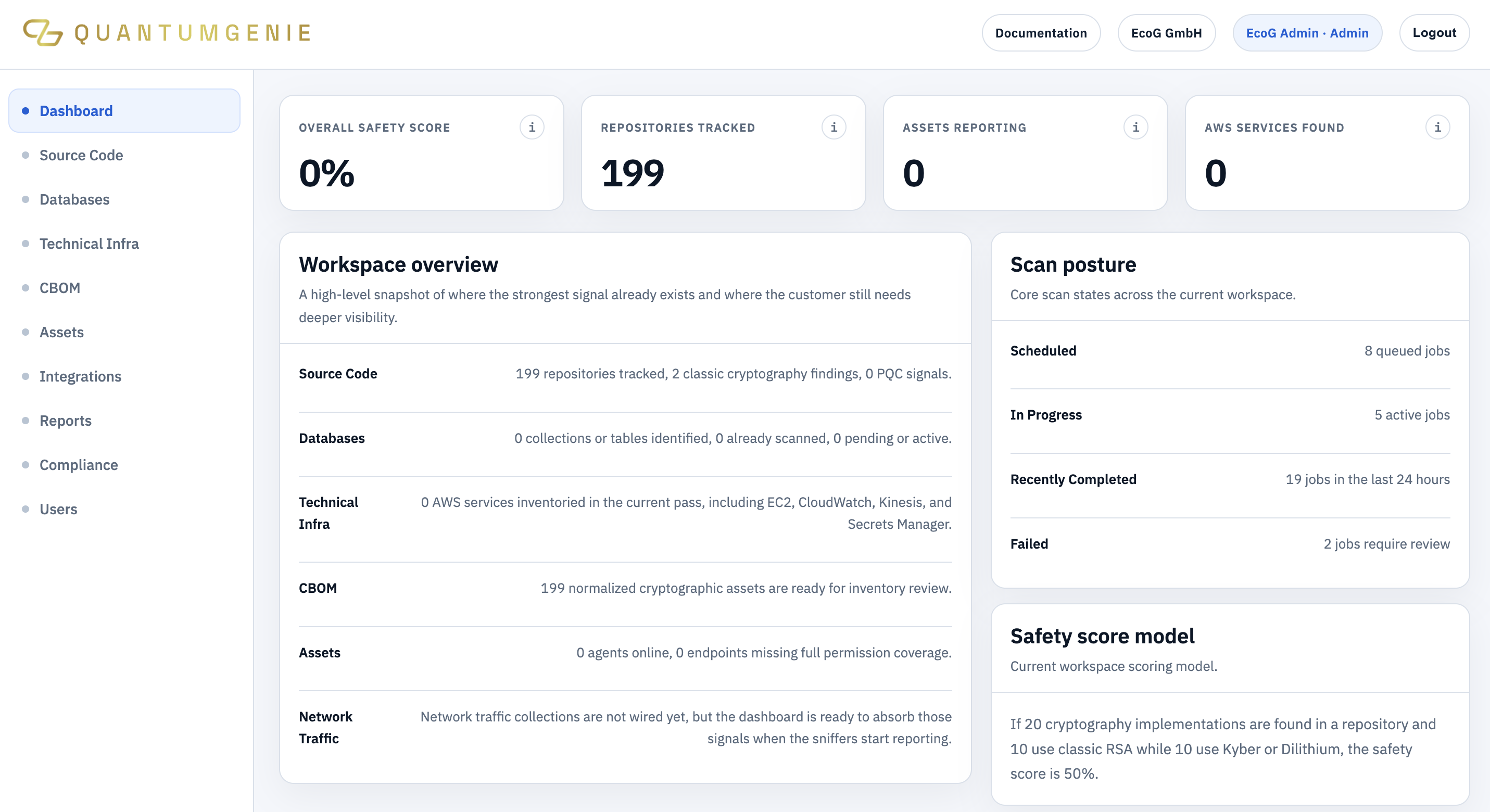
QuantumGenie aligns directly with these enterprise imperatives by providing automated discovery of cryptographic assets through its CipherScan layer, forming a detailed cryptographic bill of materials (CBOM). It enables risk-prioritized planning and structured migration workflows via CipherNova’s orchestration capabilities. This combined approach ensures that organizations not only meet compliance readiness but also operationally execute complex migration phases with governance and verification, addressing real-world constraints and timelines faced by CISOs and security architects.
Frequently Asked Questions
Why is a phased migration approach recommended for post-quantum cryptography?
A phased approach allows enterprises to incrementally implement new cryptographic algorithms while maintaining operational stability and meeting evolving compliance requirements, reducing risk and enabling manageable transitions.
How does maintaining a cryptographic inventory benefit post-quantum readiness?
A detailed cryptographic inventory provides full visibility into existing cryptographic assets, enabling effective prioritization of migration efforts, risk assessment, and compliance reporting essential for successful post-quantum cryptography adoption.
Watch The Quantum Threat
Sources And Further Reading
- FEDLIN's Post-Quantum Readiness Services FEDLIN · Jul 9, 2026
- PQC Migration Guide: A Nine-Phase Roadmap Encryption Consulting · Jun 29, 2026
- Understanding Cryptographic Inventory and Its Importance QNu Labs · Jun 17, 2026