In This Article
What This Means
- The Rising Imperative for Unified Cryptographic Operations
- Key Enterprise Implications of Lifecycle Management for PQC Migration
- How QuantumGenie Fits: Driving Practical PQC Migration Through Visibility and Orchestration
The Rising Imperative for Unified Cryptographic Operations
As quantum threats escalate, enterprises must swiftly transform their cryptographic frameworks to resist emerging risks from quantum computing. However, this evolution is far from straightforward. The core challenge lies in managing cryptographic assets throughout their entire lifecycle—from discovery and inventory, through enforcement, to runtime agility and ongoing adaptation. Isolated efforts or tools focusing on a single phase are no longer adequate.
Eprion’s recent introduction of a unified cryptographic operations platform highlights this enterprise imperative. By consolidating discovery, enforcement policies, and runtime agility into a cohesive platform that scales across diverse infrastructure, Eprion illustrates how organizations can build resilience and agility. This approach addresses the complexities enterprises face with sprawling environments and heterogeneous cryptographic usage, streamlining the journey toward quantum-safe security.
Key Enterprise Implications of Lifecycle Management for PQC Migration
Enterprises must recognize that post-quantum migration is a continuous process, not a one-time event. Effective cryptographic lifecycle management enables prioritized identification of vulnerable assets, enforcement of updated cryptographic policies, and seamless runtime transition to quantum-resistant algorithms. Platforms adopting this holistic perspective reduce operational risk, minimize disruption, and accelerate compliance readiness.
Supporting examples like QuSecure’s integrated discovery and remediation workflows, alongside PQCrypto’s focus on zero-disruption crypto-agility, reinforce the practical value of lifecycle thinking. Together, these developments signal that successful post-quantum transformations hinge on comprehensive visibility combined with orchestration capabilities that keep pace with evolving threats and standards.
Enterprise Cryptographic Lifecycle: Key Capabilities and Benefits
| Lifecycle Phase | Core Capability | Enterprise Benefit |
|---|---|---|
| Discovery & Inventory | Automated, continuous detection of cryptographic assets | Comprehensive visibility into cryptographic exposure for informed planning |
| Policy Enforcement | Centralized control and update of cryptographic policies | Ensures consistent application of quantum-safe algorithms and reduces policy drift |
| Runtime Agility | Seamless transition to post-quantum algorithms without downtime | Minimizes operational disruption and supports business continuity |
| Remediation Orchestration | Managed workflows for patching, updates, and compliance | Improves efficiency, governance, and audit-readiness |
How QuantumGenie Fits: Driving Practical PQC Migration Through Visibility and Orchestration
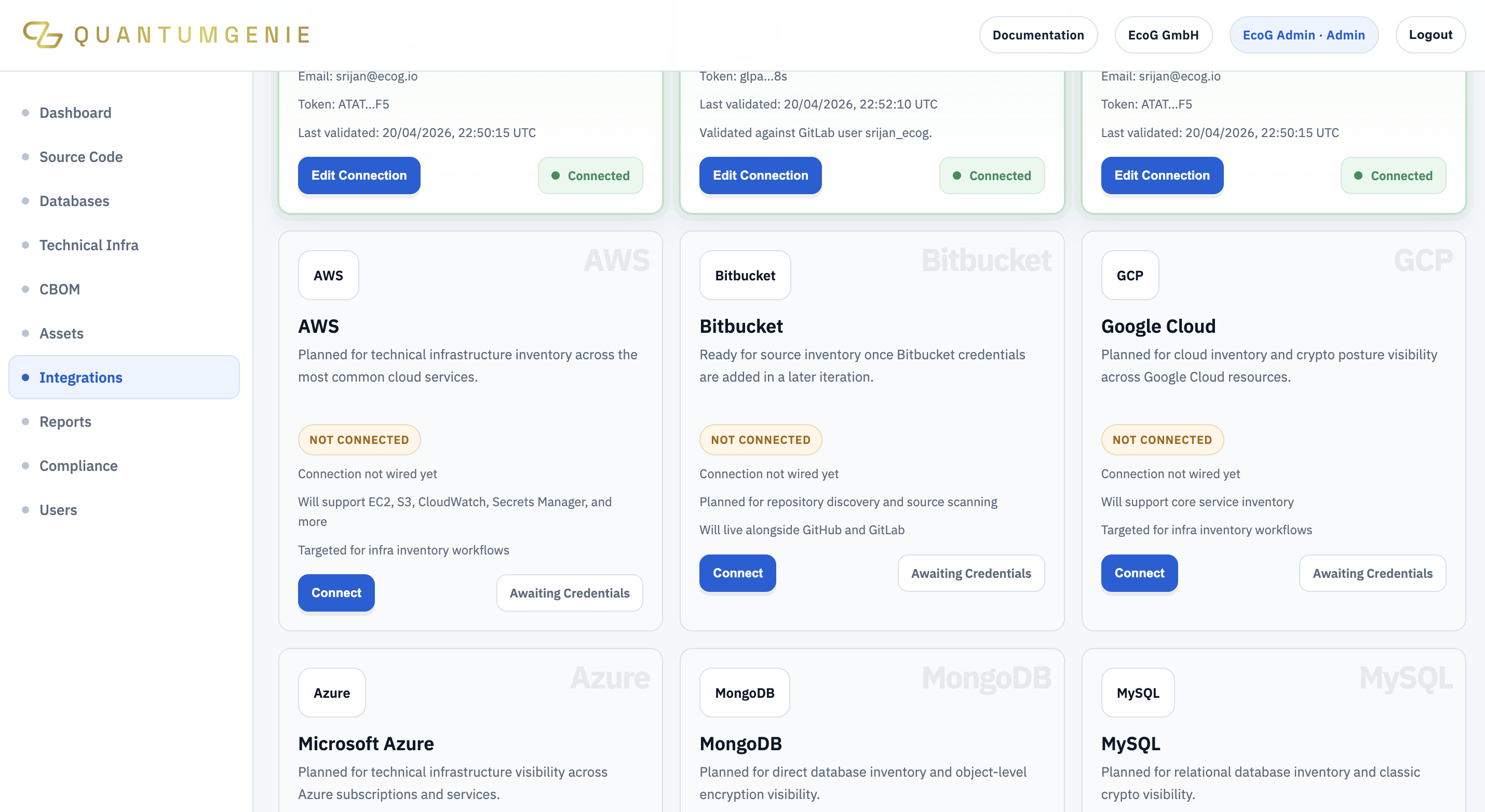
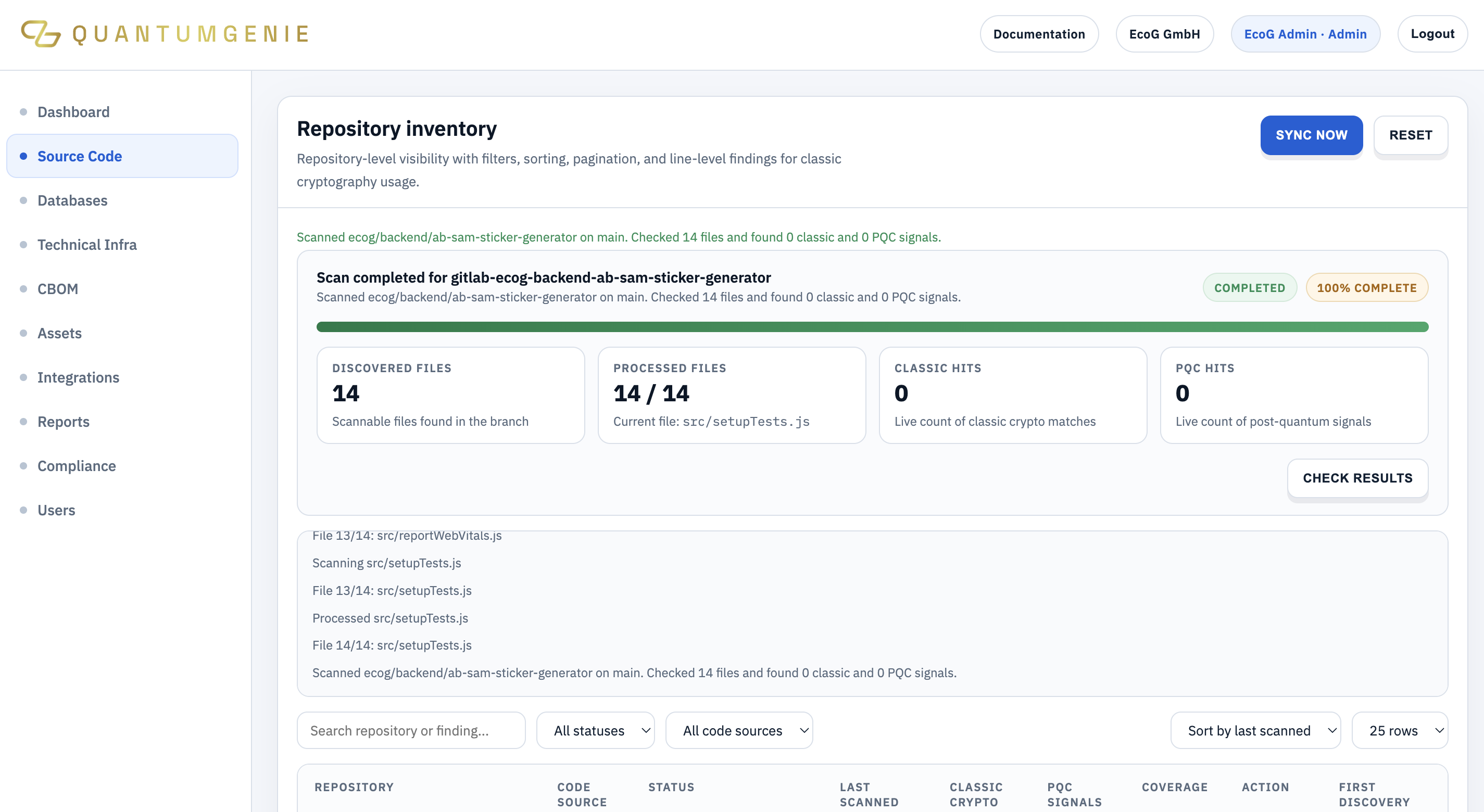
QuantumGenie converges on the foundational challenge of cryptographic discovery and inventory, a critical first step for any lifecycle management journey. Its CipherScan capability provides enterprises with automated detection and mapping of cryptographic assets embedded across websites, source code, certificates, and infrastructure. This depth of insight forms the bedrock for building an accurate cryptographic Bill of Materials (CBOM), essential for risk prioritization.
Beyond discovery, QuantumGenie’s CipherNova layer enables orchestration of remediation workflows, pull requests, policy exception handling, and verification necessary for operational crypto-agility. By integrating discovery with pragmatic remediation management, QuantumGenie ensures that enterprises not only know their crypto exposure but can act decisively to migrate toward post-quantum algorithms with governance and auditability across the entire lifecycle.
Frequently Asked Questions
Why is cryptographic lifecycle management essential for post-quantum migration?
Because post-quantum migration requires continuous visibility, control, and adaptation of cryptographic assets across complex environments, lifecycle management ensures that organizations can identify risks, enforce policies, and transition securely with minimal disruption.
How does having a cryptographic Bill of Materials (CBOM) benefit enterprises in PQC readiness?
A CBOM provides an accurate inventory of all cryptographic components, enabling prioritized risk assessment, targeted remediation, and compliance documentation, which are all critical to structured and successful PQC migration efforts.
Watch The Quantum Threat
Sources And Further Reading
- Eprion's Unified Cryptographic Operations Platform Eprion · Jul 7, 2026
- QuSecure's Integrated Platform for Post-Quantum Cryptography QuSecure · Jul 9, 2026
- PQCrypto's Quantum-Safe Security Solutions PQCrypto · Jul 10, 2026