In This Article
What This Means
- The Imperative of Post-Quantum Cryptography Migration
- Strategic Steps for Enterprise Migration
- How QuantumGenie Fits
The Imperative of Post-Quantum Cryptography Migration
The advent of quantum computing poses a significant threat to current cryptographic systems, rendering traditional algorithms like RSA and ECC vulnerable. The National Institute of Standards and Technology (NIST) has responded by finalizing three post-quantum cryptography standards: FIPS 203 (ML-KEM), FIPS 204 (ML-DSA), and FIPS 205 (SLH-DSA). These standards provide the framework for quantum-resistant cryptographic algorithms, necessitating a comprehensive migration strategy for enterprises to maintain data security and compliance.
Strategic Steps for Enterprise Migration
Migrating to PQC involves a multi-phase approach:
1. **Cryptographic Inventory**: Identifying all cryptographic assets across the organization, including certificates, keys, and protocols.

Comparison of NIST's Post-Quantum Cryptography Standards
| Standard | Description | Security Level |
|---|---|---|
| FIPS 203 (ML-KEM) | Module-Lattice-Based Key-Encapsulation Mechanism for key exchange | ML-KEM-512 (128-bit), ML-KEM-768 (192-bit), ML-KEM-1024 (256-bit) |
| FIPS 204 (ML-DSA) | Module-Lattice-Based Digital Signature Algorithm for digital signatures | Equivalent to ECDSA with P-256, P-384, and P-521 key sizes |
| FIPS 205 (SLH-DSA) | Stateless Hash-Based Digital Signature Algorithm for digital signatures | Provides an alternative to lattice-based signatures with different security and performance characteristics |
How QuantumGenie Fits
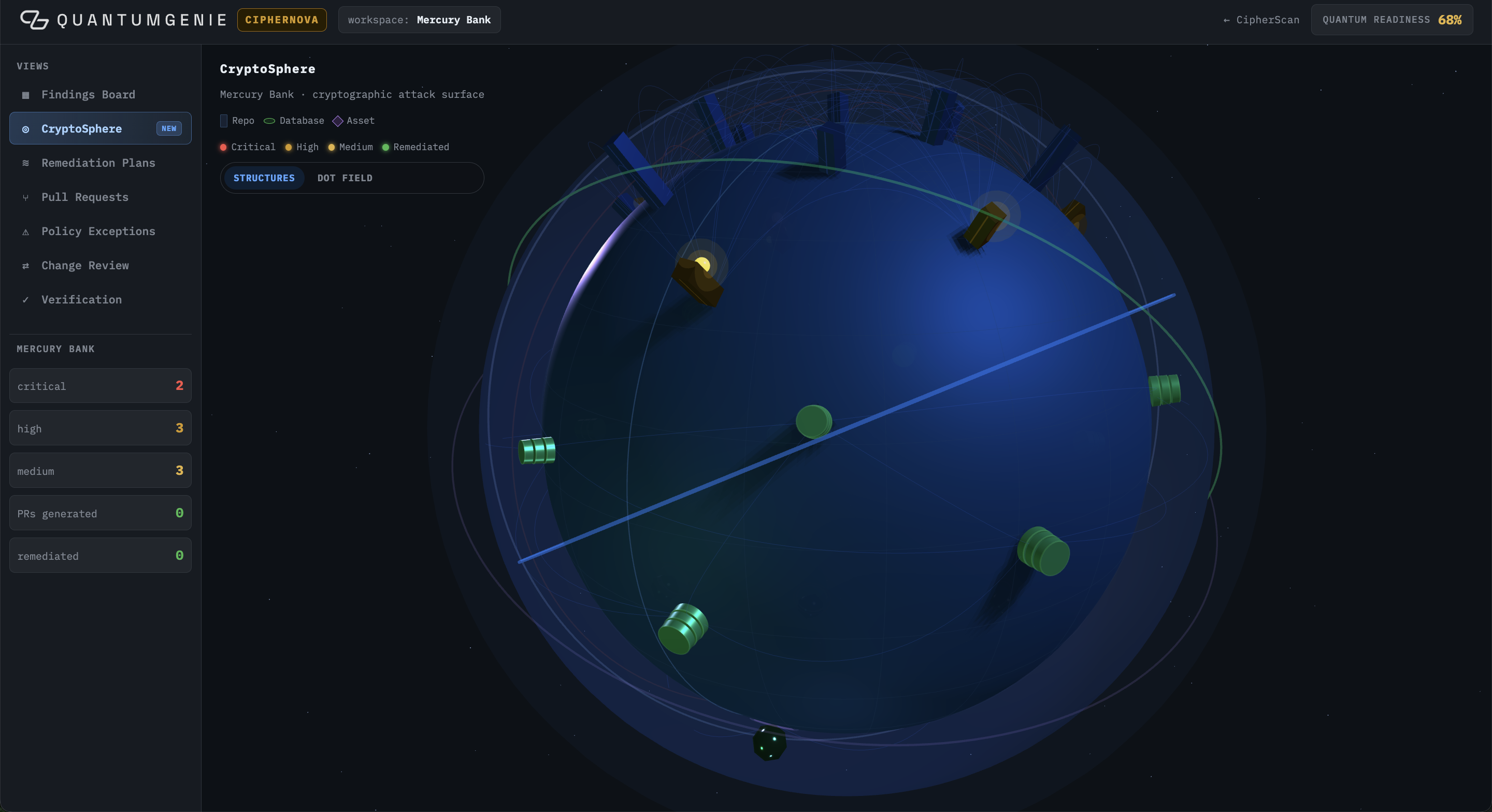
QuantumGenie provides a robust infrastructure to support enterprises in their PQC migration journey. With its cryptographic inventory management capabilities, QuantumGenie enables organizations to discover and catalog all cryptographic assets, assess migration risks, and plan remediation strategies. This comprehensive support ensures a seamless transition to quantum-resistant cryptography, aligning with NIST standards and enhancing overall cybersecurity posture.
Frequently Asked Questions
What is the timeline for migrating to post-quantum cryptography?
Enterprises should begin migration immediately, as quantum computers capable of breaking current cryptographic systems are projected to emerge between 2030 and 2035. Early adoption ensures preparedness and compliance with evolving standards.
How does QuantumGenie assist in the PQC migration process?
QuantumGenie offers tools for cryptographic inventory management, risk assessment, and remediation planning, facilitating a structured and efficient migration to post-quantum cryptography.
Watch The Quantum Threat
Sources And Further Reading
- Enterprise Guide to Post-Quantum Cryptography Implementation CUI Labs · Feb 24, 2026
- Post-Quantum Cryptography in 2026: NIST Standards, Enterprise Adoption, and Implementation Guide CUI Labs · Mar 29, 2026
- Post-Quantum Cryptography in 2026: Why Enterprise Migration Must Start Now OpenEmpower · Apr 12, 2026