In This Article
What This Means
- The Hidden Complexity of Cryptographic Inventory in the PQC Era
- Crypto-Agility and Governance Through Discovery and Automation
- How QuantumGenie Fits: Enabling Enterprise Crypto-Inventory and Migration Management
The Hidden Complexity of Cryptographic Inventory in the PQC Era
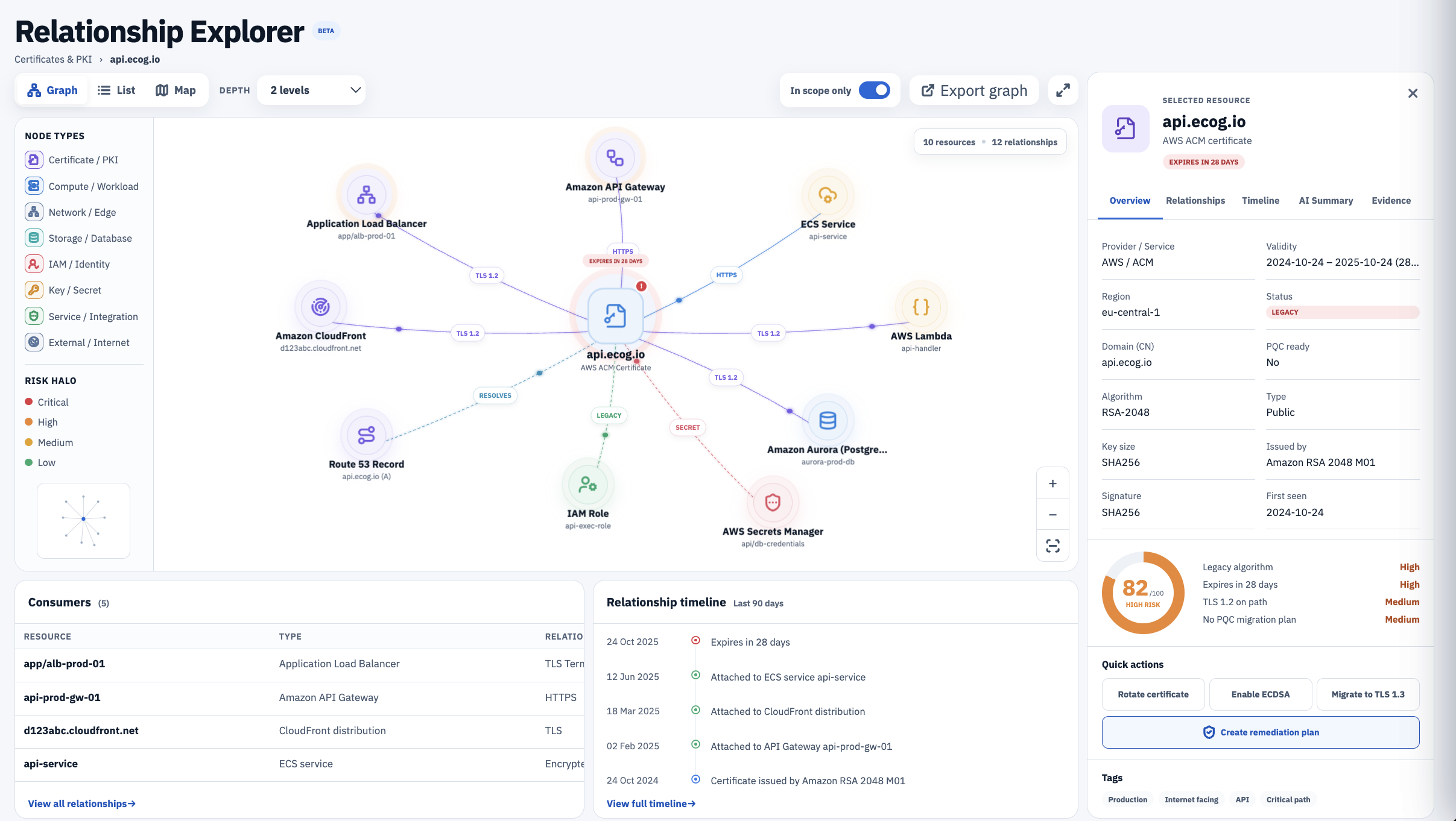
As organizations prepare for the inevitable quantum computing threat, a major challenge lies in understanding exactly where and how cryptography is implemented throughout the enterprise. Legacy systems, middleware layers, cloud services, and custom integrations often harbor a diverse array of cryptographic algorithms—some already post-quantum hybrid implementations, others relying entirely on classical schemes soon to be vulnerable. Without a clear and automated inventory, CISOs and security architects struggle to identify exposed assets, assess migration scope, and plan upgrade priorities.
The latest enterprise solutions, such as the recently introduced automated cryptographic inventory platforms, aim to solve this complexity by scanning systems comprehensively and detecting cryptographic usage patterns. Such tools can identify both traditional and nascent post-quantum algorithms, providing a real-time, consolidated view of cryptographic exposure aligned with evolving NIST standards and regulatory expectations. This inventory is crucial not only for risk assessment but also for compliance readiness and auditability.
Crypto-Agility and Governance Through Discovery and Automation
Beyond mere identification, enterprises must embrace crypto-agility—the ability to rapidly adapt cryptographic frameworks in response to emerging quantum threats and updated standards. Deploying software-defined cryptography and centralized policy enforcement enables organizations to orchestrate migration workflows and maintain regulatory compliance. However, without an authoritative cryptographic asset inventory to guide prioritization, efforts can become unfocused and inefficient.
Recent research highlights how automated discovery paired with policy-driven cryptographic governance lays the foundation for an agile, resilient security posture. This approach supports managing hybrid cryptographic deployments and facilitates transparent reporting for stakeholders. The combination of inventory and agility tools empowers security teams to remediate high-risk assets methodically while maintaining business continuity.

Key Elements of Effective Cryptographic Inventory and Migration Strategy
| Element | Description | Enterprise Benefit |
|---|---|---|
| Automated Discovery | Comprehensive and continuous scanning of all cryptographic usage | Ensures no exposed assets are overlooked; foundation for migration planning |
| Hybrid and PQC Detection | Identification of classical, hybrid, and post-quantum crypto algorithms | Supports accurate risk assessment aligned with NIST PQC standards |
| Centralized Governance | Policy-driven enforcement and crypto-agility capabilities | Enables rapid, compliant migration and audit readiness |
| Actionable Reporting | Executive dashboards and audit-ready documentation | Facilitates stakeholder communication and compliance evidence |
How QuantumGenie Fits: Enabling Enterprise Crypto-Inventory and Migration Management
QuantumGenie specializes in delivering the cryptographic discovery and inventory capabilities that enterprises critically need to navigate post-quantum readiness. By providing continuous visibility into cryptographic deployments—across websites, certificates, source code, infrastructure, databases, applications, and integrations—QuantumGenie helps build a comprehensive cryptographic inventory and cryptographic bill of materials (CBOM).
This foundational visibility allows organizations to prioritize remediation risk, plan crypto-agile migrations, and support compliance with emerging regulations. QuantumGenie’s CipherScan discovery layer and CipherNova orchestration platform work in tandem to operationalize remediation workflows, pull requests, change reviews, and verification steps—turning cryptographic inventory data into actionable migration programs that meet enterprise governance needs.
Frequently Asked Questions
Why is automated cryptographic inventory essential for post-quantum migration?
Automated inventory tools provide comprehensive visibility across complex, heterogeneous enterprise environments, identifying where cryptography is used and what algorithms are deployed. This clarity is critical for assessing risk, planning migration efforts, ensuring compliance, and avoiding gaps that adversaries could exploit once quantum attacks become practical.
How does crypto-agility depend on cryptographic discovery?
Crypto-agility—the ability to quickly update cryptographic algorithms—requires knowing what cryptography is in place, where it resides, and how it is integrated. Without a thorough inventory, attempts to replace vulnerable algorithms may miss critical components or cause operational failures. Discovery is the prerequisite for effective, high-confidence migration.
Watch The Quantum Threat
Sources And Further Reading
- Cryptographic Inventory | TYCHON Quantum Command | Tychon Tychon · Jul 14, 2026
- Post-Quantum Cryptography and Quantum-Safe Security: A Comprehensive Survey arXiv · Oct 12, 2025
- Software-Defined Cryptography: A Design Feature of Cryptographic Agility arXiv · Apr 2, 2024