In This Article
What This Means
- The Urgency of Cryptographic Asset Discovery in European Enterprises
- Strategic Risk Assessment and Compliance Implications
- How QuantumGenie Fits: Enabling Practical Crypto-Agility
The Urgency of Cryptographic Asset Discovery in European Enterprises
With the accelerating arrival of quantum-capable adversaries, European organizations are urgently confronted with the need to unearth cryptographic assets embedded deeply within their infrastructures. CRYPTAGION's latest service offering emphasizes this reality by focusing on discovery within codebases, digital certificates, and live TLS endpoints to identify quantum-vulnerable assets. This granular visibility is fundamental to forming a CycloneDX 1.6 cryptographic bill of materials (CBOM), a critical compliance and risk management deliverable for regulated enterprises seeking to prepare for quantum-resilient cryptography.
Strategic Risk Assessment and Compliance Implications
Beyond mere discovery, CRYPTAGION's platform delivers assessments of quantum-vulnerability risk, enabling enterprises to understand where their most pressing crypto exposures lie. This is particularly relevant for organizations under stringent regulatory environments in the EU, where establishing traceable compliance evidence around cryptographic posture and migration readiness is non-negotiable. Security teams must translate raw discovery data into prioritized remediation roadmaps that meet both operational and auditor expectations. Complementing this, solutions like those offered by EQCore highlight the benefits of integrating discovery with centralized orchestration and compliance workflows for regulated industries.
Comparative Focus Areas for Enterprise Cryptographic Readiness Solutions
| Capability | CRYPTAGION | EQCore |
|---|---|---|
| Cryptographic Asset Discovery | Yes, focused on codebases, certificates, TLS endpoints | Yes, with emphasis on regulated environments |
| Risk Assessment / Prioritization | Yes, quantum-vulnerability scoring | Yes, compliance-driven risk orchestration |
| Compliance Support | Generates CycloneDX 1.6 CBOM for governance | Centralized evidence and audit support |
| Migration Workflow Support | Limited to discovery and reporting | Includes orchestration and compliance checks |
How QuantumGenie Fits: Enabling Practical Crypto-Agility
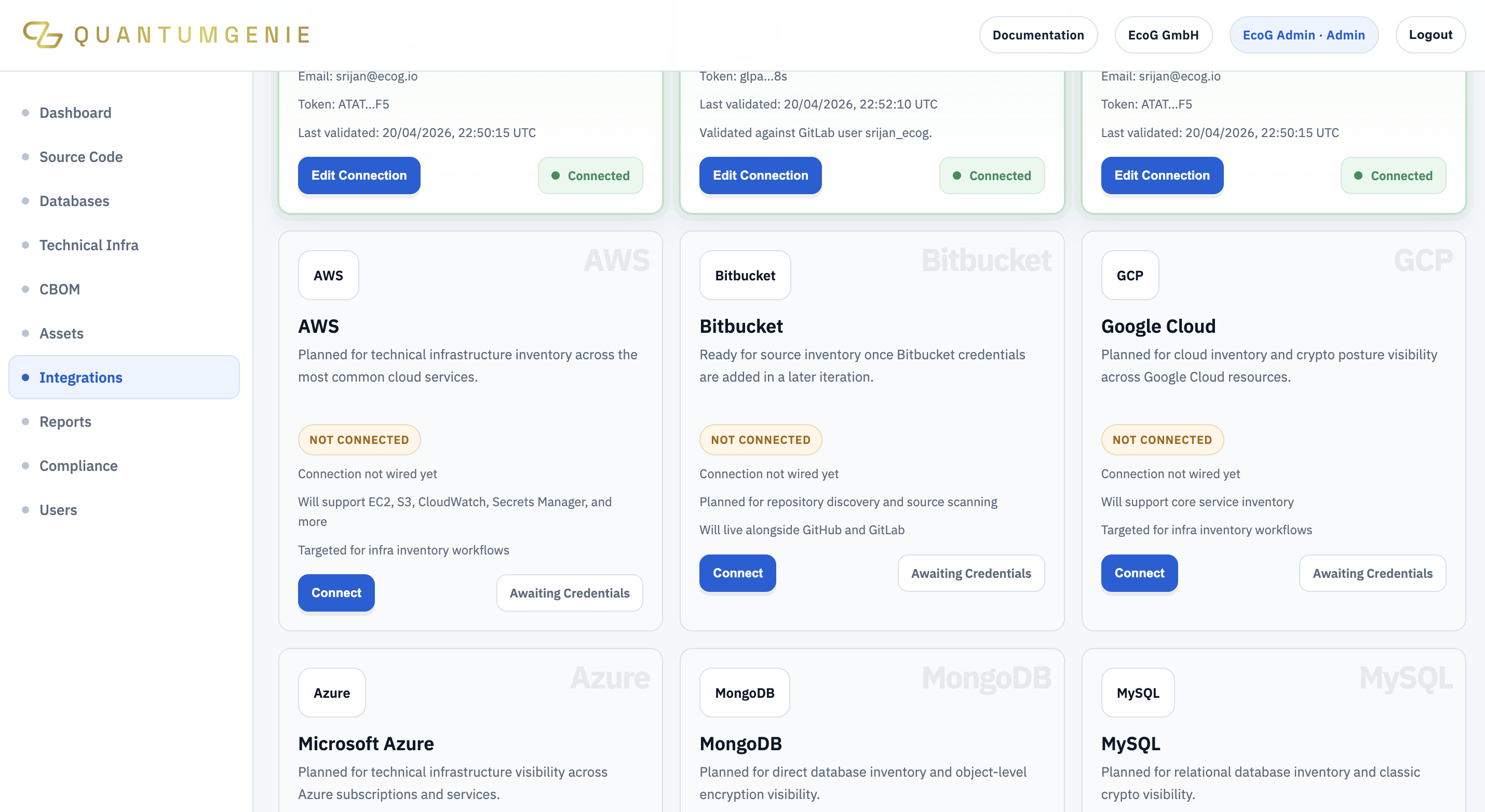
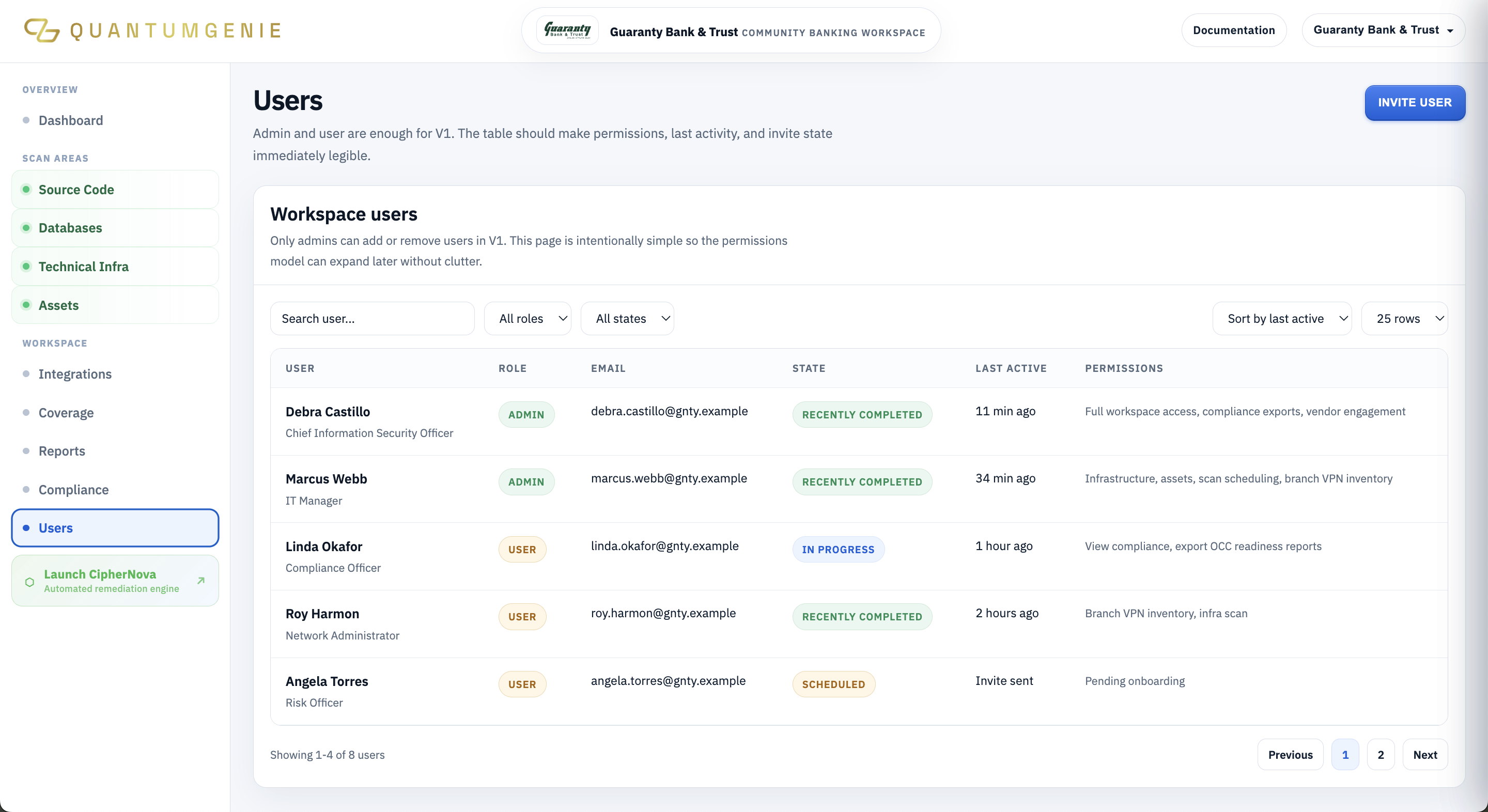
QuantumGenie’s platform aligns perfectly with this enterprise imperative by delivering comprehensive cryptographic discovery across various technology layers, from certificates to application code and infrastructure. It automates CBOM generation and provides risk prioritization capabilities critical for sequenced migration planning. Moreover, QuantumGenie supports the operationalization of remediation via workflow orchestration, code pull request automation, and policy exception management. In essence, it bridges the gap between discovery visibility and pragmatic migration enforcement, ensuring organizations can progress cautiously but confidently on their path to post-quantum cryptography readiness.
Frequently Asked Questions
Why is cryptographic asset discovery essential for post-quantum migration?
Discovery identifies all instances of cryptographic use across enterprise systems, revealing vulnerable assets that require migration before they can be exploited by quantum attacks. Without it, enterprises cannot build an accurate inventory or prioritize remediation effectively.
How does CBOM help enterprises comply with quantum resilience regulations?
A Cryptographic Bill of Materials (CBOM) provides a detailed inventory of cryptographic components and their quantum-vulnerability status, offering auditors and regulators transparent evidence that enterprises are managing cryptographic risks and planning post-quantum transitions responsibly.
Watch The Quantum Threat
Sources And Further Reading
- CRYPTAGION's Post-Quantum Cryptography Readiness for EU Enterprises CRYPTAGION · Jul 11, 2026
- QuSecure's Integrated Platform for Post-Quantum Cryptography and Crypto-Agility QuSecure · Jul 10, 2026
- EQCore's Quantum-Safe Security Framework for Regulated Environments EQCore · Jul 10, 2026