In This Article
What This Means
- Why a Comprehensive Cryptographic Inventory Matters Now
- Strategic Implications for Enterprise Migration Programs
- Wie QuantumGenie Passt: Von der Bestandsaufnahme bis zur operativen Migration
Why a Comprehensive Cryptographic Inventory Matters Now
As enterprises look beyond conventional cybersecurity threats, quantum computing advances cast an imminent shadow over traditional cryptographic schemes. Preparing for the post-quantum era isn’t just about adopting new algorithms; it demands a full inventory of existing cryptography across websites, certificates, codebases, infrastructure, and integrations. Microsoft's recent analysis stresses that without this foundational knowledge, organizations cannot effectively assess risk, plan migrations, or track modernization progress.
An up-to-date cryptographic inventory provides visibility into the full scope of cryptographic assets, enabling teams to identify vulnerable legacy algorithms, exposed certificates, and encryption points that could be targeted by quantum-enabled attacks. This inventory acts as a living map, critical for prioritizing remediation and ensuring compliance with emerging post-quantum cryptography standards.
Strategic Implications for Enterprise Migration Programs
Building on this foundation, organizations can prioritize cryptographic assets based on sensitivity, exposure, and business impact—a necessity for resource-constrained environments. Enterprises that attempt to migrate without this awareness risk reactive approaches, piecemeal remediation, and potential service disruptions. Microsoft’s position signals a market shift recognizing cryptographic posture management as a strategic enabler for successful quantum migration programs.
Enterprises can leverage such inventories to build cryptographic bills of materials (CBOMs), facilitate cross-team collaboration, and create governance models supporting crypto-agility over time. This structured approach transforms post-quantum migration from an onerous compliance task into a manageable, measurable journey aligned with broader cybersecurity frameworks.
Key Elements of Post-Quantum Cryptographic Inventory and Migration
| Element | Purpose | Enterprise Benefit |
|---|---|---|
| Comprehensive Cryptographic Inventory | Identify all cryptographic assets and weak algorithms | Enables targeted risk assessment and remediation planning |
| Cryptographic Bill of Materials (CBOM) | Document crypto-dependencies within applications and infrastructure | Supports governance and compliance readiness |
| Risk-Based Prioritization | Focus remediation on highest-impact vulnerabilities first | Optimizes resource allocation and minimizes operational disruption |
| Migration Workflow Management | Coordinate remediation tasks and track progress | Facilitates agile, auditable, and efficient migration |
Wie QuantumGenie Passt: Von der Bestandsaufnahme bis zur operativen Migration
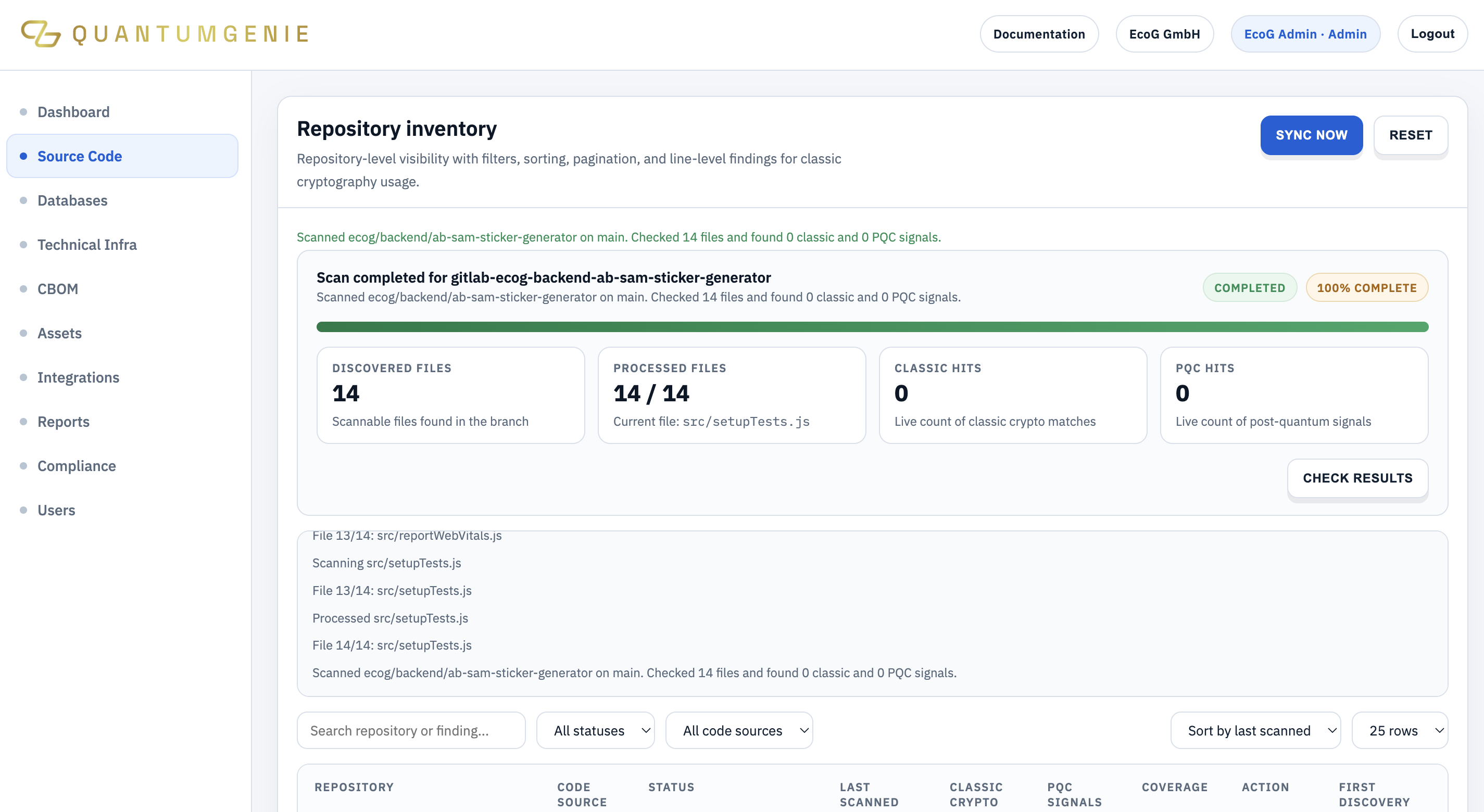
QuantumGenie adressiert exakt die identifizierte Kernherausforderung: die Erstellung und Pflege einer umfassenden kryptografischen Bestandaufnahme als Fundament für Post-Quanten-Migrationsprogramme. Mit CipherScan liefert QuantumGenie die notwendige Sichtbarkeit über kryptografische Expositionen in Anwendungen, Zertifikaten und Infrastruktur – ein entscheidender erster Schritt, den Microsoft hervorhebt.
Darüber hinaus ermöglicht QuantumGenie mit CipherNova eine nahtlose Operationalisierung der Migration durch Workflow-Management, Priorisierung von Risiken und Automatisierung von Pull Requests für den Ersatz oder das Upgrade kryptografischer Komponenten. So wird aus der Bestandsaufnahme ein agiler, kontrollierter Migrationsprozess, der Unternehmen dabei unterstützt, rechtzeitig und risikominimiert Post-Quantum-Ready zu werden.
Frequently Asked Questions
Why is building a cryptographic inventory critical before migrating to post-quantum algorithms?
A cryptographic inventory provides visibility into where and how cryptography is used across an organization’s environment. Without it, enterprises cannot accurately assess their exposure to quantum threats, prioritize remediation, or plan an effective migration strategy, increasing risk of oversight and operational disruptions.
How does cryptographic inventory support compliance and governance efforts in post-quantum readiness?
By documenting all cryptographic assets and dependencies, an inventory forms the basis for creating cryptographic bills of materials (CBOM), which are essential for meeting compliance requirements, demonstrating due diligence, and managing risk through structured governance frameworks during and after migration.
Watch The Quantum Threat
Sources And Further Reading
- Building Your Cryptographic Inventory: A Customer Strategy for Cryptographic Posture Management Microsoft Security Blog · Apr 16, 2026
- IBM Guardium Cryptography Manager IBM · Jun 28, 2026