In This Article
What This Means
- AWS’s Post-Quantum Cryptography Migration Plan: Setting an Industry Benchmark
- Contextualizing With NIST Standards and Industry Roadmaps
- How QuantumGenie Supports Enterprise PQC Migration
AWS’s Post-Quantum Cryptography Migration Plan: Setting an Industry Benchmark
Amazon Web Services recently unveiled a concrete plan to transition its infrastructure to post-quantum cryptography (PQC), beginning with systems that communicate over untrusted networks, such as the internet. This disclosure is a watershed moment that spotlights how major cloud providers are tackling the immense complexity of adapting to quantum-threatened cryptographic standards. For enterprise security leaders, it signals a practical, phased approach to migration rather than an abstract future risk. AWS’s plan integrates PQC into its shared responsibility security model, underscoring that both provider and customer roles must evolve to safeguard data against nascent quantum computing capabilities.
Enterprises must heed this example as a validation that PQC readiness is no longer optional or theoretical. Instead, organizations should begin by mapping and prioritizing cryptographic assets exposed to external networks—a risk-focused approach that AWS exemplifies. This measured progression enables mitigation of urgent vulnerabilities while laying groundwork for broader internal migrations over time.
Contextualizing With NIST Standards and Industry Roadmaps
Earlier this year, NIST finalized the first trio of post-quantum encryption standards, establishing a firm cryptographic foundation necessary for large-scale operational adoption. AWS’s migration framework naturally aligns with these standards, showcasing industry coherence around vetted PQC algorithms ready for production use. For enterprise architects, this means migration plans can increasingly rely on stable, government-endorsed algorithms, reducing uncertainty and accelerating project timelines.
Moreover, major technology firms like Cisco are announcing comprehensive quantum-safe roadmaps to prepare their enterprise customer bases by specific multi-year deadlines. This market movement conveys an imperative for businesses to accelerate PQC programs, factoring in discovery, risk assessment, and phased deployment milestones. It also emphasizes that successful migration depends on strategic orchestration and clear governance across complex IT ecosystems.

Summary of Enterprise Considerations for PQC Migration Inspired by AWS Model
| Aspect | Enterprise Imperative | QuantumGenie Capability |
|---|---|---|
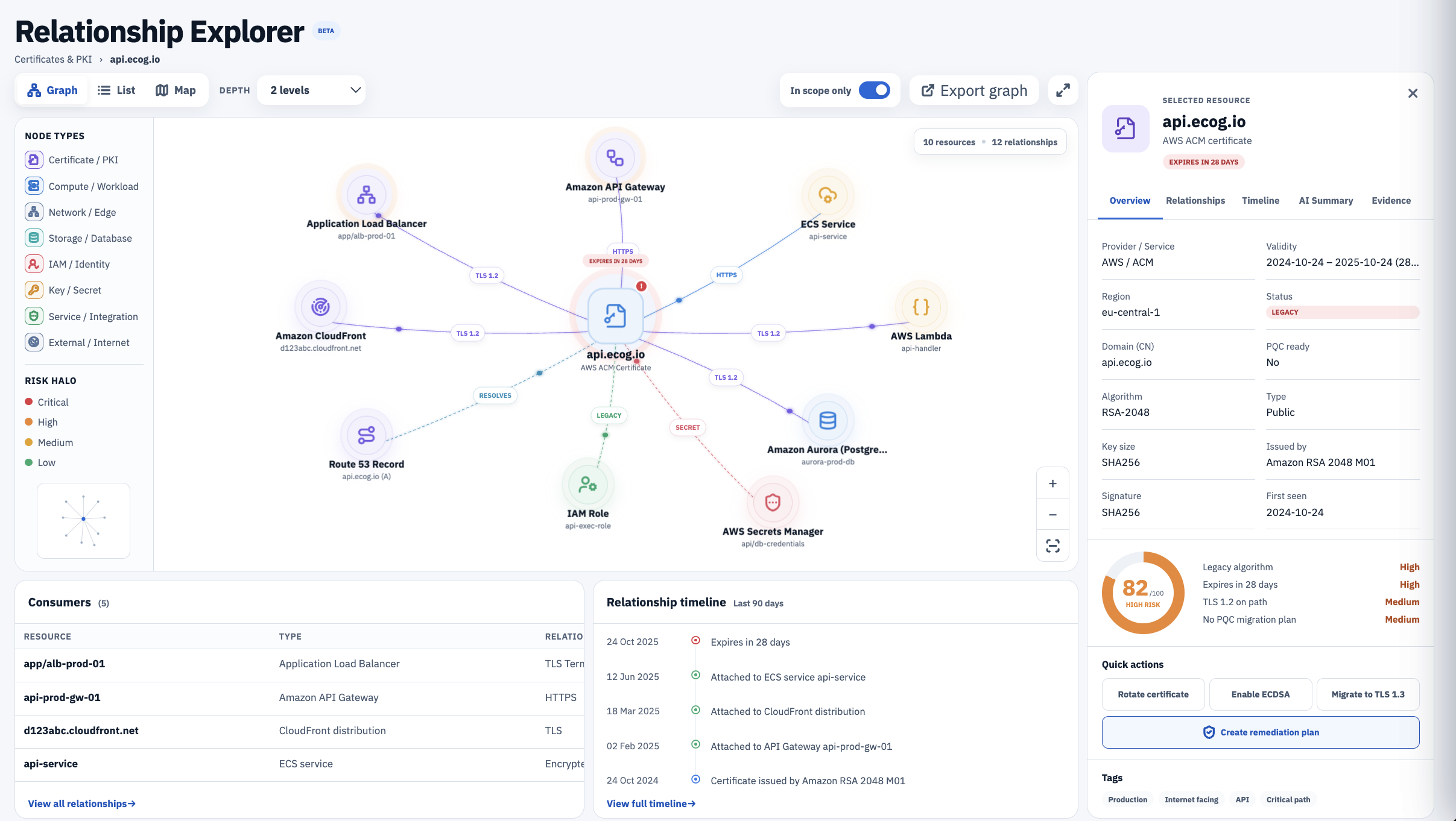
| Phased Migration | Prioritize high-risk cryptographic communications, starting with external/untrusted interfaces | Discovery and inventory of cryptographic assets with risk tagging |
| Standards Compliance | Adopt NIST-approved PQC algorithms for immediate integration | Support for cryptographic policy enforcement and version tracking |
| Shared Responsibility | Integrate provider and customer security roles in migration planning | Collaborative workflow and change management for cross-team coordination |
| Governance and Reporting | Track migration progress and audit compliance readiness | Reporting dashboards and audit trail verification |
How QuantumGenie Supports Enterprise PQC Migration
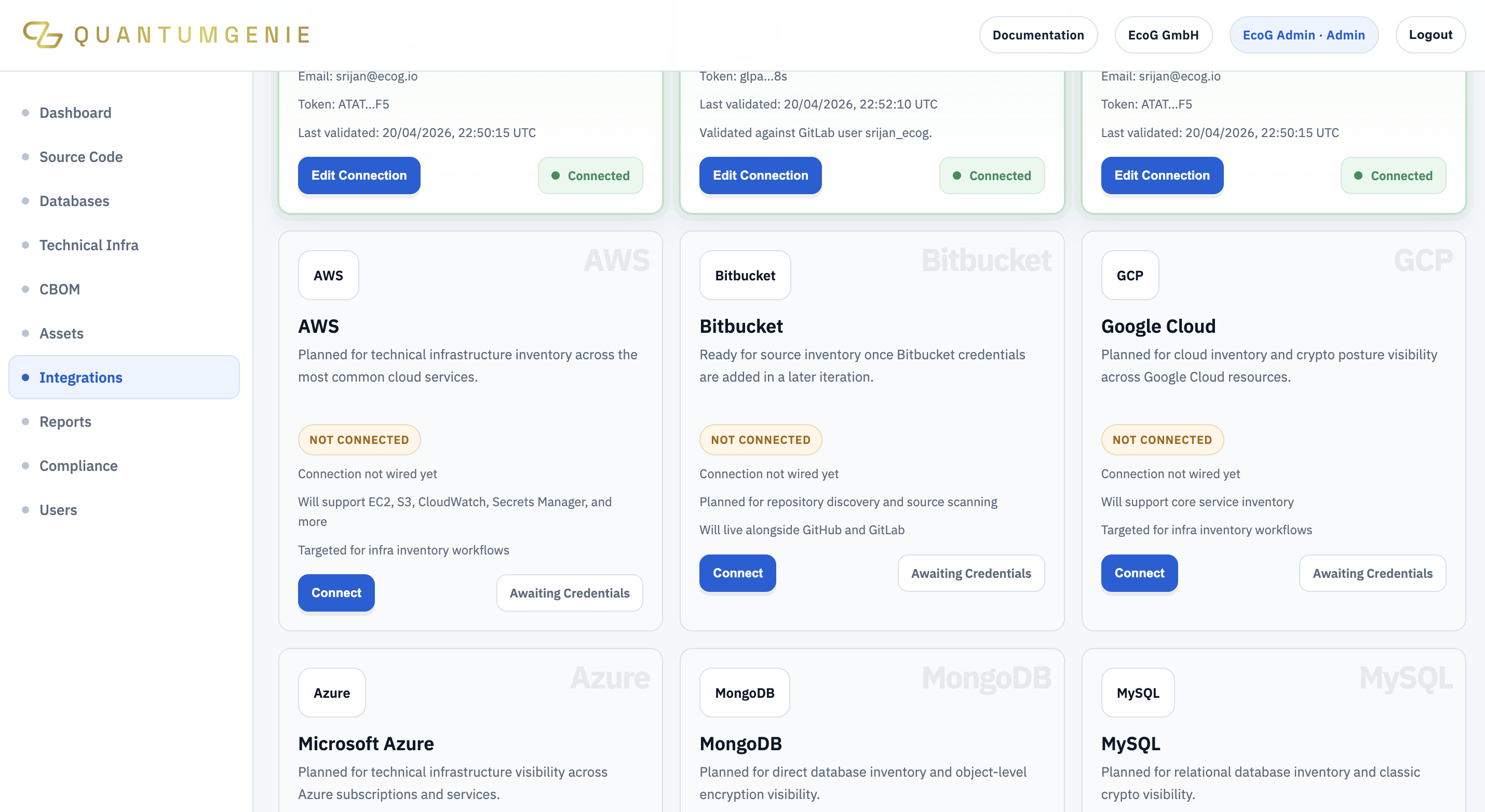
QuantumGenie is designed to help enterprises meet the practical demands exemplified by AWS’s phased PQC migration. By delivering comprehensive cryptographic asset discovery and continuous inventory management, QuantumGenie aids organizations in identifying all cryptographic exposures, including those interacting with untrusted networks prioritized by AWS.
Further, QuantumGenie helps build a comprehensive cryptographic bill of materials (CBOM), enabling risk-based prioritization to efficiently allocate remediation efforts in alignment with a phased migration approach. With integrated workflow orchestration, enterprises can operationalize their migration plans—tracking progress, managing exceptions, and verifying compliance with emerging PQC standards. In this way, QuantumGenie turns strategic roadmaps into executable programs, facilitating secure, scalable, and auditable transitions to quantum-safe cryptography.
Frequently Asked Questions
Why should enterprises prioritize cryptographic assets exposed over untrusted networks first?
Systems communicating over untrusted networks, such as the internet, face the highest risk of quantum-enabled attacks since their cryptographic protection is externally accessible. Prioritizing these areas reduces immediate exposure during initial PQC migration phases, mitigating the most urgent vulnerabilities.
How does phased migration to post-quantum cryptography reduce operational risk?
Phased migration allows organizations to incrementally implement PQC algorithms, validate interoperability, and manage resource allocation effectively. This approach prevents disruption by avoiding all-at-once changes, enabling focused remediation of the highest risk assets first and supporting continuous security assurance.
Watch The Quantum Threat
Sources And Further Reading
- AWS Announces Post-Quantum Cryptography Migration Plan AWS Security Blog · Dec 5, 2024
- NIST Finalizes First Three Post-Quantum Encryption Standards National Institute of Standards and Technology · Aug 13, 2024
- Cisco's Quantum-Safe Computing Initiative and Roadmap Cisco · Jul 7, 2026