In This Article
What This Means
- Federal Agencies Highlight Real-World Migration Complexities
- The Broader Enterprise Imperative Backed by PQC Standards Progress
- How QuantumGenie Supports Enterprises in Practical PQC Migration
Federal Agencies Highlight Real-World Migration Complexities
Federal agencies are currently reevaluating their long-established security protocols as they embark on the shift to post-quantum cryptography (PQC). According to a detailed report from FedTech Magazine, this transition uncovers significant operational and infrastructure challenges, including compatibility issues with legacy systems, difficulties in cryptographic key management, and uncertainties in integrating new PQC algorithms at scale. These obstacles underscore the necessity for systematic approaches beyond mere technical upgrades, focusing on comprehensive enterprise readiness.
This federal reassessment serves as a telling signal for private enterprises: the journey to quantum-safe encryption is far from plug-and-play. For organizations, it means embarking on a complex migration program requiring detailed asset discovery, risk-based prioritization, and orchestration of remediation workflows that can accommodate evolving standards and emerging threats. The operational strain highlighted underscores the indispensability of precision tooling and strategic planning in PQC adoption.
The Broader Enterprise Imperative Backed by PQC Standards Progress
Reinforcing this narrative, earlier releases from organizations like CISA and the National Institute of Standards and Technology have offered frameworks and guidance to evaluate the readiness of current hardware and software for PQC support. Such guidance, as per CSO Online’s coverage, provides a critical baseline for enterprises to benchmark their post-quantum preparedness, calling attention to gaps in technology stacks and legacy infrastructure.
Simultaneously, Security Today emphasizes the urgency for enterprises to begin their transition to quantum-resistant algorithms now to avoid future security lapses. With finalized NIST standards and an increasingly hostile threat environment, waiting is no longer an option. Realistically, this means enterprises must deeply understand the cryptographic footprint across websites, applications, databases, certificates, and source code to efficiently plan and execute migrations.

Comparing Enterprise PQC Readiness Indicators
| Indicator | Federal Agencies (FedTech Report) | General Enterprises (CISA & Security Today Guidance) |
|---|---|---|
| Asset Discovery | Facing difficulties identifying all cryptographic assets | Advised to perform comprehensive cryptographic inventory |
| Migration Prioritization | Struggling to prioritize legacy vs. critical assets | Recommended to prioritize by risk and compliance impact |
| Operational Execution | Limited workflow automation, manual processes prevalent | Encouraged to implement automated remediation workflows |
| Standards Alignment | Ongoing uncertainty integrating new PQC standards | Guided by finalized NIST PQC algorithms for transition |
How QuantumGenie Supports Enterprises in Practical PQC Migration
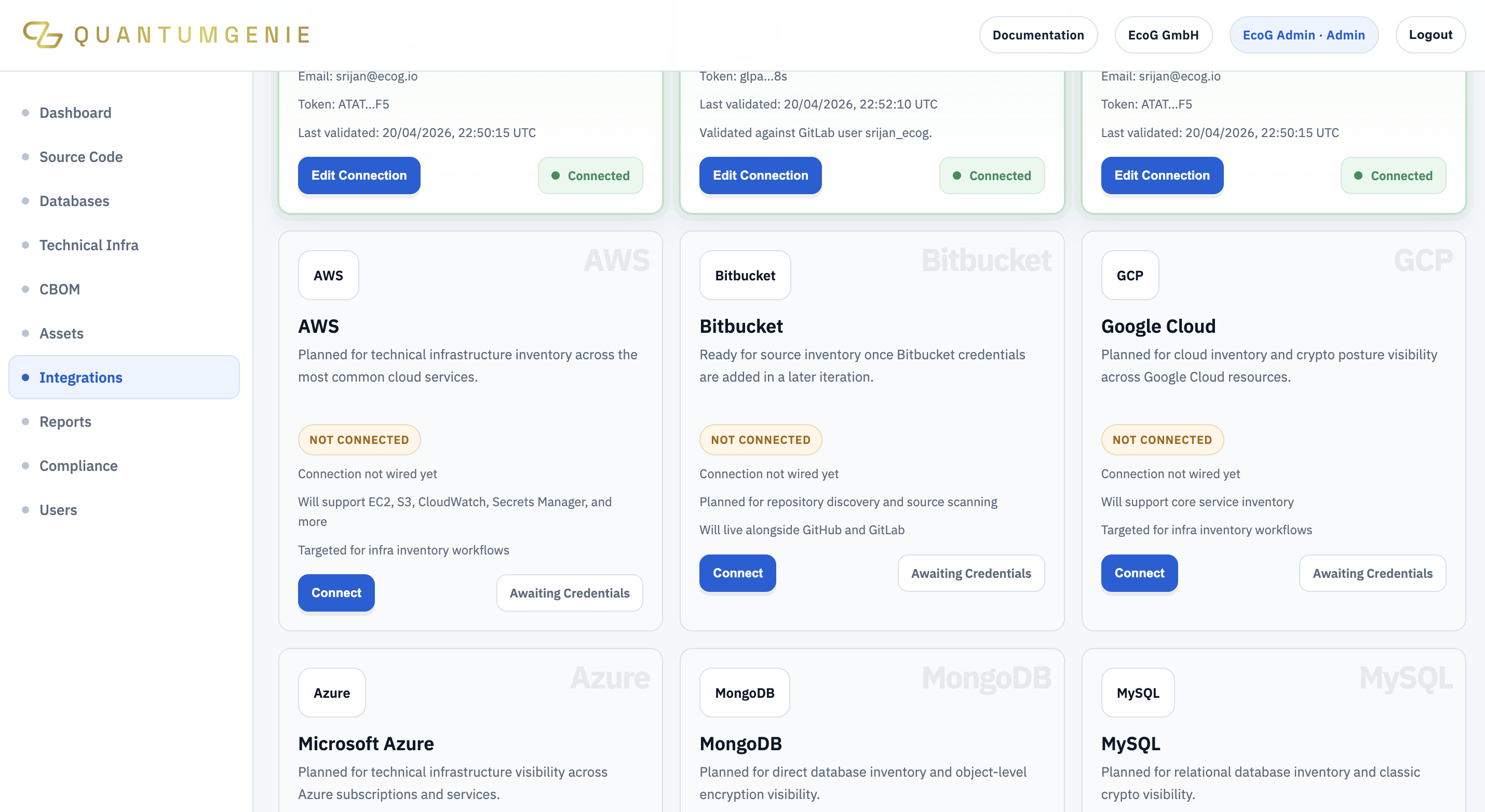
QuantumGenie addresses this pressing need by providing a robust platform for discovering, cataloging, and managing the cryptographic inventory across diverse enterprise environments. By offering detailed visibility into where cryptography is used—be it in certificates, source code, infrastructure, or integrations—QuantumGenie enables teams to prioritize migration risks and plan remediation workflows with operational precision.
This aligns perfectly with the migration challenges reported by federal agencies. By operationalizing these insights, QuantumGenie helps enterprises execute migration plans efficiently with features supporting pull request automation, policy exception handling, change review, and verification. In essence, QuantumGenie turns the daunting challenge of PQC migration into a manageable, transparent process, ensuring enterprises remain resilient and compliant amidst quantum-era disruptions.
Frequently Asked Questions
Why is post-quantum cryptography migration more complex than previous cryptographic transitions?
PQC migration involves integrating entirely new algorithm families that often require changes to hardware and software components, managing legacy systems, and ensuring compliance with evolving standards, making it more complex than past transitions.
How can enterprises prioritize cryptographic assets for PQC migration?
Enterprises should conduct a comprehensive cryptographic inventory to identify where cryptography is used, assess the criticality and exposure risk of each asset, and prioritize migration based on potential impact to security and compliance requirements.
Watch The Quantum Threat
Sources And Further Reading
- Agencies Question Security Protocols Amid Shift to Post-Quantum Cryptography FedTech Magazine · May 21, 2026
- CISA Releases Technology Readiness List for Post-Quantum Cryptography CSO Online · Jan 27, 2026
- Post-Quantum Cryptography: Why Enterprises Must Transition Their Encryption Now Security Today · Apr 5, 2026