In This Article
What This Means
- NIST Standards Finalized and NSA Deadlines Demand Enterprise Action
- Preparing for a Complex Migration: Inventory and Crypto-Agility at the Core
- How QuantumGenie Fits into Post-Quantum Migration Strategies
NIST Standards Finalized and NSA Deadlines Demand Enterprise Action
The cybersecurity landscape is on the brink of a radical shift following the National Institute of Standards and Technology’s (NIST) finalization of the first set of post-quantum cryptography (PQC) standards. Coupled with the National Security Agency’s (NSA) new Commercial National Security Algorithm Suite 2.0 (CNSA 2.0) framework, enterprises are facing precise deadlines: all new national security systems must implement quantum-safe algorithms by January 2027, with full migration required by 2035.
This regulatory clarity marks the start of an estimated $15 billion migration effort as enterprises realign their entire cryptographic infrastructure to withstand the looming threat posed by quantum computing. The significance goes beyond regulatory compliance—it redefines enterprise risk management, operational planning, and security architecture at scale. Delaying this transition increases exposure to “harvest-now, decrypt-later” attacks, where encrypted data captured today could be decrypted once quantum computers mature.
Preparing for a Complex Migration: Inventory and Crypto-Agility at the Core
Amid the race to meet these aggressive timelines, organizations confront the foundational challenge of knowing precisely what cryptographic assets they have in place. As highlighted by recent analysis on cryptographic inventory practices, effective transition to PQC hinges on maintaining a live, comprehensive, and continuously updated cryptographic inventory. Without such visibility, risk prioritization and remediation planning become guesswork.
Moreover, enterprises must adopt crypto-agility—systems capable of seamlessly switching or upgrading cryptographic algorithms—to adapt as PQC standards evolve. Migration isn’t a one-time change but an ongoing governance process that demands integration with existing software development lifecycle tools, operational workflows, and compliance audits.

Key Deadlines and Enterprise Impact of Post-Quantum Migration
| Milestone | Deadline | Enterprise Implication |
|---|---|---|
| NSA CNSA 2.0 New Systems Quantum-Safe Requirement | January 2027 | Mandate for all new national security systems to implement PQC algorithms immediately. |
| Full Migration to Quantum-Safe Algorithms | 2035 | Complete overhaul of legacy cryptography required; sustained compliance and operational agility essential. |
| Estimated Migration Market Size | $15 Billion | Significant and sustained investment in cryptographic assets, tooling, and services anticipated. |
| Early Migration Benefits | Ongoing | Reduces exposure to quantum decryption attacks; builds crypto-agility and resilience. |
How QuantumGenie Fits into Post-Quantum Migration Strategies
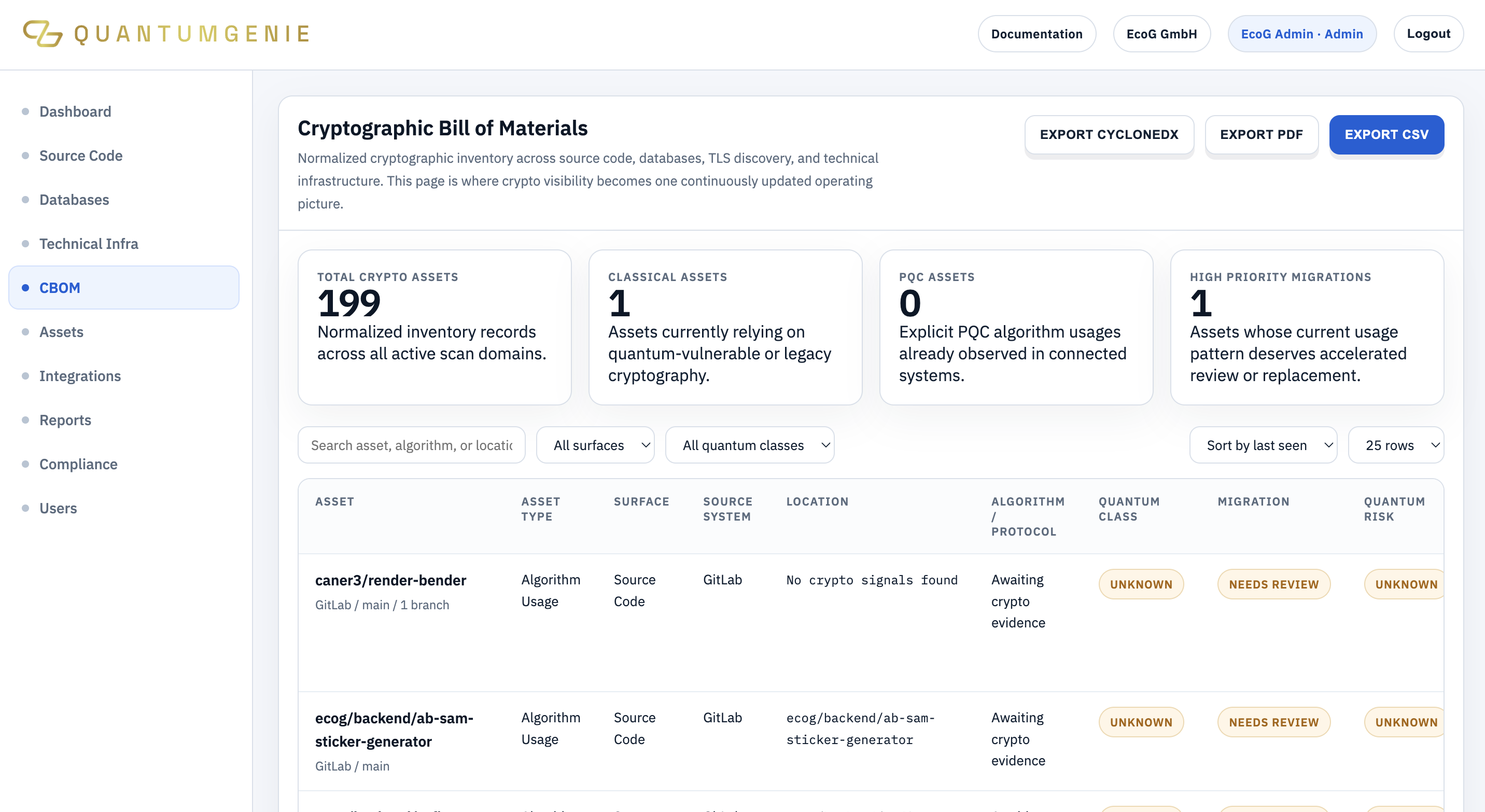
QuantumGenie addresses these critical enterprise needs by offering a robust infrastructure designed for end-to-end cryptographic governance through the quantum transition. Its CipherScan component automatically discovers cryptographic exposures across websites, certificates, source code, and infrastructure, building a detailed cryptographic bill of materials (CBOM). This inventory foundation enables CISOs and architects to prioritize risk areas effectively and plan pragmatic migration roadmaps aligned with the precise deadlines set by authorities like NSA.
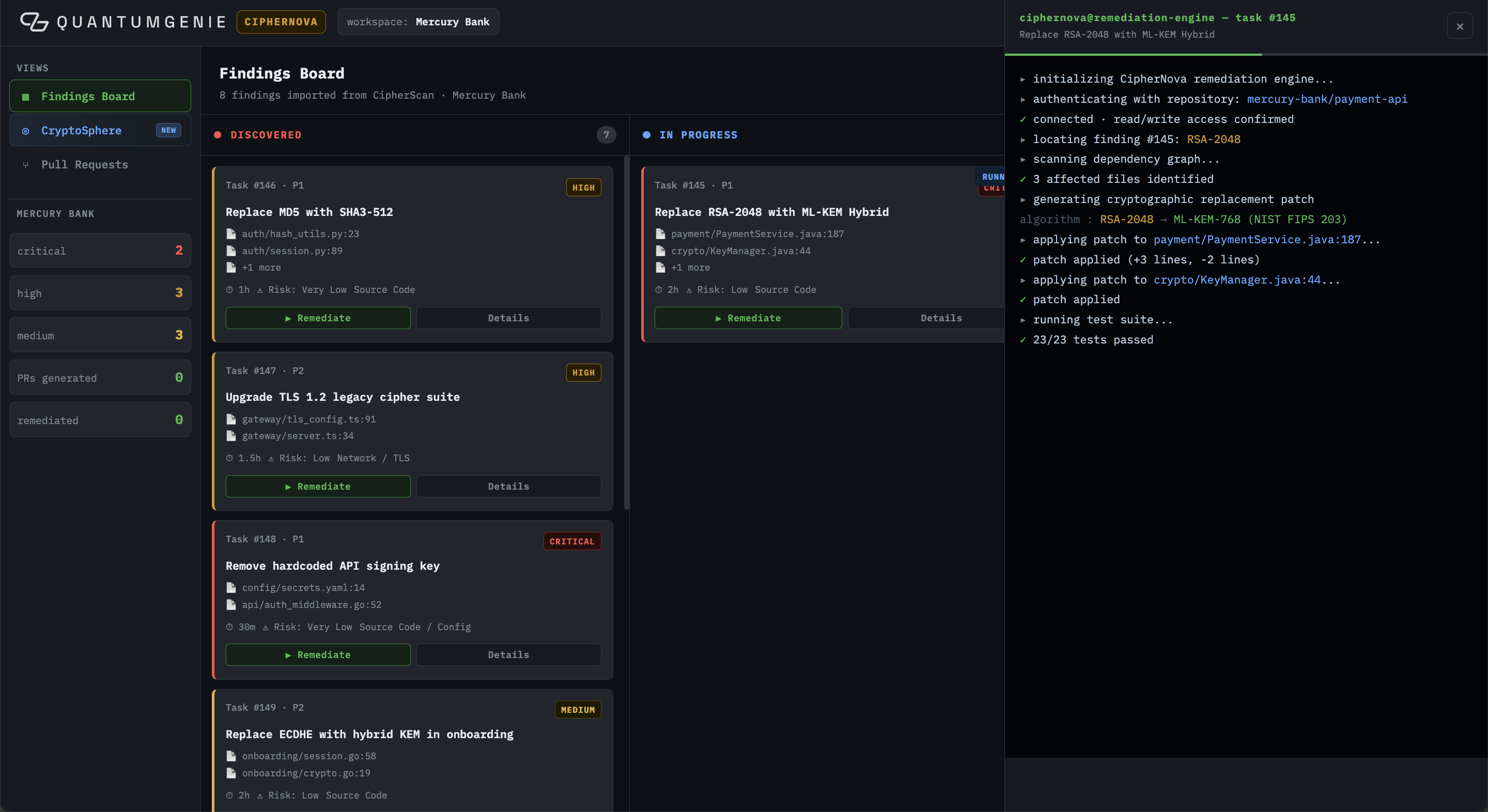
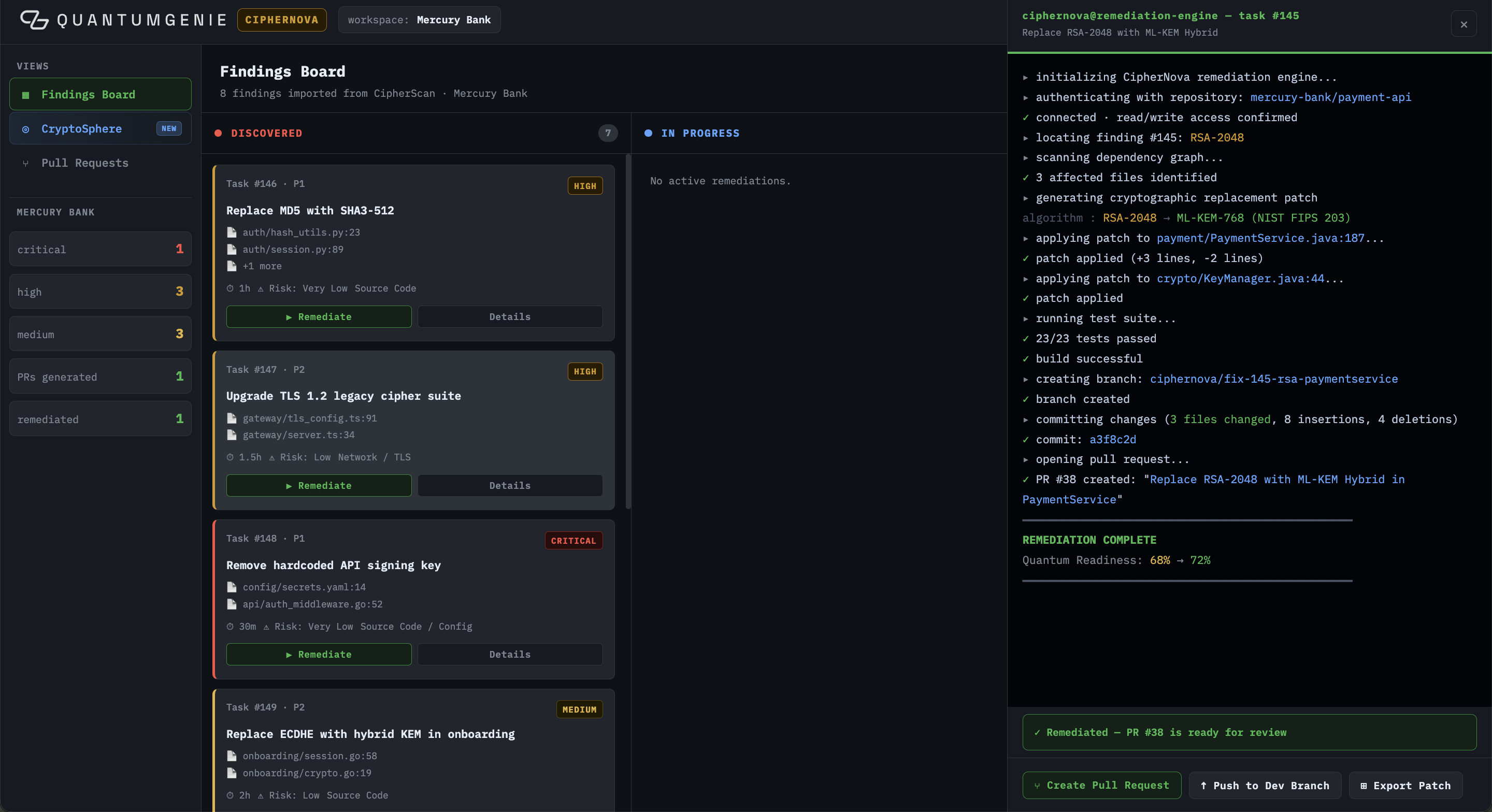
Furthermore, QuantumGenie’s CipherNova operationalizes remediation via workflow orchestration, pull request integration, policy exception tracking, and verification, accelerating controlled migration execution while evidencing compliance readiness. As organizations face the $15 billion post-quantum migration challenge, QuantumGenie offers actionable visibility and execution capabilities essential to reduce risk, streamline decision-making, and achieve regulatory and security goals.
Frequently Asked Questions
Why is NIST’s finalization of PQC standards a critical milestone?
NIST’s finalization provides enterprise organizations with validated, government-backed cryptographic algorithms that have undergone rigorous evaluation. This milestone enables organizations to confidently adopt PQC solutions that protect against quantum-enabled attacks while ensuring interoperability and compliance.
How does a cryptographic inventory support post-quantum migration?
A cryptographic inventory gives organizations full visibility into where and how cryptography is used across their environment. This visibility is essential to identify vulnerable assets, prioritize remediation, plan phased migration, and maintain compliance with regulatory requirements during the transition.
Watch The Quantum Threat
Sources And Further Reading
- The $15 Billion Post-Quantum Migration: NIST Standards Are Final, NSA Deadlines Are Set, and Enterprise Cybersecurity Is About to Be Rebuilt from the Ground Up PR Newswire · Mar 31, 2026
- Microsoft Updates Quantum Safe Program Timeline to 2029 Amid Accelerated Quantum Computing Developments PC Gamer · Jul 6, 2026
- Post-Quantum Cryptography and the 2026 Cryptographic Inventory Zynap · Jul 8, 2026