In This Article
What This Means
- The Emerging Paradigm of Software-Defined Cryptography
- Implications for Enterprise PQC Migration Strategies
- How QuantumGenie Fits the Software-Defined Cryptography Vision
The Emerging Paradigm of Software-Defined Cryptography
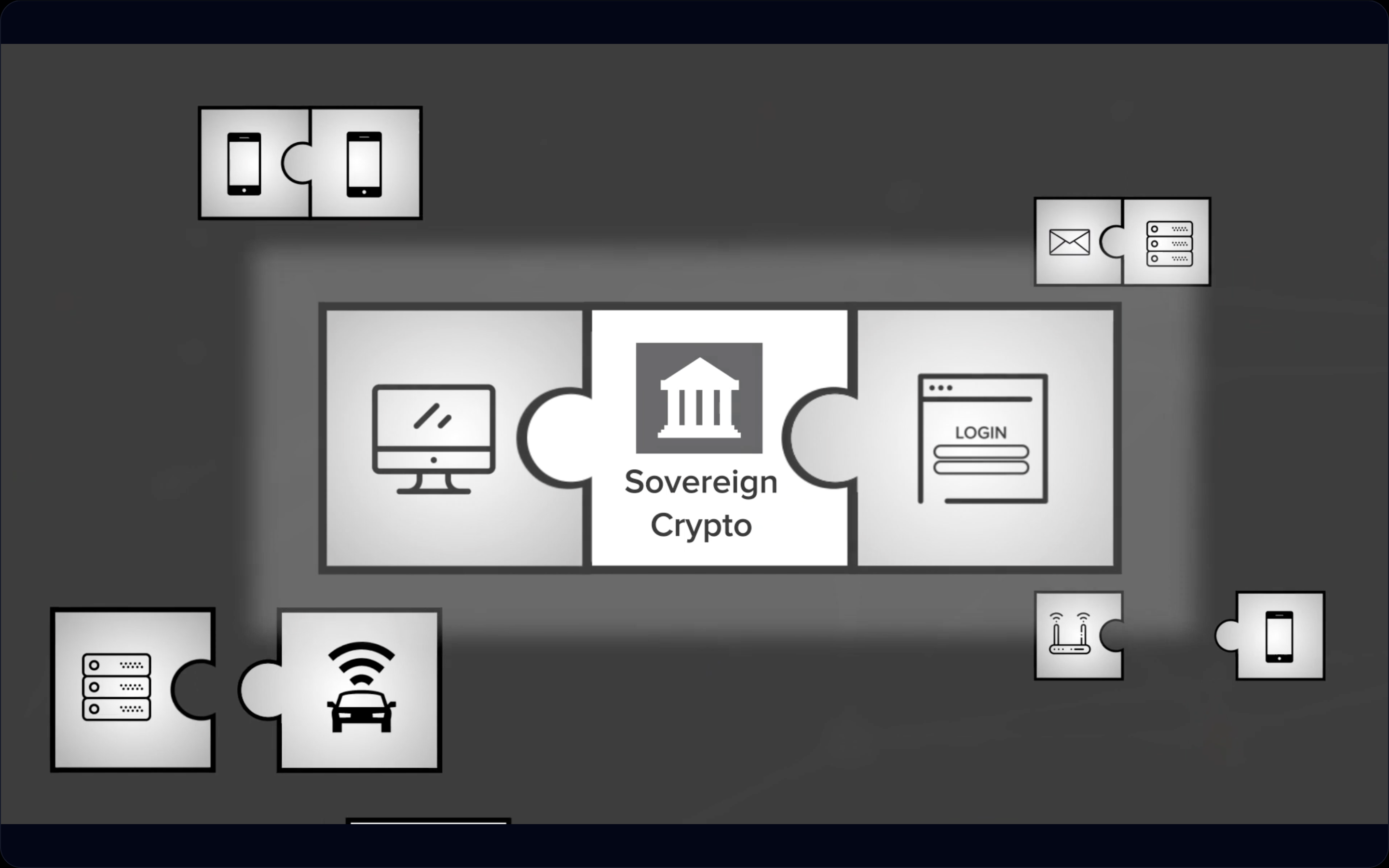
As organizations prepare for the quantum era, the sheer complexity of transitioning to post-quantum cryptography (PQC) has become apparent—far beyond just selecting new algorithms. A recent paper from arXiv spotlights software-defined cryptography as a foundational design principle that leverages software controls to provide centralized governance and automated enforcement of cryptographic policies. This approach enables enterprises to integrate PQC in a way that is agile, manageable, and responsive to evolving threats and standards. It shifts the migration challenge from cryptographic primitives alone towards a systemic solution involving comprehensive policy management and orchestration.
Implications for Enterprise PQC Migration Strategies
The survey on PQC adoption and network instrumentation emphasizes that many enterprises struggle with fragmented migrations and uncoordinated deployment pathways. Incremental, hybrid crypto-agility enforced through software control frameworks offers a practical path forward, allowing reversible, measurable transitions without service disruption or security gaps. The complexity of maintaining compatibility, mitigating novel attacks, and managing multiple cryptographic stacks simultaneously underscores why enterprises must embrace software-defined cryptography. This enables not only switching algorithms but dynamically governing cryptographic assets as software-defined entities.
Implementing this approach means enterprises require real-time visibility into all cryptographic use cases across networks, applications, and infrastructure as well as policy enforcement mechanisms that support automated remediation and compliance tracking. Without this, PQC migration risks becoming untenable as a manual effort lacking scalable governance.
Key Dimensions of Software-Defined Cryptography for Enterprise PQC Migration
| Dimension | Enterprise Impact | QuantumGenie Capability |
|---|---|---|
| Centralized Policy Governance | Ensures consistent cryptographic standards and migration policies across all assets | Unified inventory and compliance dashboard with CipherScan |
| Automated Enforcement | Reduces manual errors and accelerates migration workflows | Pull request automation and workflow checks in CipherNova |
| Crypto-Agility Support | Enables seamless swaps between classical and post-quantum algorithms | Dynamic prioritization and hybrid migration planning |
| Continuous Visibility | Maintains updated cryptographic exposure and compliance posture | Ongoing discovery and exposure dashboards |
How QuantumGenie Fits the Software-Defined Cryptography Vision
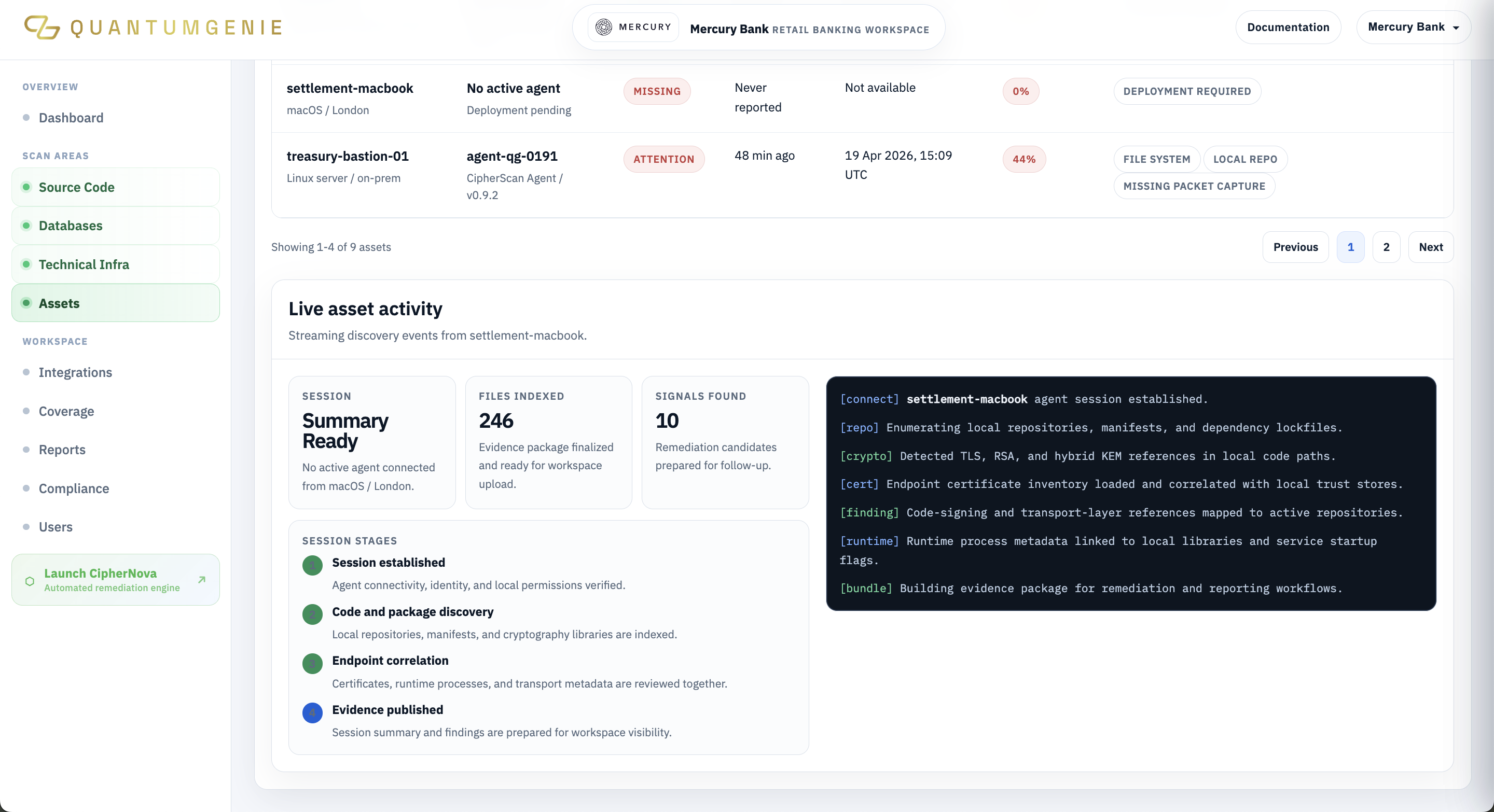
QuantumGenie perfectly embodies the operational principles of software-defined cryptography. Its CipherScan module provides continuous discovery and inventory of cryptographic assets, forming the essential data backbone for centralized governance. The CipherNova platform then enables automated enforcement workflows—facilitating proofed remediation plans, pull requests integration, and compliance exception tracking all within a unified system. By bridging visibility with action, QuantumGenie empowers enterprises to operationalize crypto-agility as described in the emerging paradigm.
In effect, QuantumGenie transforms cryptography management into a software-defined process, helping organizations navigate PQC migration complexity while meeting regulatory and operational demands. Enterprises gain the ability to plan, prioritize, and execute PQC and hybrid migrations with confidence, ensuring resilience against quantum threats without disrupting critical business functions.
Frequently Asked Questions
What is software-defined cryptography and why is it critical for PQC migration?
Software-defined cryptography refers to managing cryptographic functions and policies through software that provides centralized governance and automated enforcement. This approach is critical for PQC migration because it enables enterprises to handle the complexity of switching algorithms, enforce security policies consistently across systems, and support crypto-agility with resilience and scalability.
How does QuantumGenie enable enterprises to implement software-defined cryptography?
QuantumGenie provides a comprehensive platform that discovers and inventories all cryptographic assets and facilitates automated workflows for remediation and compliance. This enables enterprises to centrally govern cryptographic policies, prioritize migration risks, implement hybrid crypto-agility, and track progress—transforming cryptography management into a software-defined process aligned with modern PQC needs.
Watch The Quantum Threat
Sources And Further Reading
- Software-Defined Cryptography: A Design Feature of Cryptographic Agility arXiv · Apr 2, 2024
- Post-Quantum Cryptography and Quantum-Safe Security: A Comprehensive Survey arXiv · Oct 12, 2025
- Post-Quantum Cryptography (PQC) Network Instrument: Measuring PQC Adoption Rates and Identifying Migration Pathways arXiv · Jul 31, 2024