In This Article
What This Means
- Understanding the Practical Landscape of Post-Quantum Cryptography
- From Research Challenges to Enterprise Implementation
- How QuantumGenie Helps Enterprises Operationalize PQC Readiness
Understanding the Practical Landscape of Post-Quantum Cryptography
As the quantum computing horizon advances, enterprises face the urgent challenge of ensuring their cryptographic foundations remain secure against emerging quantum attacks. A new comprehensive survey published on arXiv breaks down the complex domain of post-quantum cryptography (PQC), moving beyond theoretical cryptanalysis to practical deployment factors. Importantly, it details taxonomy, performance tradeoffs, hardware acceleration possibilities, and real-world implementation considerations for a variety of PQC algorithms.
This holistic view clarifies why enterprises must first assess their existing cryptographic landscape—understanding the types of algorithms in use, their performance characteristics, and where hardware or software acceleration can impact security and efficiency. This understanding is foundational before embarking on migration programs or selecting swaps for legacy public-key algorithms vulnerable to quantum attacks.
From Research Challenges to Enterprise Implementation
Supporting research highlights the complexity and evolving nature of PQC migration, emphasizing the need for cryptographic agility — the capability to switch cryptographic algorithms quickly and safely without compromising systems. Enterprises must confront the challenge of working with incomplete standards, balancing early adoption with the risk of protocol instability, and devising robust migration strategies that minimize business disruption.
This requires a structured approach that builds upon transparency in cryptographic inventory, risk prioritization based on algorithm exposure, and integration of migration processes into existing DevOps and security workflows. Enterprises can no longer treat PQC as a theoretical problem — it demands concrete programmatic governance and operational discipline to meet both security demands and compliance requirements.

Key Enterprise Considerations for Post-Quantum Cryptography Migration
| Aspect | Enterprise Implication | QuantumGenie Role |
|---|---|---|
| Cryptographic Inventory | Identify all cryptographic assets and usages across systems | Discovery and CBOM generation with CipherScan |
| Performance & Hardware Support | Balance security with operational performance | Inventory aids assessment of where hardware acceleration applies |
| Cryptographic Agility | Ability to switch algorithms without downtime or risk | Workflow orchestration and policy enforcement via CipherNova |
| Risk Prioritization | Focus remediation on highest vulnerability exposures | Prioritization tools and reporting dashboards |
How QuantumGenie Helps Enterprises Operationalize PQC Readiness
QuantumGenie addresses these practical imperatives by providing a discovery platform that maps cryptographic assets across infrastructure, from websites and certificates to source code and databases. Its CipherScan technology helps enterprises identify where classical and potentially quantum-vulnerable cryptography resides, enabling construction of a cryptographic bill of materials (CBOM).
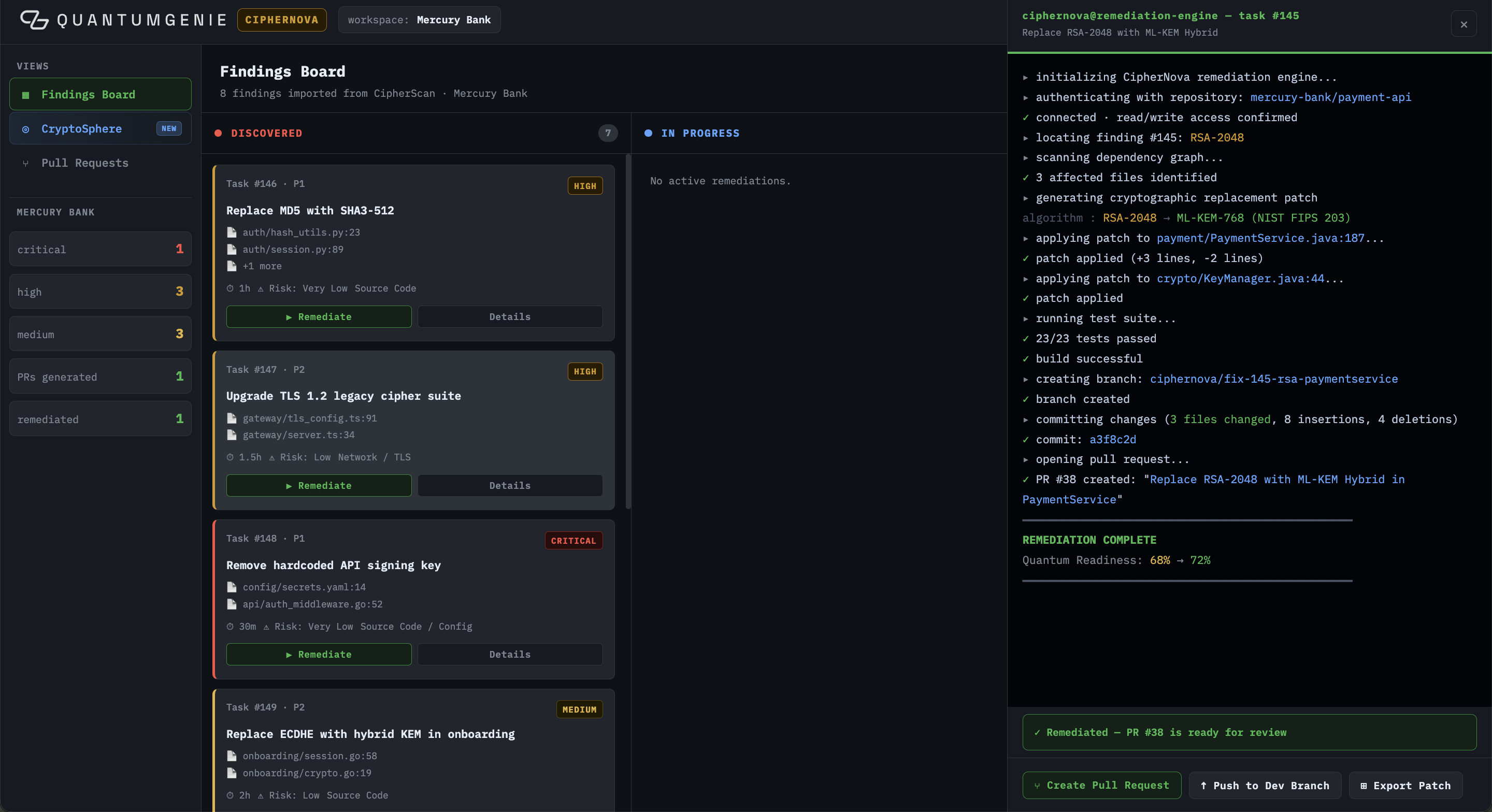
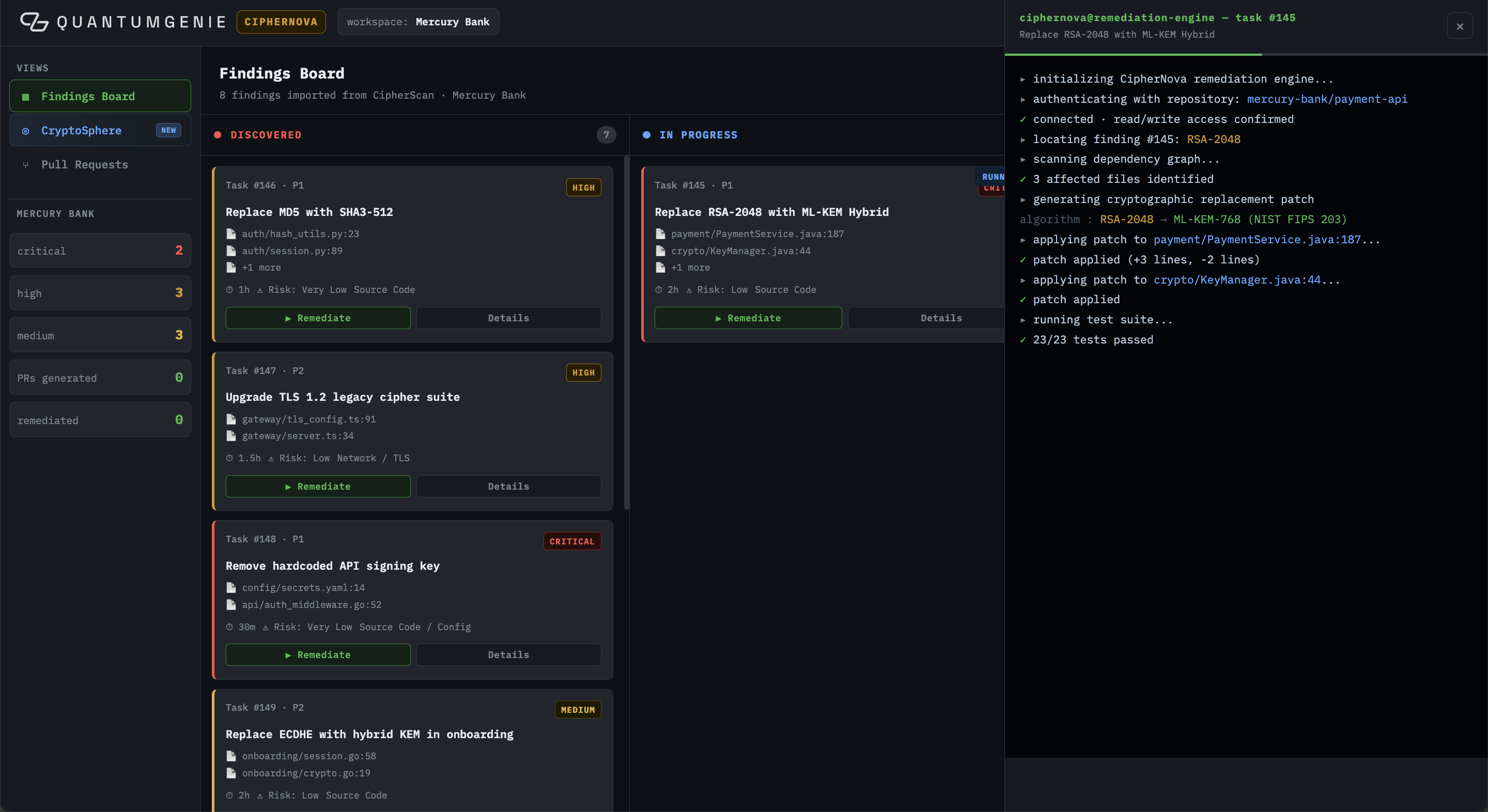
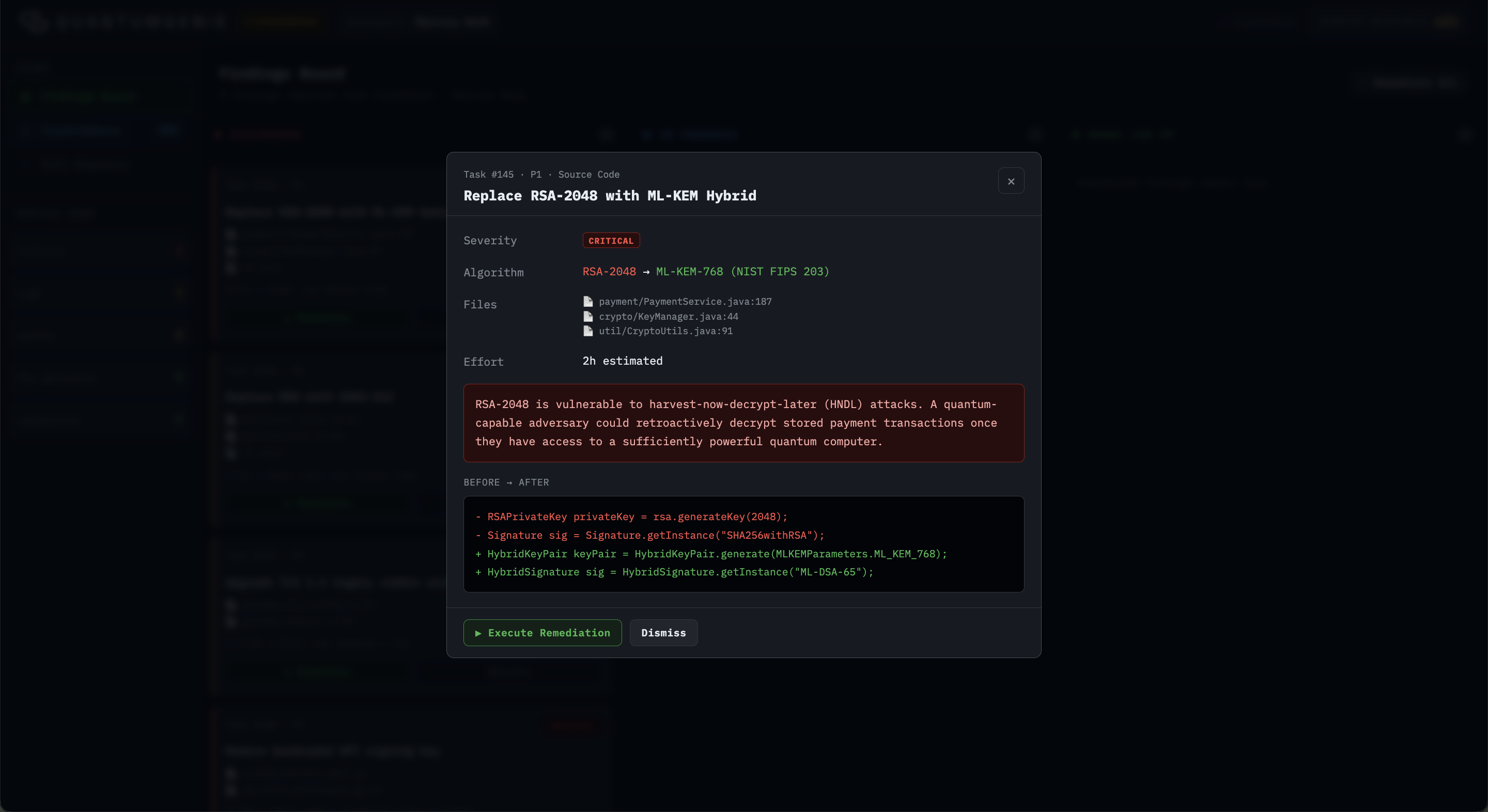
With this visibility, security teams can prioritize remediation efforts focusing on the highest risk assets and plan stepwise migrations. QuantumGenie's CipherNova layer further supports the orchestration of migration workflows, automates pull request management, verifies changes against policy, and documents compliance evidence. This comprehensive operationalization moves enterprises from cryptographic unknowns to controlled, measurable migration progress — exactly the capabilities highlighted as critical in the surveyed research.
Frequently Asked Questions
Why is creating a cryptographic inventory critical before PQC migration?
A cryptographic inventory uncovers all algorithms in use and their contexts, enabling accurate risk assessment and targeted migration planning. Without this, enterprises risk missing vulnerable assets or applying overly broad changes causing operational issues.
How does cryptographic agility affect enterprise security posture?
Cryptographic agility allows enterprises to swiftly swap compromised algorithms with secure alternatives, reducing exposure windows and supporting compliance with evolving standards, thus strengthening overall posture against quantum threats.