In This Article
What This Means
- Beyond Theory: Practical Enterprise Priorities in Post-Quantum Cryptography
- Signals of Enterprise Momentum from Leading Technology and Policy Guidance
- How QuantumGenie Powers Real-World Enterprise Post-Quantum Cryptography Migration
Beyond Theory: Practical Enterprise Priorities in Post-Quantum Cryptography
The transition to quantum-safe security is no longer a futuristic concept but an urgent, ongoing enterprise challenge. The 2025 comprehensive survey published on arXiv provides a valuable synthesis of post-quantum cryptography (PQC) taxonomies, performance metrics, and, crucially, deployment considerations for organizations. For CISOs and enterprise architects, the survey highlights a decisive shift from monolithic, “rip-and-replace” PQC adoption towards hybrid strategies that progressively integrate post-quantum algorithms alongside classical techniques. This crypto-agility approach inherently balances security with operational continuity, helping enterprises manage transitional risks without disrupting critical services.
Increasingly, enterprises recognize that PQC readiness demands not just new algorithms but an overarching migration architecture—one that includes detailed cryptographic inventory, layered fallback mechanisms, and ongoing monitoring. This reflects an evolving ecosystem where agility and adaptability are paramount, steering away from one-dimensional, static cryptography solutions. Understanding these themes directly informs enterprise security roadmaps and resource allocation for PQC programs.
Signals of Enterprise Momentum from Leading Technology and Policy Guidance
Supporting this perspective, recent developments such as Apple’s PQ3 post-quantum encryption deployment for iMessage signal that industry leaders are moving toward practical PQC implementation, highlighting a broader imperative for enterprises to accelerate readiness programs. Likewise, the Cybersecurity and Infrastructure Security Agency (CISA) has published a technology readiness list aimed at helping organizations assess their PQC preparedness across infrastructure components, which assists in identifying gaps and focusing migration efforts strategically.
These signals underscore the vital need for enterprises to adopt scalable, repeatable processes that support cryptographic agility and enable incremental migration. Organizations must not only select appropriate PQC algorithms but also establish operational frameworks for continuous assessment, risk prioritization, and workflow-driven remediation. This enhances compliance posture and reduces exposure during the multi-year PQC transition.

Key Elements for Enterprise Post-Quantum Cryptography Migration
| Element | Description | Enterprise Implication |
|---|---|---|
| Cryptographic Inventory | Comprehensive mapping of all cryptographic usage across assets | Enables risk-based migration prioritization and compliance evidence |
| Hybrid Migration | Implementing PQC algorithms alongside classical ones incrementally | Reduces operational disruption and allows continuous validation |
| Crypto-Agility | Capability to switch or update cryptographic algorithms dynamically | Future-proofs enterprise security posture against evolving threats |
| Operational Workflows | Automated remediation, change management, and verification | Speeds migration, reduces errors, and ensures policy compliance |
How QuantumGenie Powers Real-World Enterprise Post-Quantum Cryptography Migration
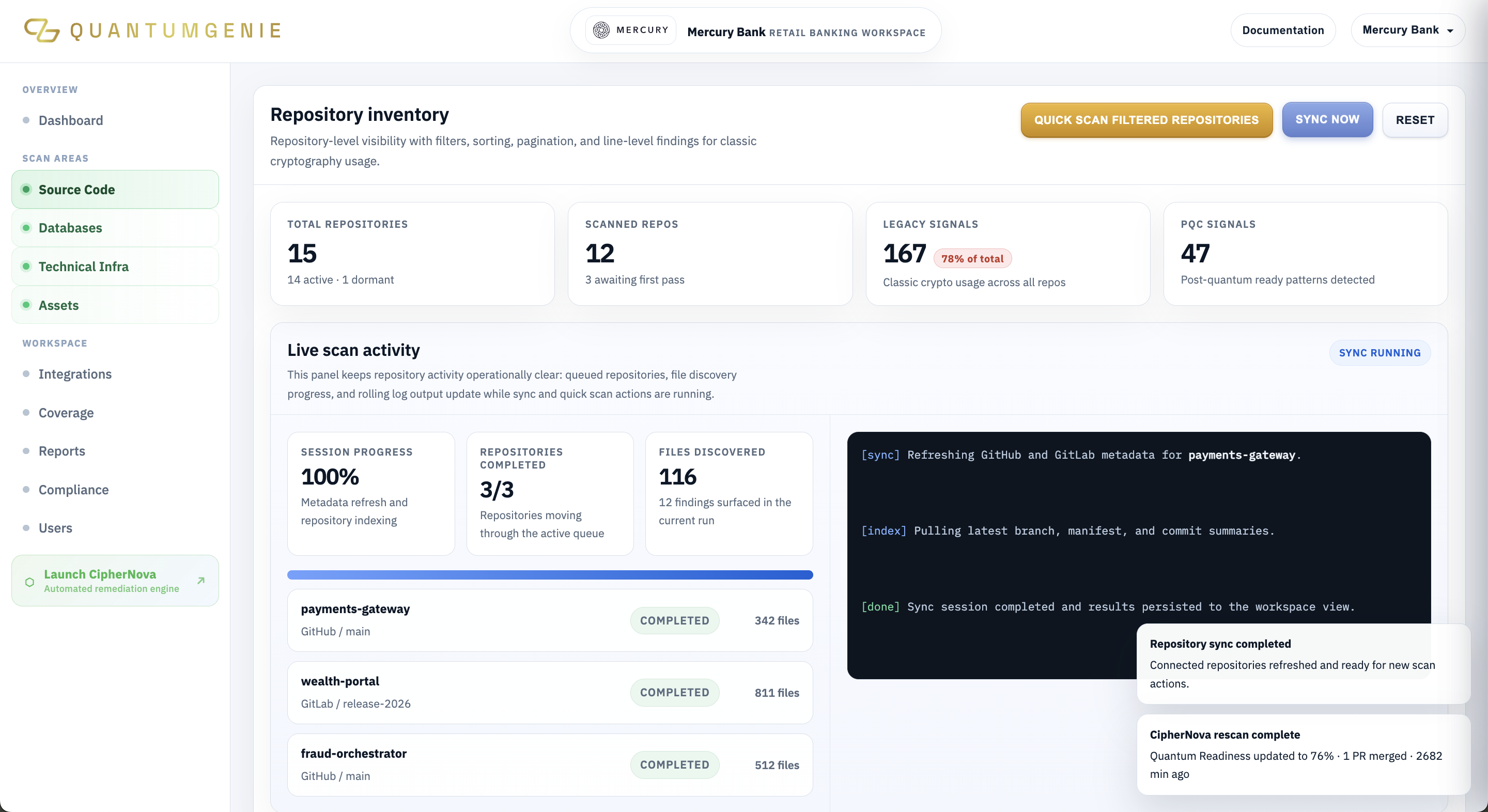
QuantumGenie is designed to address the exact challenges outlined in the survey and reinforced by industry signals. Its CipherScan product provides comprehensive discovery of cryptographic assets across websites, certificates, codebases, and infrastructure, enabling enterprises to build a complete cryptographic bill of materials (CBOM). This foundational inventory is critical to understanding the migration scope and risk prioritization for agile, hybrid PQC adoption strategies.
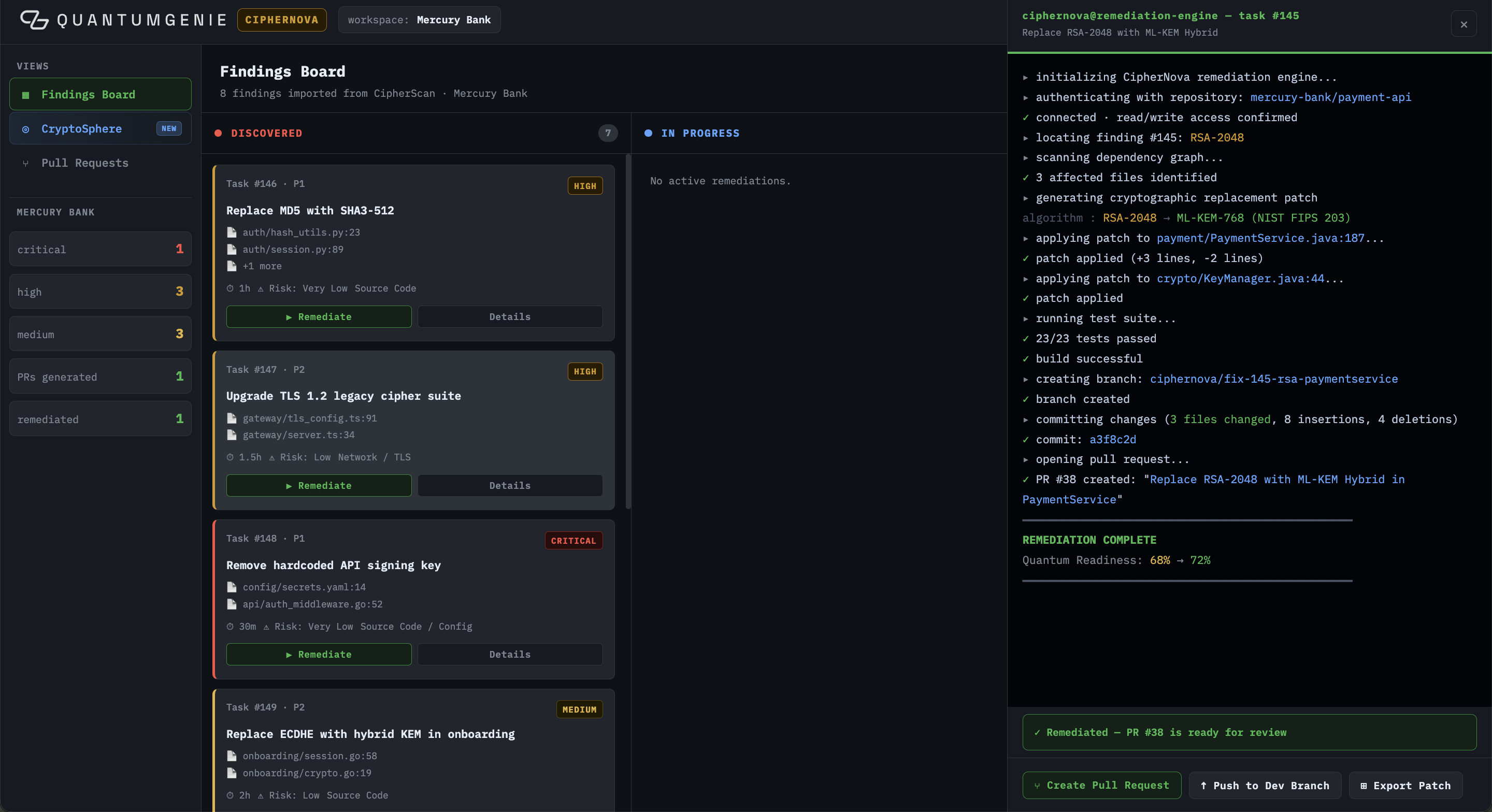
Further, QuantumGenie’s CipherNova component operationalizes migration workflows by orchestrating remediation plans, managing policy exceptions, and automating change reviews in development pipelines. This accelerates controlled, verifiable PQC migration and ongoing crypto-agility, aligning closely with the survey’s recommended best practices for incremental deployment and risk management. In essence, QuantumGenie provides the practical infrastructure enterprises need to translate PQC readiness concepts into actionable, scalable programs that maintain security and compliance throughout transition.
Frequently Asked Questions
Why is a hybrid approach to post-quantum cryptography recommended for enterprises?
A hybrid approach allows enterprises to deploy post-quantum algorithms alongside classical cryptography, balancing security and performance while enabling gradual, manageable migration without disrupting existing operations.
How does cryptographic inventory management support PQC migration?
By discovering and cataloging all cryptographic uses across enterprise systems, cryptographic inventory management enables organizations to prioritize migration efforts, assess risk exposure, and comply with audit requirements effectively.
Watch The Quantum Threat
Sources And Further Reading
- Post-Quantum Cryptography and Quantum-Safe Security: A Comprehensive Survey arXiv · Oct 12, 2025
- Apple’s PQ3 Launch Signals Enterprise Post-Quantum Cryptography Readiness Imperative TechTarget · Jun 30, 2026
- CISA-Technologie-Readiness-Liste stärkt Unternehmen für Post-Quantum-Kryptografie-Migration CSO Online · Jun 30, 2026