In This Article
What This Means
- Federal Agency Challenges Signal Enterprise Migration Realities
- Emerging Threats and the Imperative for Crypto-Agility
- How QuantumGenie Fits in Post-Quantum Migration and Security
Federal Agency Challenges Signal Enterprise Migration Realities
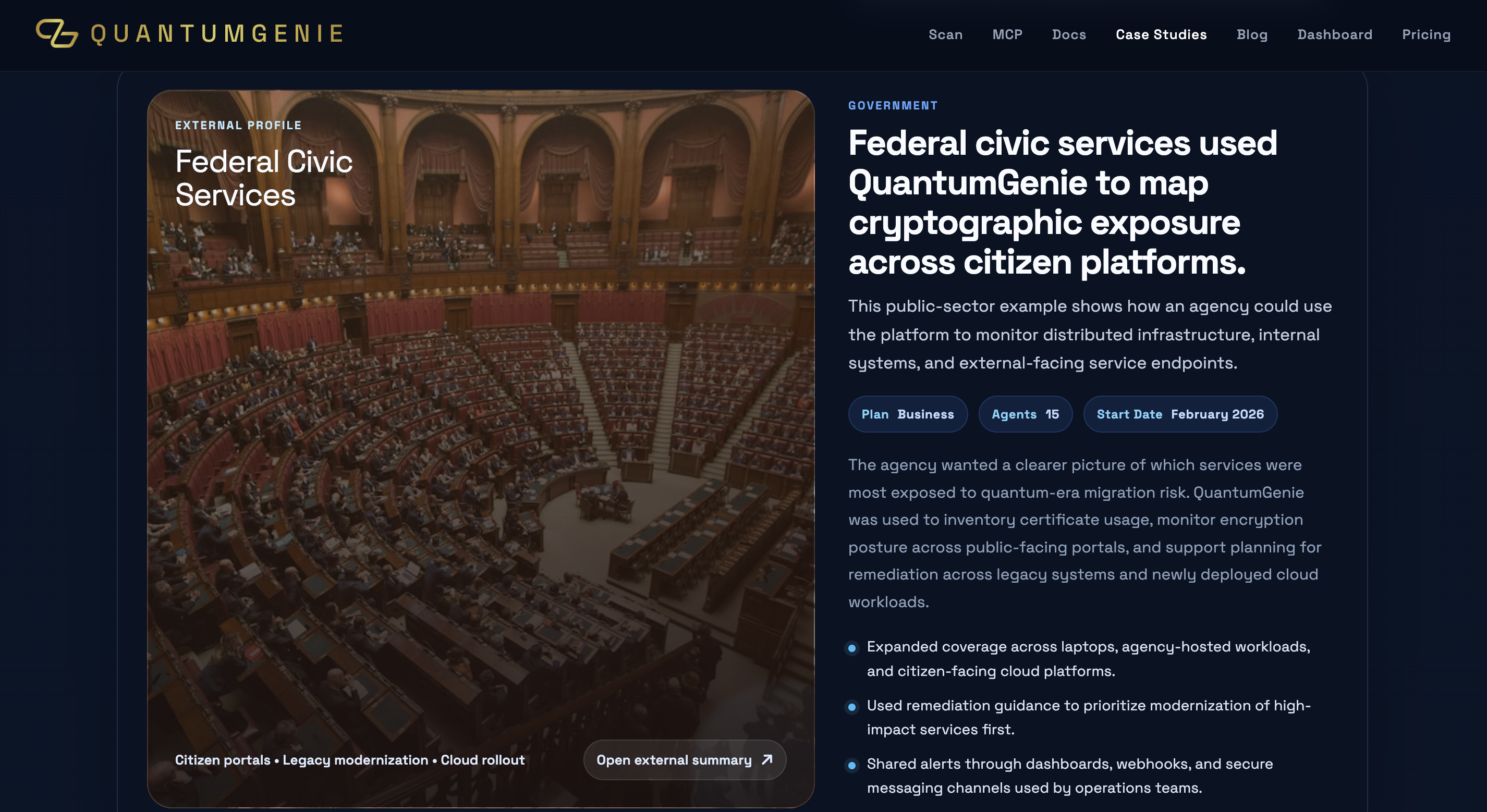
Recent reports from FedTech Magazine reveal that federal agencies continue to question and revise their existing security protocols amidst the ongoing shift to post-quantum cryptography (PQC). The transition towards NIST-standardized PQC algorithms is not just a technical upgrade but a fundamental change in cryptographic infrastructure. Agencies face difficulties in updating systems, verifying compliance, and maintaining operational continuity — challenges mirrored in the enterprise space. These growing pains underscore that PQC migration is a complex, multi-dimensional effort requiring comprehensive visibility and governance.
Emerging Threats and the Imperative for Crypto-Agility
Compounding the urgency, the Kyber ransomware family has recently been found employing ML-KEM-1024, a NIST-approved PQC algorithm, demonstrating that threat actors are adopting advanced cryptography to protect their payloads against decryption attempts. This development signals that enterprises must accelerate their preparedness to defend against sophisticated threats leveraging PQC. The traditional reactive security posture is insufficient; organizations must practice crypto-agility — the ability to rapidly pivot cryptographic algorithms and keys — to stay resilient as adversaries evolve.
Key Enterprise PQC Migration Challenges Highlighted by Agency Experience
| Challenge | Enterprise Implication | QuantumGenie Solution |
|---|---|---|
| Protocol and Infrastructure Upgrades | Need for holistic visibility and risk assessment | Comprehensive cryptographic discovery and inventory |
| Compliance and Certification | Pressure to meet emerging and evolving compliance mandates | Automated evidence gathering and migration planning |
| Operational Continuity | Balancing migration with live service availability | Orchestrated remediation workflows with impact analysis |
| Emerging Quantum-Safe Threats | Mitigating advanced cryptographic attacks and ransomware | Crypto-agility and prioritization of high-risk exposures |
How QuantumGenie Fits in Post-Quantum Migration and Security
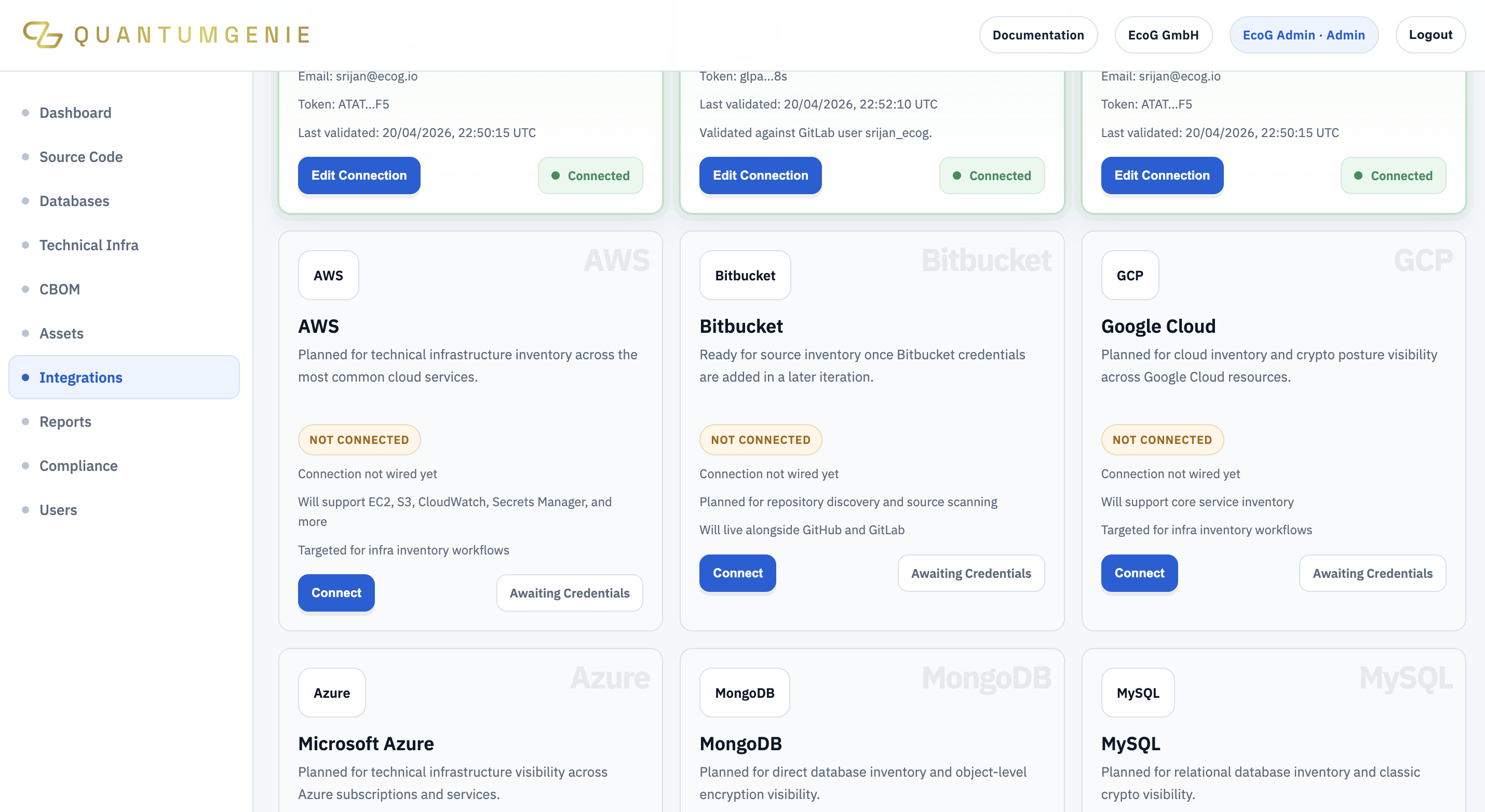
QuantumGenie is positioned to address these enterprise challenges by providing a unified platform for cryptographic discovery, risk prioritization, and migration orchestration. Its CipherScan component uncovers cryptographic assets across domains — from certificates and source code to infrastructure and applications — enabling teams to build a comprehensive cryptographic inventory and component bill of materials (CBOM). This foundation supports prioritized remediation plans and governance workflows through CipherNova, ensuring enterprises can operate with visibility and control during the complex migration. In a landscape where both compliance and adaptive security are paramount, QuantumGenie empowers CISOs and architects to meet regulatory mandates, mitigate harvest-now-decrypt-later risks, and manage crypto-agility operationally.
Frequently Asked Questions
Why are federal agencies struggling with the PQC transition?
Federal agencies have complex and legacy infrastructures that require extensive testing, validation, and compliance checks before PQC algorithms can be fully deployed, which slows the transition and reveals the depth of operational challenges enterprises will face.
How does QuantumGenie help with compliance readiness during PQC migration?
QuantumGenie automates cryptographic discovery and generates detailed inventories and evidence needed for audits, helping organizations track compliance status and plan required remediations methodically in line with regulatory requirements.
Watch The Quantum Threat
Sources And Further Reading
- Agencies Question Security Protocols Amid Shift to Post-Quantum Cryptography FedTech Magazine · May 21, 2026
- In a First, a Ransomware Family Is Confirmed to Be Quantum-Safe Ars Technica · Apr 23, 2026