In This Article
What This Means
- Post-Quantum Cryptography Support: A Patchy Picture in Enterprise Libraries
- Implications for Enterprise Migration Strategy
- How QuantumGenie Fits into the Enterprise PQC Migration Landscape
Post-Quantum Cryptography Support: A Patchy Picture in Enterprise Libraries
The post-quantum threat to classical cryptographic algorithms has driven international standards bodies like NIST to select new quantum-resistant algorithms. However, a recent analysis published on arXiv reveals that support for these NIST-selected post-quantum cryptography (PQC) algorithms across leading open-source cryptographic libraries remains inconsistent. While some libraries have integrated candidates with reasonable maturity, others lag behind or offer partial, experimental support lacking in operational reliability.
For enterprises, this variance matters tangibly because cryptographic libraries form the foundational layers of security infrastructure—from TLS stacks in web servers to software cryptography modules in applications. Inconsistent PQC readiness means enterprises face substantial hurdles in both adopting PQC algorithms and maintaining security assurances. Blindly integrating immature library support risks interoperability problems, security bugs, and operational disruptions.
Implications for Enterprise Migration Strategy
The Cyber Technology Insights report corroborates these findings from the field with additional context: enterprises desiring quantum-safe security must chart a comprehensive migration path that starts with discrete discovery and inventory of cryptographic assets in use, across certificates, code, and protocols, then assessing quantum risk exposure accordingly.
This layered approach needs to consider the hybrid deployment of PQC algorithms alongside classical legacy ones, given limited and evolving library support. Migrating critically depends on crypto-agility—enterprise systems must be architected to quickly swap algorithms as PQC standards and library implementations stabilize. However, such agility cannot be achieved without an up-to-date, detailed cryptographic inventory and rigorous prioritization of migration risk, underscoring the need for automated discovery and posture management tools.

Summary of Enterprise PQC Support in Cryptographic Libraries
| Cryptographic Library | PQC Algorithm Support | Maturity Level |
|---|---|---|
| Library A | Moderate (Lattice-based and Hash-based) | Beta / Experimental |
| Library B | Limited (Only Signature schemes) | Early Development |
| Library C | Comprehensive (Encryption and Signatures) | Stable / Production |
| Library D | Minimal | No Support |
How QuantumGenie Fits into the Enterprise PQC Migration Landscape
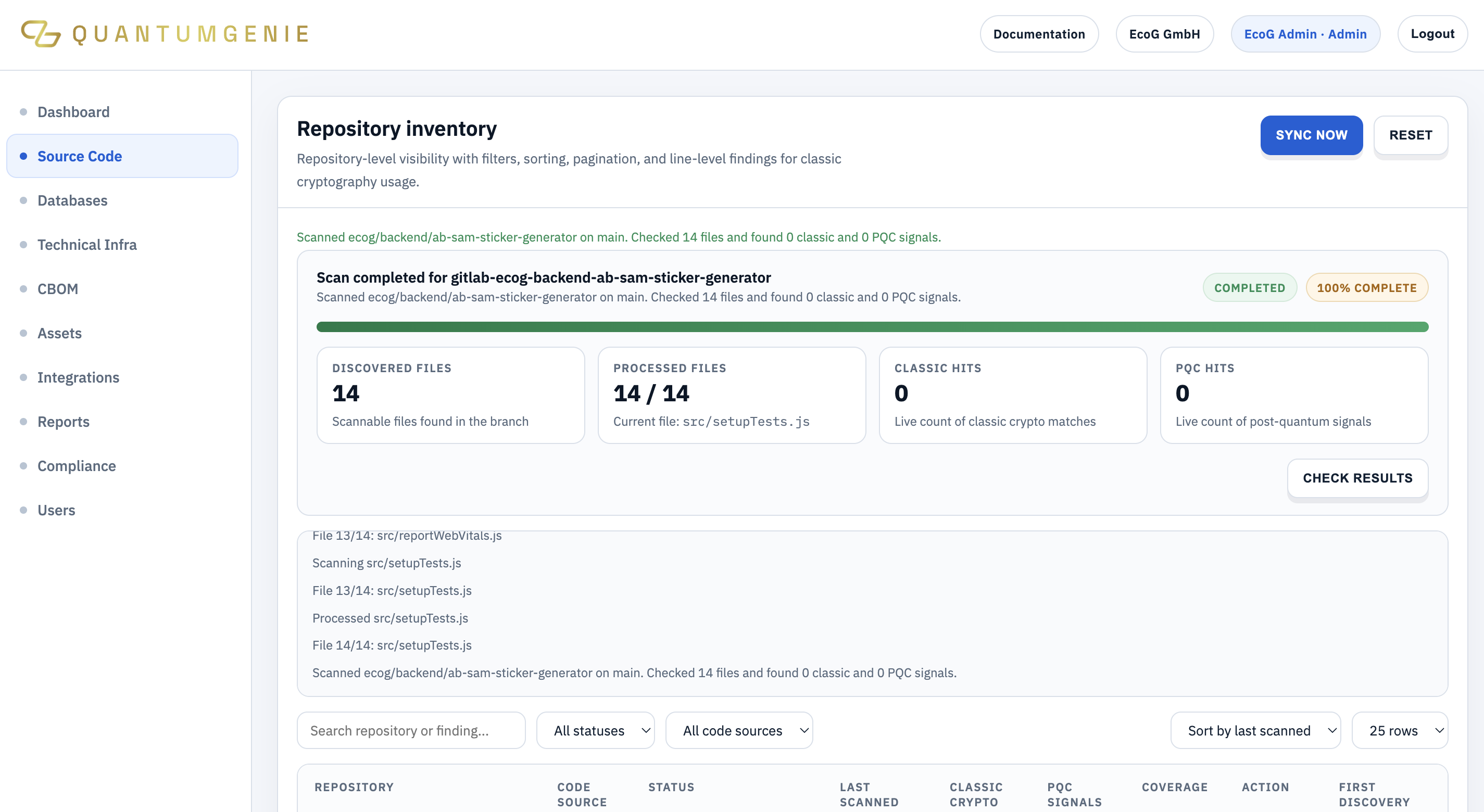
QuantumGenie’s CipherScan platform provides enterprises with the vital capability of automated cryptographic discovery and continuous exposure visibility. Given the fragmented and uneven support of PQC algorithms in widely used libraries, CipherScan helps identify where legacy vulnerable cryptography persists and where PQC or hybrid solutions have already been integrated—information essential to guiding practical migration plans.
By generating a prioritized cryptographic inventory and contextual risk scoring, QuantumGenie empowers CISOs and security architects to navigate interoperability gaps and risk trade-offs exposed by the varied ecosystem of cryptographic library support. This detailed asset knowledge enables staged migration, operational verification, and flexible crypto-agility without risky blind spots, making QuantumGenie foundational infrastructure for post-quantum readiness and compliance.
Frequently Asked Questions
Why is inconsistent PQC support in cryptographic libraries a critical concern for enterprises?
Inconsistent support can cause interoperability issues, security vulnerabilities, and operational disruptions, complicating the adoption of quantum-safe algorithms and delaying effective migration.
How does a cryptographic inventory help in PQC migration?
It provides a detailed map of where and how cryptography is used, enabling prioritization of risk areas, planning of hybrid deployments, and management of algorithm transitions with minimal disruption.
Watch The Quantum Threat
Sources And Further Reading
- A Survey of Post-Quantum Cryptography Support in Cryptographic Libraries arXiv · Aug 22, 2025
- Post-Quantum Cryptography: Enterprise Guide to Quantum-Safe Security Cyber Technology Insights · May 14, 2026
- Enterprise Cryptographic Posture Management Platform Qinsight · Jul 14, 2026