In This Article
What This Means
- Uneven PQC Algorithm Support in Foundational Cryptographic Libraries
- Enterprise Implications: Practical Migration Challenges Ahead
- How QuantumGenie Fits: Empowering Visibility and Migration Governance
Uneven PQC Algorithm Support in Foundational Cryptographic Libraries
A revealing recent study published on arXiv examined the level of support for post-quantum cryptography (PQC) algorithms across nine widely used open-source cryptographic libraries. These libraries form the backbone of many enterprise security infrastructures, underpinning everything from SSL/TLS communications to internal encryption workflows.
The survey focused on the libraries' implementation of the National Institute of Standards and Technology (NIST) selected PQC finalists. It found considerable variability in readiness: some libraries have made significant strides adopting PQC algorithms, while others lag behind or only partially support the new standards. This patchwork support landscape introduces critical risks as enterprises approach the quantum threat horizon. Components relying on outdated or unpatched libraries may become vulnerable to harvest-now-decrypt-later attacks or be unable to interoperate securely in PQC-enabled environments.
Enterprise Implications: Practical Migration Challenges Ahead
For CISOs and enterprise architects, this fragmented library support signals complex migration challenges. Updating cryptographic components is not a uniform process — it requires exhaustive auditing to identify which libraries and algorithms are currently in use, assessing their PQC readiness status, and prioritizing patching or replacement accordingly.
Furthermore, some PQC algorithms impose higher computational costs or require protocol adjustments, complicating integration in legacy or resource-constrained environments. Compatibility issues may arise between systems relying on different library versions or cryptographic suites, potentially disrupting operations or weakening security postures.
Comparison of PQC Algorithm Support in Selected Cryptographic Libraries (Summary)
| Cryptographic Library | PQC Algorithms Supported | NIST PQC Finalists Implemented |
|---|---|---|
| Library A | Dilithium, Kyber, Falcon | Yes |
| Library B | Kyber only | Partial |
| Library C | None | No |
| Library D | Dilithium, Falcon | Yes |
How QuantumGenie Fits: Empowering Visibility and Migration Governance
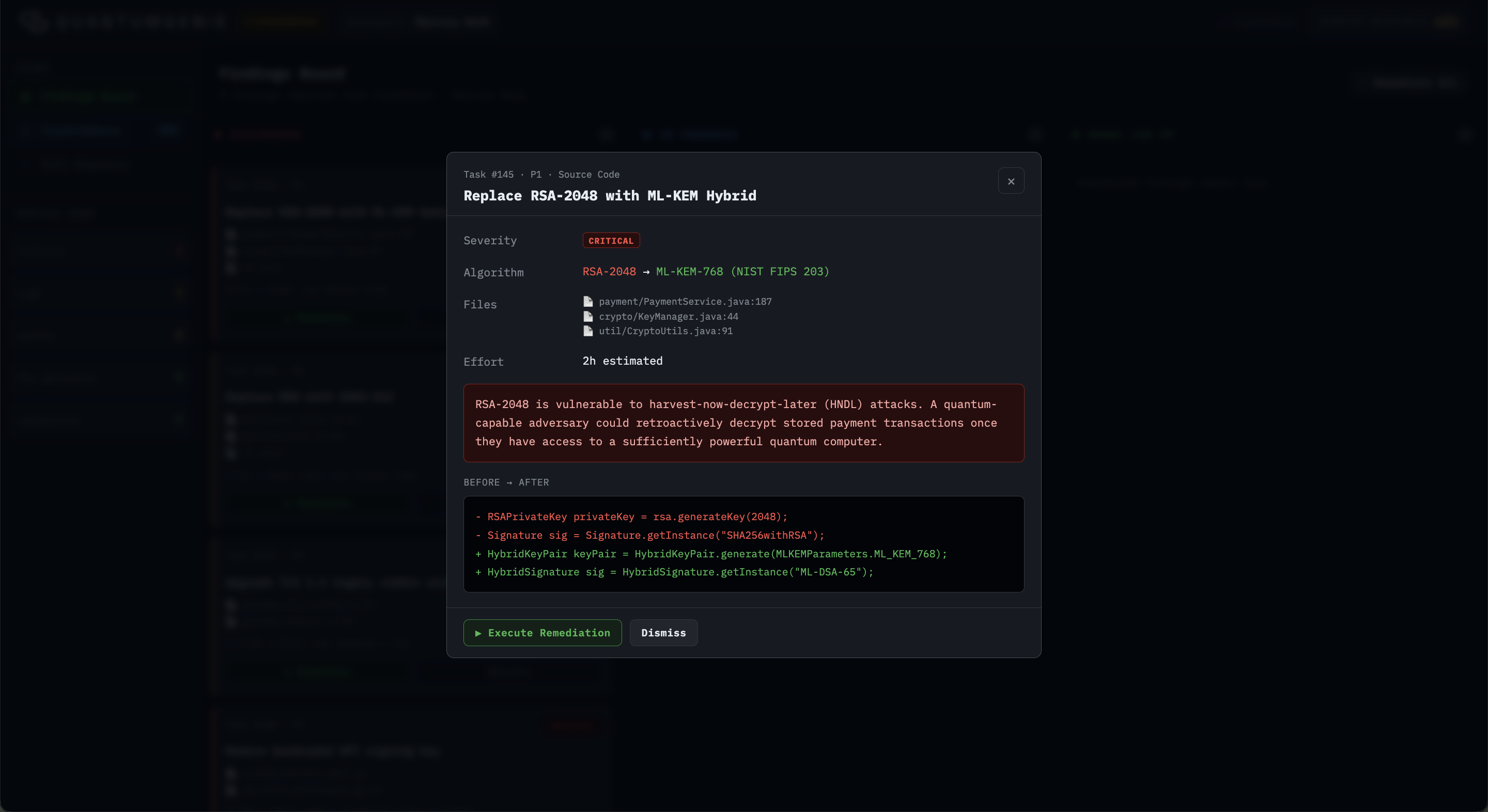
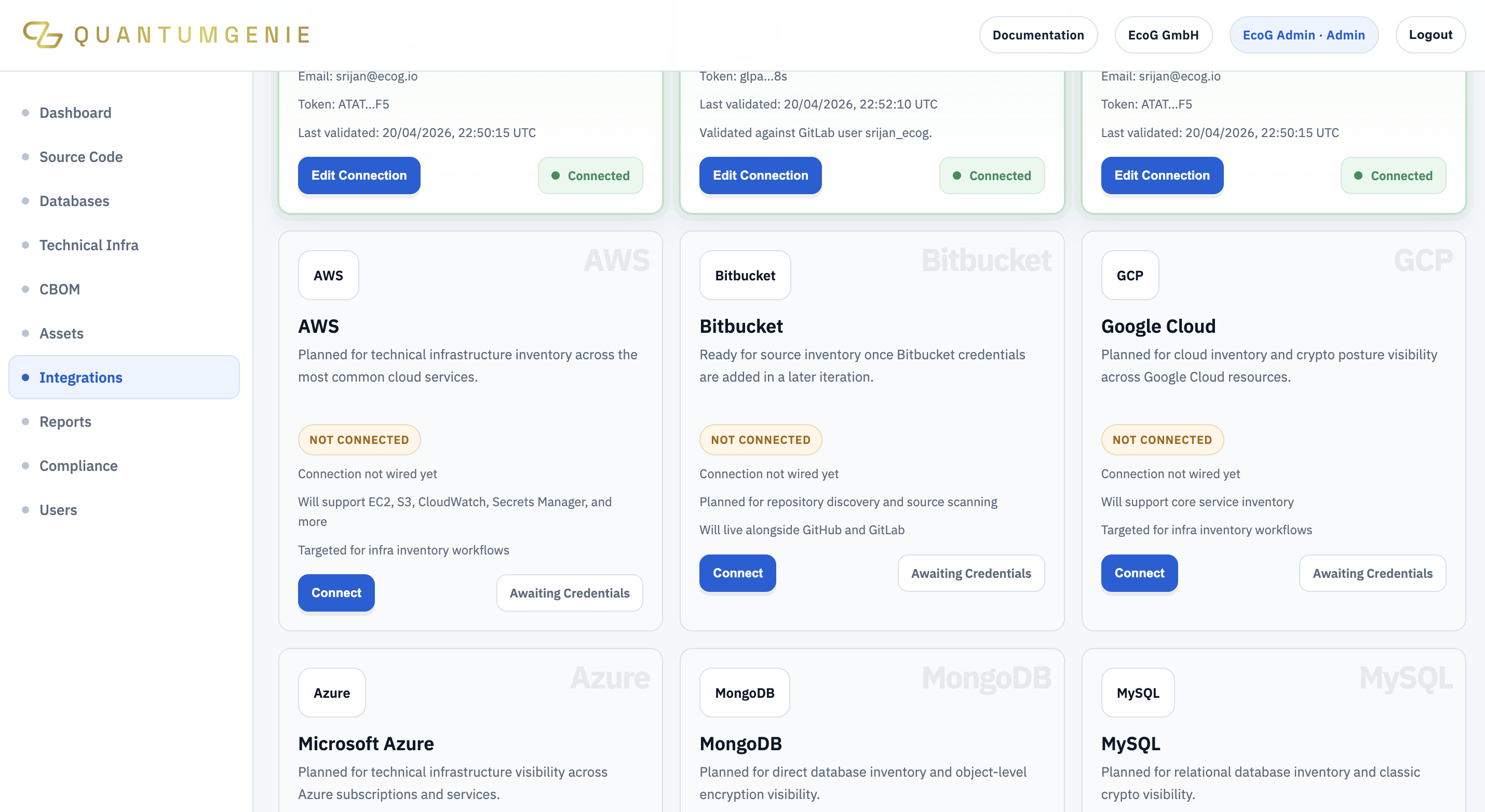
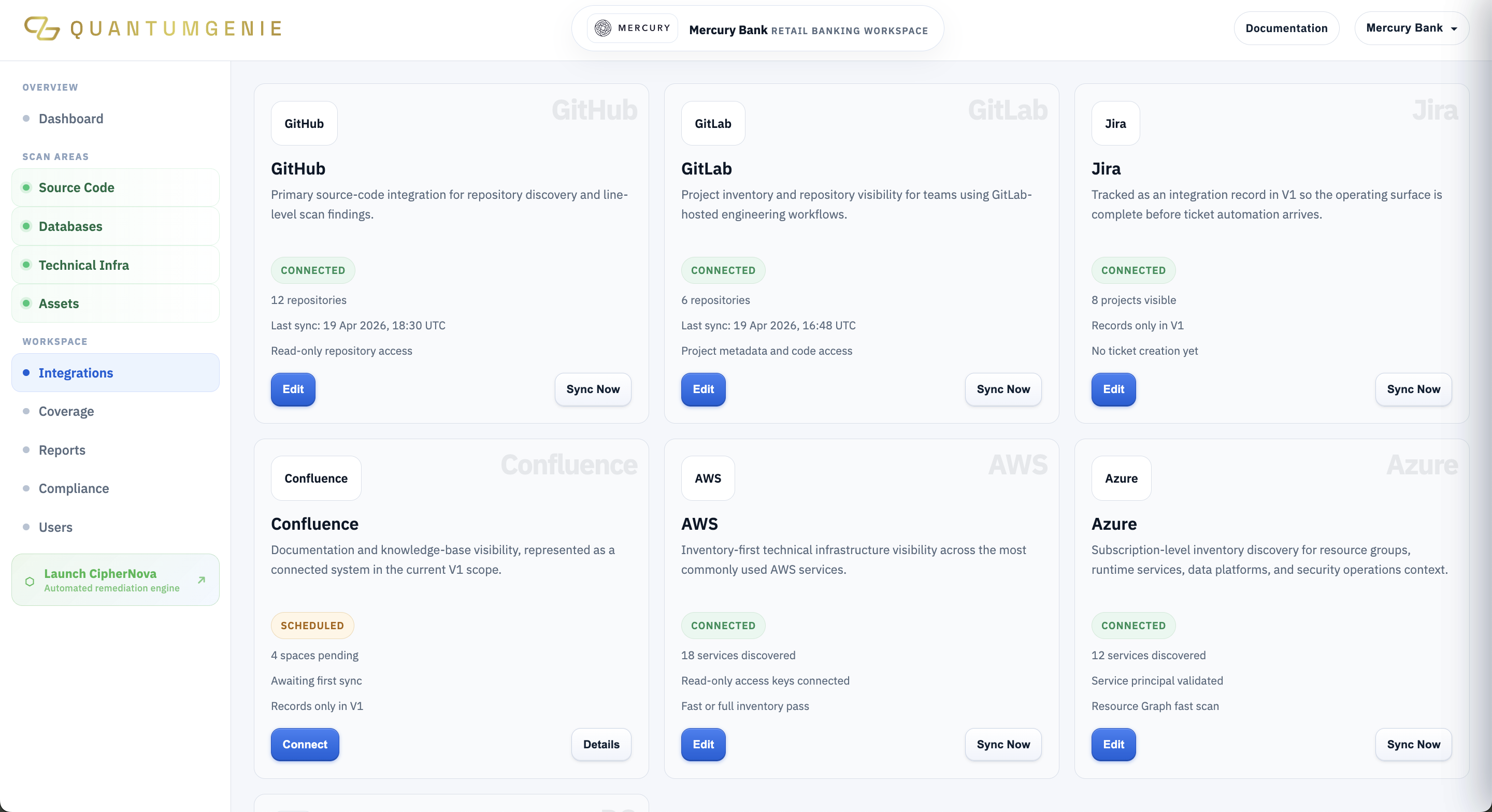
QuantumGenie's CipherScan product addresses this critical enterprise need by providing comprehensive discovery and inventory capabilities for cryptographic usage across websites, certificates, source code, infrastructure, databases, and applications. This inventory forms a cryptographic bill of materials (CBOM), crucial for understanding which cryptographic libraries and algorithms are deployed enterprise-wide.
By mapping cryptographic components at this granular level, QuantumGenie enables security teams to prioritize remediation efforts where PQC readiness is weakest—such as systems dependent on libraries lagging in PQC algorithm implementation. Additionally, CipherScan integrates with remediation orchestration through the CipherNova layer, streamlining workflow checks, pull requests, and policy exception handling.
Frequently Asked Questions
Why is post-quantum cryptography support in cryptographic libraries important for enterprises?
Cryptographic libraries are the foundation of many security systems; their support for post-quantum algorithms ensures that enterprises can migrate securely to quantum-resistant cryptography, preventing future vulnerabilities.
How can QuantumGenie help organizations manage risks related to inconsistent PQC library support?
QuantumGenie helps discover and inventory all cryptographic usage across an enterprise, enabling accurate risk prioritization and streamlined remediation workflows for components using less-ready cryptographic libraries.
Watch The Quantum Threat
Sources And Further Reading
- A Survey of Post-Quantum Cryptography Support in Cryptographic Libraries arXiv · Aug 22, 2025
- Post-Quantum Cryptography and Quantum-Safe Security: A Comprehensive Survey arXiv · Oct 12, 2025